战争交易

Search documents
存量市场博弈,板块轮动继续
Hua Tai Qi Huo· 2026-03-12 04:55
1. Report Industry Investment Rating - Not provided in the given content 2. Core View of the Report - Although the war has shifted to a low - intensity level, it may not end soon, and its impact on the market has emerged, triggering periodic theme trading. Sectors such as energy (including traditional and new energy) and military industry are repeatedly active. It is recommended to pay attention to changes in market trading volume, and in the short term, stock index futures will continue the range - repair trend [3] 3. Summary by Relevant Catalogs Market Analysis - **Macro - economic situation**: The Fourth Session of the 14th National Committee of the Chinese People's Political Consultative Conference closed on the morning of March 11. The Fourth Session of the 14th National People's Congress will hold a closing meeting on the afternoon of March 12. As of the end of January, the balance of inclusive small and micro - enterprise loans in China was 37.6 trillion yuan, a year - on - year increase of 11.4%, 5.4 percentage points higher than the growth rate of all loans. In January, the average interest rate of newly issued inclusive small and micro - enterprise loans was 3.67%, 0.16 percentage points lower than the annual average interest rate in 2025. Geopolitically, Trump said that there were "almost no targets left to strike" in Iran, and the US military action against Iran was "about to end", but US and Israeli officials said they had not received internal instructions to stop military operations [1] - **Stock market performance**: In the spot market, the three major A - share indexes fluctuated upwards. The Shanghai Composite Index rose 0.25% to close at 4133.43 points, and the ChiNext Index rose 1.31%. Among industries, the coal, power equipment, basic chemicals, and public utilities sectors led the gains, while the national defense and military industry, media, and electronics sectors led the losses. The daily market turnover was 2.5 trillion yuan. Overseas, the three major US stock indexes closed mixed, with the Dow Jones Industrial Average falling 0.61% to 47417.27 points and the Nasdaq rising 0.08% to 22716.13 points [2] - **Futures market situation**: In the futures market, the basis of stock index futures declined. In terms of trading volume and open interest, both the trading volume and open interest of stock index futures decreased [2] Strategy - Pay attention to the trading opportunities brought by the war. Although the war situation has entered a low - intensity stage, it may not end soon, which will lead to periodic theme trading in sectors such as energy and military industry. It is recommended to focus on changes in market trading volume, and in the short term, the stock index will continue the range - repair trend [3] Chart Summary - **Macro - economic charts**: Include charts showing the relationship between the US dollar index and A - share trends, US Treasury yields and A - share trends, RMB exchange rate and A - share trends, and US Treasury yields and A - share style trends [6][8][10] - **Spot market tracking charts**: The daily performance of major domestic stock indexes on March 11, 2026, shows that the Shanghai Composite Index rose 0.25%, the Shenzhen Component Index rose 0.78%, the ChiNext Index rose 1.31%, etc. There are also charts of the trading volume of the Shanghai and Shenzhen stock markets and the margin trading balance [13][14] - **Stock index futures tracking charts**: Include data on the trading volume and open interest of IF, IH, IC, and IM contracts, the basis of stock index futures, and the inter - period spreads of stock index futures, as well as corresponding charts [17][35][44]
美银美林:如何迎接下一场牛市
Jin Rong Jie· 2025-05-22 07:34
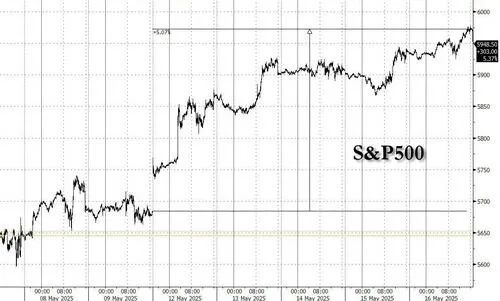
Group 1 - Michael Hartnett's prediction of "buy on news, sell on facts" has been validated, with the S&P 500 rising 5% since last Friday [1] - Hartnett's focus has shifted to the next major trend, identifying the worst and best-performing assets year-to-date: Oil (-12%), Gold (+21%), Russian Ruble (+41%), and Polish stock market (+28%) [2] - Key indicators to watch include the 30-year U.S. Treasury yield at 5%, the DXY dollar index at 100, and the SOX semiconductor index at 5000 [3] Group 2 - The market sentiment is currently extremely exuberant, but there is a possibility of a pullback once the details of any agreements are announced [4] - Hartnett's long-term investment strategy is based on three pillars: a weaker dollar, peak U.S. Treasury yields, and a recovery in the Chinese economy [7] - Recent fund flows indicate a significant net inflow into U.S. equities amounting to $19.8 billion, with notable inflows into stocks ($25.2 billion) and bonds ($13.1 billion) [9] Group 3 - Year-to-date fund flow trends show gold is on track for record annual inflows of $85 billion, while U.S. equities may see inflows of $416 billion, the second-highest on record [10][11][13] - The Bull & Bear index remains at 3.6, indicating that market sentiment has not yet shifted from bearish to bullish [23] - A significant warning signal is present as 84% of the MSCI global index components are above their 50-day and 200-day moving averages, indicating an overbought market [26] Group 4 - Hartnett highlights the importance of U.S. fiscal and monetary policy changes, predicting a shift from aggressive stimulus to fiscal tightening by 2025 [28] - The geopolitical landscape is evolving, with the "Riyadh Agreement" potentially impacting U.S. energy prices and inflation [32] - Hartnett emphasizes that future market trends will be heavily influenced by bond yields, which will determine the effectiveness of U.S. populist policies [37]