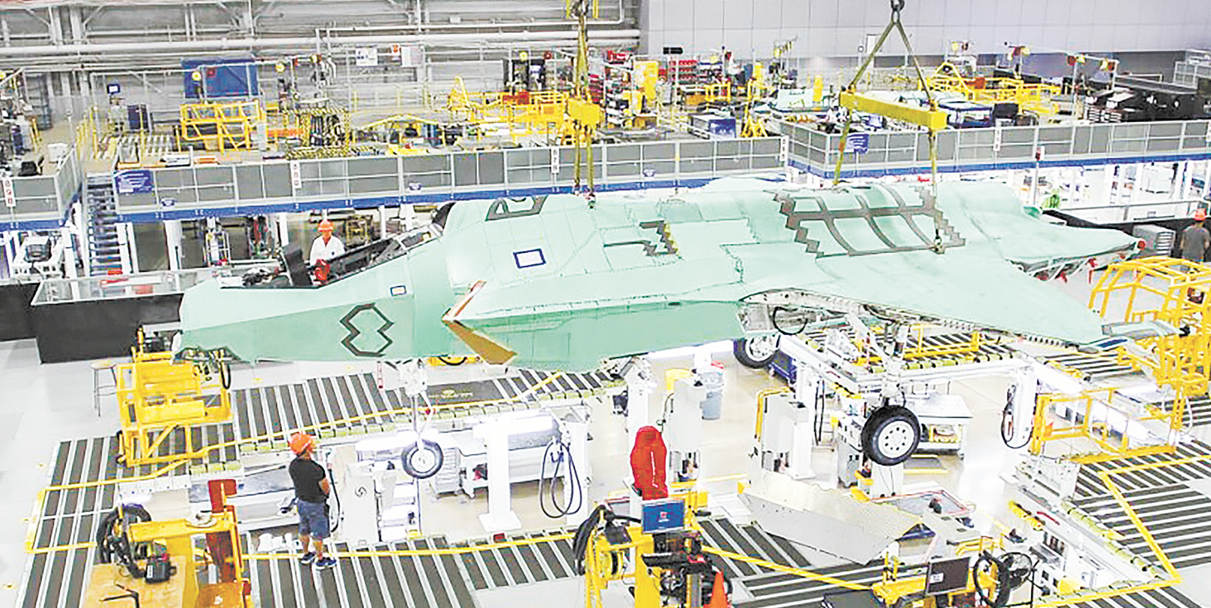
战斗机任务执行率

Search documents
美报告:F-35一半时间无法升空
Xin Lang Cai Jing· 2025-12-26 04:40
Core Viewpoint - The F-35 fighter jet program, the most expensive military procurement in U.S. history, is facing significant operational and financial challenges, including low mission readiness rates, delivery delays, and soaring costs, which are impacting both the U.S. military and its allies [2][4][8]. Group 1: Mission Readiness and Performance Issues - The average "mission execution rate" of the F-35 is projected to be below the minimum standard of 67%, with recent statistics showing it hovering around 55%, marking a new low for 2024 [2][3]. - The low readiness rate is attributed to maintenance deficiencies by Lockheed Martin, with the Pentagon failing to hold the company accountable for its poor performance [3][4]. - The F-35's maintenance demands and high operational costs have been criticized, with concerns that its readiness could decline further to as low as 35% as the fleet ages [3][4]. Group 2: Financial and Procurement Challenges - The total lifecycle cost of the F-35 program is expected to exceed $2 trillion, with reports highlighting its poor reliability and high operational costs, potentially hindering the planned procurement quantities [4][5]. - The Pentagon's budget for fiscal year 2026 has already halved the planned procurement of F-35s, with further reductions anticipated over the next decade [5]. Group 3: Delivery Delays and Cost Overruns - The F-35 program is experiencing significant delivery delays, with aircraft delivered in 2023 averaging 61 days late and projections for 2024 indicating an average delay of 238 days [6]. - The delays are primarily attributed to hardware and software upgrades, which have increased production costs and postponed the enhancement of combat capabilities by five years [6]. Group 4: Impact on Allies and Alternative Solutions - The issues surrounding the F-35 are prompting U.S. allies to reconsider their procurement plans, with Spain abandoning its F-35 acquisition and Switzerland contemplating reductions in its orders due to increased costs [8][9]. - Allies are increasingly leaning towards developing new fighter jets collaboratively, such as the Future Combat Air System (FCAS) and the Global Combat Air Program (GCAP), as well as considering proven alternatives like the Eurofighter Typhoon and the French Rafale [8][9].



五角大楼监管不力,多个盟友取消订单,美报告:F-35“去年有一半时间无法升空”
Huan Qiu Shi Bao· 2025-12-25 22:54
Core Viewpoint - The F-35 stealth fighter program, the most expensive military procurement in U.S. history, is facing significant operational challenges, including low mission readiness rates, delivery delays, and soaring costs, which are impacting both U.S. military readiness and allied nations' plans [1][5][8]. Group 1: Mission Readiness and Performance - The average mission execution rate of the F-35 fighter jets is projected to be significantly below the U.S. military's minimum standard of 67%, with recent statistics indicating it has been around 55% in recent years, and is expected to drop further in 2024 [2][4]. - The low mission readiness is attributed to maintenance deficiencies by Lockheed Martin, which has not been held accountable for its poor performance under existing contracts [4][5]. Group 2: Cost and Procurement Issues - The total lifecycle cost of the F-35 program is expected to exceed $2 trillion, with reliability issues and high operational costs potentially hindering the planned procurement quantities [5][6]. - The U.S. Air Force is considering significant reductions in F-35 procurement, with the 2026 fiscal year procurement quantity already cut by half, and further reductions anticipated over the next decade [5][6]. Group 3: Delivery Delays - The F-35 program is experiencing severe delivery delays, with aircraft delivered in 2023 averaging 61 days late, and projections for 2024 indicating an average delay of 238 days [6][7]. - These delays are primarily attributed to hardware and software upgrade issues, which have also increased production costs and postponed the timeline for enhanced capabilities by five years [6][7]. Group 4: Impact on Allies - The ongoing issues with the F-35 program are prompting U.S. allies to reconsider their procurement plans, with countries like Spain and Switzerland either canceling or reducing their orders [8][9]. - Allies are increasingly looking towards alternative solutions, including joint development of new fighter jets and proven aircraft models, due to the F-35's reliability and cost challenges [8][9].