
房地产化债

Search documents
中金 • 联合研究 | 助力房地产风险化解的AMC作用初探
中金点睛· 2026-02-10 23:37
Core Viewpoint - The effectiveness of real estate debt reduction in China is beginning to show, but significant challenges remain. A systematic approach to asset revitalization is needed, with financial asset management companies (AMCs) potentially playing a unique role in managing non-performing assets [1][2]. Group 1: Real Estate Debt Situation - Since 2022, the scale of real estate debt in China has been reduced, but it has not yet reached acceptable levels. The process of destocking and deleveraging in the industry will be long-term [2]. - By the end of 2025, the total asset scale of Chinese real estate companies is expected to be approximately 103 trillion yuan, with total liabilities around 79 trillion yuan, reflecting a cumulative decrease of about 10.7 trillion yuan and 12.3 trillion yuan from the end of 2021 [5]. - The structure of liabilities remains a concern, with interest-bearing liabilities expected to be around 21.4 trillion yuan (27.3% of total liabilities) and non-interest-bearing liabilities around 57.3 trillion yuan [5]. Group 2: AMC's Role in Debt Reduction - AMCs are positioned to play a crucial role in the revitalization of real estate assets, focusing on risk resolution and participating in real estate restructuring as a primary business direction [2][31]. - The estimated annual asset scale that AMCs can invest in the real estate sector is in the hundreds of billions yuan, with the potential to leverage even larger asset scales [2]. - AMCs have been supporting real estate restructuring through self-funding, external funding leverage, and resource integration, emphasizing both the "blood transfusion" function of capital injection and the "blood production" capability of resource coordination [2]. Group 3: Challenges and Future Directions - The debt reduction process has shown structural characteristics, with the most significant reductions in contract liabilities, reflecting a policy focus on ensuring housing delivery [6][8]. - The future focus of debt reduction efforts may need to adjust, particularly as the task of ensuring housing delivery is largely complete, and the quality risk of commercial bank loans remains a concern [8][9]. - The overall financial health of the industry is still suboptimal, with the ratio of annual sales to outstanding debt indicating significant room for improvement [9][10]. Group 4: AMC Transformation and Capability Building - Upgrading the capability to manage non-performing assets is critical for AMCs, requiring the establishment of expert teams and a supportive external policy environment [3]. - Collaboration with external resources, particularly with investment banks, banks, and operational institutions, can enhance efficiency [3]. - Transitioning from a "heavy" to a "light" operational model is a long-term goal, relying on differentiated active management capabilities of alternative assets [3]. Group 5: Systematic Asset Revitalization - A systematic asset revitalization framework is essential for addressing the challenges in the real estate sector, with AMCs potentially serving as a bridge among various stakeholders [18][20]. - The development of a multi-layered financial market is crucial for facilitating asset circulation and revitalization, with AMCs playing a pivotal role in this process [19][24]. - The establishment of a robust securitization market, particularly through REITs, is seen as a key factor in enhancing asset pricing and liquidity [23].


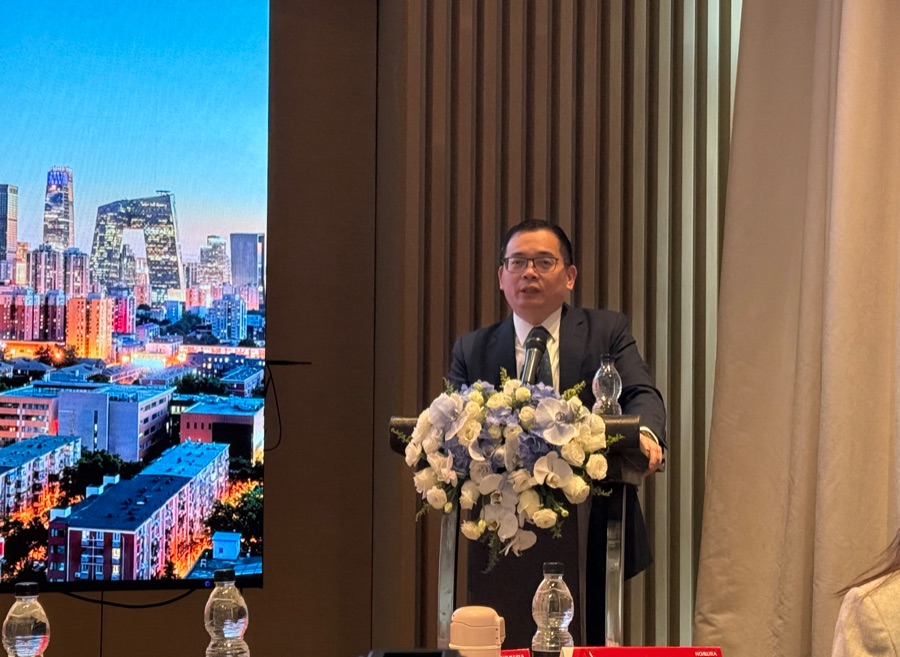
野村首席观点 | 陆挺:2026年中国宏观经济分析和展望
野村集团· 2026-01-29 04:03
Core Viewpoint - The article discusses the macroeconomic outlook for China in 2026, emphasizing the need for increased government spending and policy measures to stabilize the economy and address internal demand pressures [5][10]. Economic Policy and Government Spending - In 2026, China is expected to implement larger-scale government spending plans, including the issuance of special bonds and a moderate reduction in interest rates by the central bank [5]. - The government aims to address the real estate sector's debt issues and reform the pension system to support sustainable consumption [5][11]. Domestic Demand and Economic Growth - In 2025, China's economy surpassed 140 trillion yuan, growing by 5% year-on-year, but internal demand remains weak, with retail sales and fixed asset investment declining [6][7]. - The export sector showed resilience, contributing 15%-20% to GDP, supported by China's strong industrial base and competitive pricing [7]. Stock Market Performance - The stock market was active in 2025, with the Shanghai Composite Index rising nearly 22% from 3,262 to 3,968 [8]. - Government policies have successfully supported the stock market, but there are concerns about the wealth effect being limited for retail investors due to pressures in the real estate market [8][9]. Future Economic Trends - The economic trajectory for 2026 is expected to be "front low, back high," with a focus on expanding domestic demand and stabilizing the real estate market [10]. - The central bank is anticipated to have limited room for further interest rate cuts, emphasizing the need for fiscal policy to stabilize the economy [10][12]. Debt Management and Social Security - A key focus for 2026 will be managing the debt of real estate companies and improving credit relationships to restore credit demand [11]. - Enhancing the social security system, particularly increasing pension levels, is crucial for boosting consumer spending and addressing effective demand shortages [12].

房企化债提速 月内4家获关键进展
Bei Jing Shang Bao· 2026-01-27 03:07
Group 1 - The core viewpoint of the articles highlights the significant progress in debt restructuring for real estate companies in early 2026, continuing the trend from 2025 where major firms like Sunac China and Country Garden successfully restructured debts totaling approximately 1.2 trillion yuan [1][5]. - In January 2026, several companies, including Vanke and Kaisa, announced important developments in their debt restructuring processes, indicating a positive start to the year [2][3]. - The "white list" financing system for real estate projects has been optimized, extending the loan extension period from a maximum of 2.5 years to 5 years, providing companies with more financial flexibility [1][7]. Group 2 - Vanke's debt restructuring plan includes a combination of fixed payments, cash buybacks, and interest prepayments, which has garnered high approval from bondholders [2][3]. - Kaisa's restructuring has entered a critical judicial phase, as indicated by a ruling from the Hong Kong High Court, marking a significant step in its overseas debt restructuring [3]. - The debt restructuring efforts have been characterized as a "blood transfusion" for companies, addressing immediate liquidity crises while emphasizing the need for companies to restore their operational capabilities [5]. Group 3 - The debt restructuring process has seen major milestones, such as Jinke's judicial restructuring involving 147 billion yuan in debt, which is the largest case in the real estate sector [4]. - Sunac China is expected to reduce its overall debt pressure by nearly 60 billion yuan, while Country Garden's overseas debt restructuring aims to reduce approximately 11.7 billion USD, equivalent to about 84 billion yuan in interest-bearing debt [4]. - The "white list" financing mechanism has been crucial in supporting real estate companies, with over 7 trillion yuan in loan approvals by September 2025, facilitating the construction and delivery of nearly 20 million housing units [6][7].



野村陆挺:2026年扩内需要做好房地产化债
2 1 Shi Ji Jing Ji Bao Dao· 2026-01-26 07:21
Core Viewpoint - The report highlights the expectations for China's macroeconomic policies in 2026, emphasizing increased government spending and monetary easing to support economic stability and growth [1][9]. Economic Outlook - In 2025, China's economy is projected to exceed 140 trillion yuan, achieving a year-on-year growth of 5%, with a quarterly trend showing a decline from 5.4% in Q1 to 4.5% in Q4 [2][3]. - Domestic demand remains under pressure, with retail sales growing by 3.7% to 50.12 trillion yuan, while fixed asset investment decreased by 3.8% to 48.52 trillion yuan [2][3]. - Exports are resilient, with a growth of 6.1% to 26.99 trillion yuan, supported by China's strong industrial base and competitive pricing [2]. Stock Market Performance - The stock market showed significant activity in 2025, with the Shanghai Composite Index rising nearly 22% from 3,262 at the beginning of the year to 3,968 by year-end [4][7]. - Government policies have successfully fostered a bullish market environment, with a cautious approach to prevent excessive volatility [7][8]. Policy Recommendations - For 2026, it is crucial to implement stronger measures to address real estate debt issues and enhance the pension system to support sustainable consumption [1][10]. - The focus should be on stabilizing the real estate market and improving the social security system to increase household consumption rates [11]. - A proposed increase in pension levels for 1.8 billion retirees could significantly boost consumer spending, with an estimated fiscal impact of over 200 billion yuan for a 100 yuan monthly increase [11].
每周精读 | 2025年十大作品全国20强揭晓(11.29-12.5)
克而瑞地产研究· 2025-12-06 01:44
Group 1 - The article highlights the ongoing critical phase of the real estate industry characterized by "debt reduction promotion + sales bottoming out," with major real estate companies' operational actions and financing events being focal points for market attention [10] - In November 2025, the real estate market saw a month-on-month increase in financing, with notable companies like Longfor and Huafa streamlining their structures to enhance efficiency [9] - New housing supply showed a month-on-month increase of 1.6%, with cities like Guangzhou, Suzhou, and Dongguan experiencing significant growth [9] Group 2 - The average sales rate for newly launched projects increased by 3 percentage points to 35%, with cities like Tianjin, Suzhou, and Ningbo exceeding 60% [9] - The second-hand housing market experienced a 14% month-on-month increase in transaction area, with cities like Shanghai, Chengdu, and Wuhan seeing over 20% growth [9] - The land market saw a month-on-month increase in transaction area and amount by 39% and 57% respectively, with the average premium rate recovering [9][15] Group 3 - In December, new housing supply is expected to be of higher quality but in reduced quantity, coupled with year-end discounts from real estate companies, potentially leading to a short-term recovery in transactions [13] - The upcoming land auctions in December are set to include 125 plots with a total starting price of 172.3 billion yuan, with cities like Guangzhou and Wuhan having significant offerings [14]

从超万亿元化债看房地产新生之路
Zheng Quan Ri Bao· 2025-11-09 16:23
Core Insights - The debt restructuring of Sunac China and Country Garden has successfully reduced approximately $9.6 billion and $11.7 billion in debt respectively, marking a significant milestone in the industry [1] - A total of 21 distressed real estate companies have completed debt restructuring, with a total debt reduction scale of about 1.2 trillion yuan [1] - The shift from "debt extension" to "substantial debt reduction" is a key breakthrough, with some companies achieving debt reduction ratios as high as 70% [1] Debt Restructuring and Operational Transformation - The core of the debt reduction process involves innovative methods such as debt-to-equity swaps and asset pledges, which alleviate short-term repayment pressures and improve balance sheets [1] - Debt restructuring is seen as a temporary solution to liquidity crises, emphasizing the need for companies to combine debt reduction with operational transformation for sustainable development [1] - Ensuring project delivery has become a critical indicator for assessing the operational stability of distressed real estate companies, as it is essential for rebuilding trust with clients and the market [2] Financial Strategies and Asset Management - Companies need to explore additional funding sources beyond debt restructuring, such as revitalizing existing assets and broadening monetization channels [2] - The involvement of Asset Management Companies (AMCs) is crucial for companies with complex debt structures, as they can leverage their expertise to manage non-performing assets and attract strategic investors [3] - Successful cases, such as the restructuring of Jinke Co. with a debt reduction of 147 billion yuan, illustrate the effectiveness of combining judicial restructuring with strategic investment and business transformation [3] Shift to Light Asset Operations - Many companies, including Country Garden, are shifting their strategic focus towards light asset operations like property management and construction agency services, which require less capital investment and provide stable cash flow [4] - This transition represents a broader industry shift from incremental development to stock operation, although these new business models may not immediately replace traditional development activities [4] Future Development Trends - The real estate market is entering a deep adjustment phase, prompting both distressed and quality companies to explore new growth avenues, such as commercial real estate and property management [4] - The investment logic in the real estate market is expected to focus on operational quality and sustainable development capabilities, driving companies to accelerate their transition from development-driven to operation-driven models [5]