抗焦虑疗法

Search documents
我国科学家解开“孤独伤脑”的长久谜题
Huan Qiu Wang Zi Xun· 2026-01-30 01:45
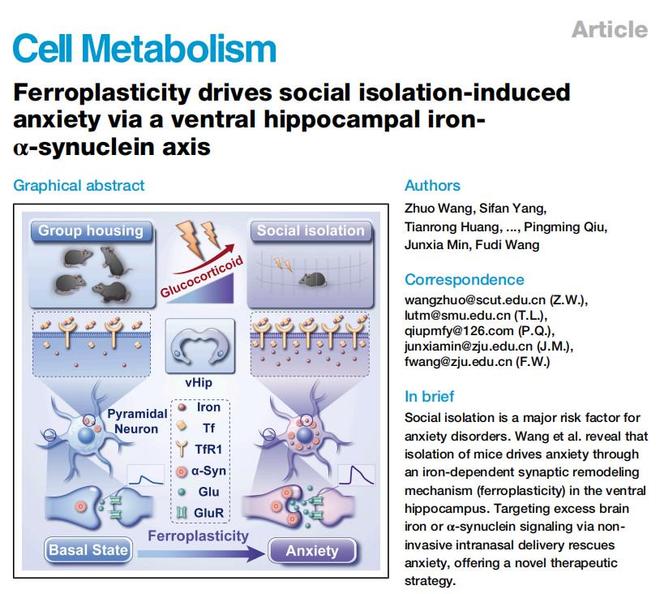
Core Insights - The research reveals that social isolation triggers iron accumulation in specific brain regions, activating a new neural plasticity pathway termed "iron plasticity" [1][5][6] - This discovery provides a novel, non-invasive intervention approach for anxiety without traditional medications, addressing the long-standing issue of "loneliness harming the brain" [1][5] Group 1: Research Findings - The study utilized a mouse model simulating long-term human isolation, finding increased iron levels in the "ventral hippocampus," a region associated with emotional regulation [5] - Excess iron activates a molecule called α-synuclein, leading to excessive neuronal firing and heightened anxiety signals, indicating a specific stress response to social deprivation [5][6] - The research establishes a link between disrupted iron metabolism and emotional disorders, suggesting a metabolic basis for understanding mental illnesses [6] Group 2: Intervention and Implications - The team tested a non-invasive nasal delivery method targeting key molecules related to iron plasticity, resulting in significant anxiety reduction in mice within two weeks, faster than traditional social reintegration [8] - This approach could potentially benefit over 1 billion people globally suffering from anxiety related to social isolation, offering a new direction for non-invasive, targeted anxiety therapies [8] - Future plans include advancing the safety and dosage optimization of the nasal spray for human trials, as well as exploring the role of iron accumulation in other neuropsychiatric disorders [8]