排污权有偿使用和交易

Search documents
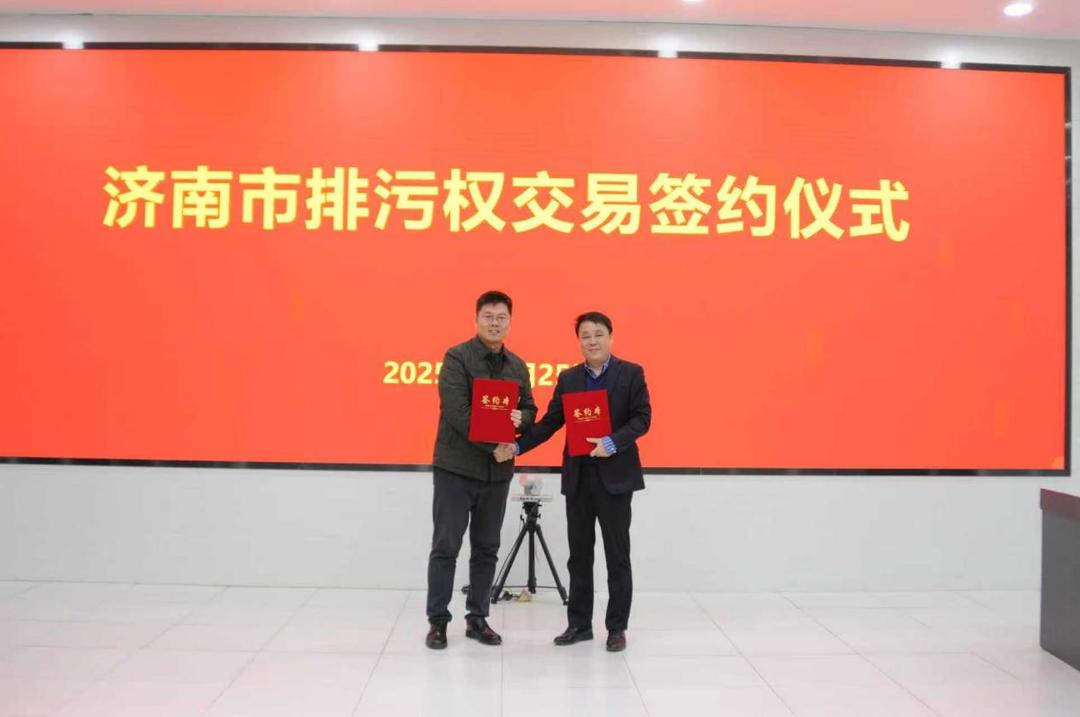
颗粒物33.7吨、氮氧化物126吨!济南排污权交易又下一单
Qi Lu Wan Bao· 2025-12-26 07:37
Core Insights - The successful signing of the pollution rights trading contract by Shandong Pingyin Fengyuan Carbon Co., Ltd. marks a significant achievement in Jinan's efforts to deepen the implementation of paid use and trading of pollution rights [1][3]. Group 1: Transaction Details - Fengyuan Carbon purchased 33.7 tons of particulate matter and 126 tons of nitrogen oxides from the Jinan municipal government's reserves, which supports both the company's development needs and contributes to the improvement of Jinan's ecological environment [3]. - The transaction represents a notable increase in the types of trading targets, trading volume, and transaction amount compared to the first government reserve pollution rights transaction, indicating a maturation and increased activity in Jinan's pollution rights trading market [5]. Group 2: Policy and Implementation - Since the initiation of the paid use and trading pilot program in 2024, Jinan has adhered to principles of "pilot first, gradual progress, differentiation, and phased implementation," focusing on "two high" industries and targeting particulate matter, nitrogen oxides, and volatile organic compounds as key pollutants [3][5]. - The Jinan Ecological Environment Bureau plans to continue enhancing the pollution rights trading mechanism to effectively optimize the allocation of environmental factors, supporting high-level ecological protection and high-quality economic and social development in the city [5].

什么是排污权出让收入?
蓝色柳林财税室· 2025-08-22 11:09
Basic Situation - The revenue from the transfer of emission rights refers to the income obtained by the government through the paid transfer of emission rights, including the emission rights usage fees collected through fixed quota transfers and the income obtained through public auctions [1][2]. - Emission rights are defined as the types and quantities of pollutants that a polluting entity is allowed to discharge within a certain period, according to national or local pollution discharge standards and total pollution control requirements [1]. Historical Development - Since 2007, the State Council has organized pilot programs for the paid use and trading of emission rights in 11 provinces (regions, cities) including Tianjin, Hebei, and Inner Mongolia [2]. - In 2014, the State Council issued guidelines to further promote the paid use and trading of emission rights, requiring pilot areas to establish a paid use system and accelerate trading [2]. - In 2015, regulations were introduced to standardize the management of revenue from the transfer of emission rights, aiming to promote pollutant reduction through market mechanisms [2]. - In December 2020, it was announced that starting from January 1, 2021, the revenue from the transfer of emission rights would be collected by tax authorities [2]. Policy Basis - The primary legal framework governing this system is the "Environmental Protection Law of the People's Republic of China" [3]. - Key documents include: 1. Guidelines from the State Council on promoting the paid use and trading of emission rights (2014) [4]. 2. Notification from the Ministry of Finance, National Development and Reform Commission, and Ministry of Environmental Protection regarding the management of revenue from the transfer of emission rights (2015) [4]. 3. Notification regarding the transfer of certain non-tax revenues to tax authorities (2020) [4]. 4. Announcement from the State Taxation Administration on the management responsibilities for non-tax revenue projects (2020) [4]. Revenue Collection Standards - For fixed quota transfers, polluting entities must pay an emission rights usage fee, with the fee standards determined by local price, finance, and environmental protection departments based on factors such as environmental resource scarcity and pollution control costs [7]. - For public auctions, the starting price is determined by local price, finance, and environmental protection departments, referencing the emission rights usage fee standards [8]. Budget Management - Revenue from the transfer of emission rights is included in the general public budget management and is fully paid into the local treasury [9].