
提案工作

Search documents
市政协十六届四次会议今天开幕
Xin Lang Cai Jing· 2026-01-26 21:05
Core Viewpoint - The 16th Chengdu Municipal Committee of the Chinese People's Political Consultative Conference (CPPCC) will hold its fourth session from January 27, with a formal duration of three and a half days, focusing on various reports and discussions related to government work and proposals [1]. Group 1: Meeting Agenda - The meeting will cover eight main agenda items, including the review of the work report of the CPPCC Standing Committee and the report on the proposal work since the last session [1]. - It will also include discussions on government work reports, the 14th Five-Year Plan, and financial reports during the attendance at the municipal people's congress [1]. Group 2: Meeting Structure - The meeting will consist of four plenary sessions, two special meetings, and multiple group meetings, including a session for party leaders and a meeting for group conveners [2]. - Notably, this session will be the first to report on the work of reflecting social sentiments and public opinions [2]. Group 3: Proposal Management - The total number of proposals during the meeting will be limited to 500, shifting the focus from quantity to the quality and effectiveness of the proposals [2]. - The CPPCC will also conduct a "Committee Members and Bureau Chiefs Face-to-Face" consultation activity, expanding the invitation to 24 city-level department heads for direct engagement with committee members [3].
政协陕西省十三届三次会议以来共提交提案1190件
Xin Lang Cai Jing· 2026-01-26 13:51
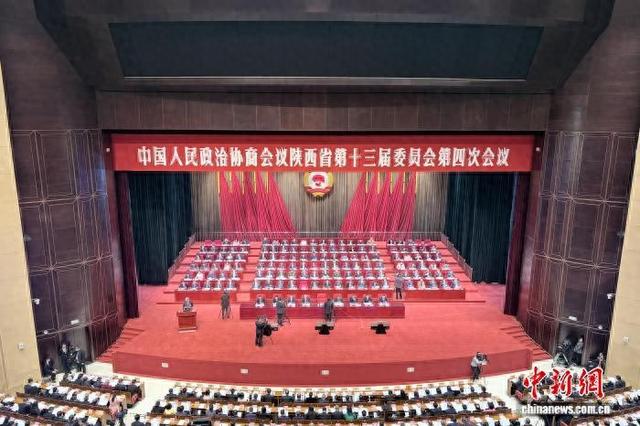
Core Viewpoint - The 4th session of the 13th Committee of the Chinese People's Political Consultative Conference (CPPCC) in Shaanxi Province opened on January 26, focusing on the proposal work since the 3rd session, highlighting the importance of proposals in driving high-quality development in the region [1]. Proposal Statistics - A total of 1,190 proposals were submitted since the 3rd session, with 851 proposals officially registered after review. Among these, 751 were individual proposals (88.2%) and 100 were collective proposals (11.8%) [2]. - The registered proposals were assigned to 79 relevant units for handling, including provincial departments, municipal governments, and central institutions in Shaanxi. By December 15, 2025, all proposals had been addressed [2]. - Of the proposals, 364 (42.8%) were accepted and implemented, 408 (47.9%) were incorporated into various plans or policies and are currently being organized for implementation, while 79 (9.3%) could not be implemented due to policy and condition limitations and were explained [2]. Focus Areas of Proposals - The proposals were aligned with the high-quality development goals of Shaanxi Province, with 245 focusing on economic development, 38 on political development, 103 on cultural development, 389 on social development, and 76 on ecological civilization [2]. Future Directions - The CPPCC aims to better integrate with the central objectives and serve the modernization efforts in Shaanxi. This includes guiding proposal topics, enhancing collaborative handling of proposals, and ensuring that proposals align with contemporary development and public needs [3].

南京秦淮区政协:以“五大品牌”改革之笔,书写履职赋能新篇
Xin Lang Cai Jing· 2026-01-08 21:03
Core Viewpoint - The Nanjing Qinhuai District Political Consultative Conference (PCC) is focusing on reform and brand building to enhance its role in governance and development, achieving significant outcomes through various initiatives and activities in the past year [1][2]. Group 1: Reform and Governance - The Qinhuai District PCC has held multiple meetings and organized over 30 key consultation activities, resulting in the completion of 260 proposals and the publication of 206 social sentiment reports [1]. - The PCC emphasizes the importance of political leadership and has implemented a strict reporting system to ensure alignment with the district's reform objectives [2]. - The PCC is actively involved in enhancing grassroots governance and modernizing local administration through targeted discussions and proposals [3]. Group 2: Economic Development - The PCC has introduced action plans for high-quality economic development, focusing on ten economic areas and facilitating the establishment of high-level projects in the district [5]. - A series of reports and recommendations have been developed to optimize the industrial system and promote strategic emerging industries, including low-altitude economy initiatives [6]. - The PCC has engaged in extensive research and collaboration to address key issues in employment, housing, and social welfare, proposing actionable solutions to enhance local living conditions [6]. Group 3: Cultural and Tourism Integration - The PCC is committed to cultural development and has been actively involved in projects that promote the integration of culture, tourism, and commerce, contributing to the establishment of Nanjing as a cultural tourism hub [7]. - Proposals have been made to enhance the preservation and utilization of historical sites, with ongoing projects aimed at improving the overall cultural landscape of the district [7]. Group 4: Proposal and Legislative Work - The PCC advocates for high-quality proposals that address critical reform challenges, with a focus on precise topic selection and in-depth research [8]. - An innovative mechanism for proposal handling has been established, leading to successful implementation and recognition of several proposals at the municipal level [9]. Group 5: Collaborative Governance - The PCC has fostered collaboration with provincial and municipal councils to address common issues and enhance the effectiveness of governance [10]. - Engagement with various stakeholders, including ethnic and religious groups, has been prioritized to ensure comprehensive governance and community involvement [11]. Group 6: Capacity Building and Cultural Initiatives - The PCC has implemented initiatives to strengthen the capacity of its members through reading and training programs, enhancing their ability to contribute to governance [12]. - The completion of significant cultural projects, such as the compilation of the "Qinhuai River New Chronicle," showcases the PCC's commitment to cultural reform and heritage preservation [12].
马明龙督办市政协重点提案时强调以新时代人文经济学助推文化强市建设
Zhen Jiang Ri Bao· 2025-06-20 23:39
Core Viewpoint - The article emphasizes the importance of leveraging cultural resources in Zhenjiang to promote a cultural economy, highlighting the need for innovative development and the preservation of historical sites [1][2]. Group 1: Cultural and Economic Development - The city aims to utilize its rich cultural heritage to enhance the cultural economy, focusing on the transformation and innovative development of traditional street areas [1][2]. - The government is encouraged to create a modernized vision that harmonizes material and spiritual civilization, turning cultural advantages into economic benefits [2]. Group 2: Traditional Street Area Revitalization - There is a strong emphasis on the need to plan traditional street area construction carefully, ensuring that these areas maintain their historical essence while adapting to modern needs [2]. - Key focus areas include the continuation of historical fabric, cultural enrichment, activation of business formats, and the integration of smart technologies [2]. Group 3: Proposal Handling and Governance - The article highlights the importance of effective proposal handling by the local government, ensuring that issues are genuinely resolved and that committee members are satisfied with the outcomes [3]. - It calls for a collaborative effort among various levels of the political advisory body to enhance the integration of cultural and tourism development [2][3].