撒切尔主义

Search documents
日本首位女首相的执政难题
Xin Jing Bao· 2025-10-22 11:26
Core Points - The election of Sanna Takai as Japan's first female Prime Minister marks a significant milestone in breaking the "glass ceiling" in a male-dominated political landscape [1][10] - Takai's political journey faced challenges, including the withdrawal of the Komeito party from the ruling coalition, complicating her path to the premiership [2][3] - The political landscape is shifting, with opposition parties seeing an opportunity to challenge the long-standing dominance of the Liberal Democratic Party (LDP) [3][5] - Takai's political style and ideology are compared to that of former UK Prime Minister Margaret Thatcher, but her ability to implement similar reforms in Japan remains uncertain [8][10] Political Context - Takai became the first female president of the LDP on October 4, 2023, and subsequently secured the position of Prime Minister [2] - The LDP's recent electoral losses and the Komeito party's exit from the coalition have left the LDP in a minority position in both houses of parliament [2][3] - The opposition parties, including the Constitutional Democratic Party, are calling for unity to achieve a change in government, posing a potential threat to Takai's leadership [3][5] Challenges Ahead - Takai faces significant internal party challenges, including criticism over the LDP's handling of political scandals and the need to unify party factions [11][12] - Economic issues, particularly inflation and the legacy of "Abenomics," present immediate challenges for her administration [12] - Foreign relations, particularly with the United States regarding tariffs and trade agreements, will be a critical area for Takai to navigate [13][14] Historical Significance - Takai's election is seen as a breakthrough for women's representation in Japanese politics, although her conservative views may limit her impact on gender equality initiatives [10] - The comparison to Thatcher raises questions about Takai's potential effectiveness in implementing significant economic reforms in Japan [8][10]
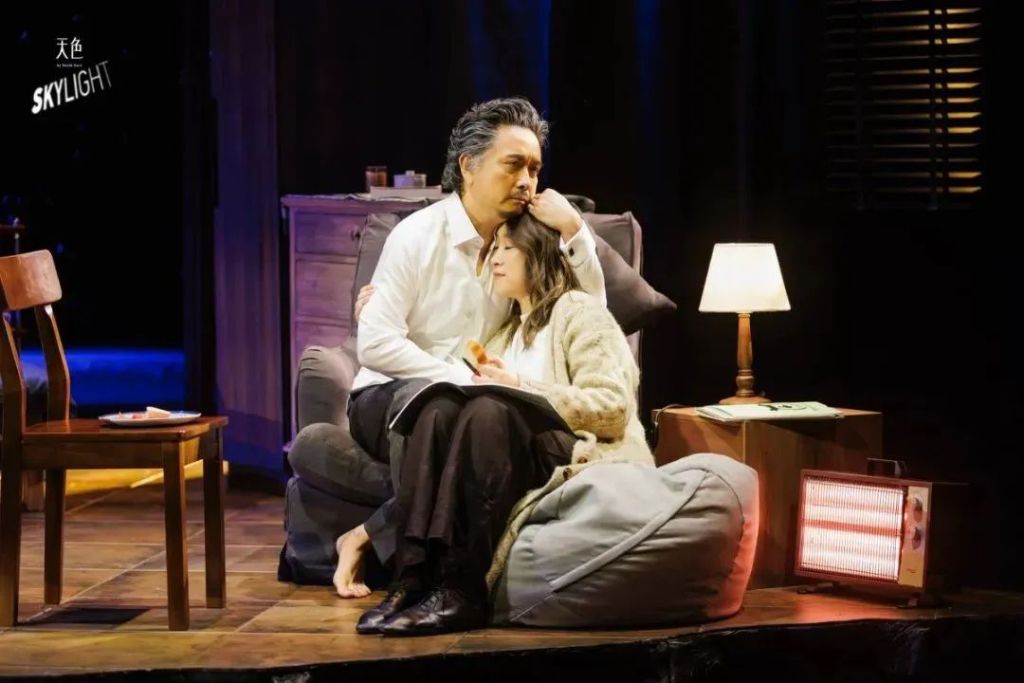
粤语话剧《Skylight天色》:独立女性遇上撒切尔遗产
Xin Lang Cai Jing· 2025-08-28 06:18
Core Viewpoint - The play "Skylight" by David Hare explores complex themes of class, gender, and idealism, presenting a challenging experience for both actors and audiences, particularly in the context of contemporary theater's shifting attention spans [1][13]. Summary by Sections Play Overview - "Skylight" tells the story of Tom, a successful restaurant mogul, who seeks to reconnect with his former lover, Kyra, after his wife's death. Their differing values and life philosophies lead to intense dialogue and conflict, further complicated by the presence of Tom's son, Edward [2][5]. Themes and Social Commentary - David Hare's works often focus on political and social issues rather than simple love stories. "Skylight" reflects the societal tensions of the post-Thatcher era, highlighting the clash between Tom's capitalist views and Kyra's commitment to education and social justice [4][5][14]. - The play critiques the widening gap between social classes and the neglect of public services under Thatcherism, as represented by Kyra's struggles in a society that prioritizes wealth over community welfare [6][14]. Directorial Approach - Director Sito Wai-Chak adopts a minimalist aesthetic, focusing on the script and performances rather than elaborate staging. This approach emphasizes the dense dialogue and the emotional depth of the characters [9][11]. - The lighting design plays a crucial role in reflecting the characters' emotional states, transitioning from cold to warm tones as their relationship evolves [10]. Audience Reception and Challenges - The play faces challenges in engaging contemporary audiences accustomed to fast-paced entertainment. The lengthy dialogue and complex themes may lead to difficulties in audience comprehension and engagement [13][15]. - Despite these challenges, the play has seen strong attendance, indicating a continued interest in its themes and performances, as evidenced by audiences waiting for post-show interactions with the cast [15].