
故宫文物南迁

Search documents
民族危难中的一曲文明壮歌
Ren Min Ri Bao· 2025-11-20 22:21
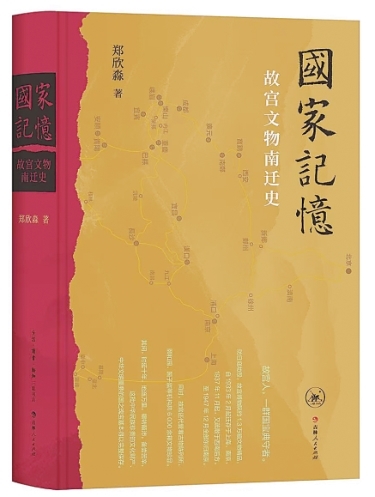
Core Viewpoint - The book "National Memory: The History of the Relocation of Palace Museum Artifacts" by Zheng Xinmiao highlights the significant cultural migration of Palace Museum artifacts from 1933 to 1949, emphasizing the dedication of the Palace staff in preserving cultural heritage during a tumultuous period in Chinese history [2]. Group 1 - The book utilizes a wealth of previously undisclosed archives, diaries, letters, and images to recount the largest and longest cultural migration in world history, which involved the relocation of 19,000 boxes of artifacts [2][3]. - The decision to relocate the artifacts was made in response to the national crisis and the prolonged nature of the War of Resistance against Japan, reflecting a strategic arrangement that included the relocation of government and educational institutions [3][4]. - The narrative is framed within the emotional context of national survival, showcasing the collective responsibility and spirit of the Palace staff who undertook the monumental task of protecting the artifacts amidst war [4][5]. Group 2 - The book details the challenges faced by the Palace staff during wartime, including rising living costs and family separations, which underscored their commitment to safeguarding cultural heritage [4]. - An important international exhibition held in London in 1935 is highlighted, where the selection of artifacts aimed to showcase Chinese artistic achievements, reinforcing the connection between cultural exchange and national strength [5]. - The author emphasizes that the Palace staff's dedication during this critical period exemplifies their commitment to civilization and national duty, marking a significant chapter in the history of cultural preservation [5].

故宫文物南迁纪念展在京开幕
Ren Min Ri Bao· 2025-09-30 22:02
Core Viewpoint - The "Memorial Exhibition of Cultural Relics Relocation from the Palace Museum" opened at the Palace Museum, showcasing over 60 precious cultural relics and more than 100 archival documents, highlighting the historical significance of the relocation during the Anti-Japanese War [1] Group 1 - The exhibition is located in the Shenwumen Exhibition Hall and will run until December 31, 2025 [1] - It features a variety of artifacts including bronze, jade, porcelain, clocks, and paintings, reflecting the arduous journey of the cultural relics during the war [1] - Experts at the opening ceremony emphasized the importance of the relocation as part of the Chinese people's resistance against Japanese aggression and its role in preserving and transmitting Chinese civilization [1] Group 2 - The exhibition aims to scientifically and reasonably protect and utilize the historical sites related to the relocation of cultural relics [1] - There is a call for thorough research and documentation of the history and spiritual value of the relics' relocation, emphasizing its role in shaping historical memory and cultural identity [1]
不能拆的遗址 不能断的文脉
Xin Hua She· 2025-06-16 11:43
Core Viewpoint - The article highlights the historical significance of the relocation of cultural relics from the Palace Museum to Chongqing during the Second Sino-Japanese War, emphasizing the importance of preserving this history through the establishment of the Chongqing Palace Museum Relocation Memorial Hall at the site of the former Anderson & Co. warehouse [1][3][4]. Group 1: Historical Context - The relocation of 59,000 cultural relics from the Palace Museum began in February 1933, with 13,427 boxes transported to avoid looting by Japanese forces [1]. - The journey of these relics spanned over a decade and involved numerous provinces, showcasing the challenges faced during wartime [1][2]. Group 2: Discovery and Preservation Efforts - The connection between Chongqing and the Palace Museum's relics was largely unknown until recent research efforts uncovered the historical ties [2]. - The preservation of the Anderson & Co. site was marked by the bold "Do Not Demolish" message, reflecting Chongqing's commitment to safeguarding its cultural heritage [3]. Group 3: Memorial Hall Development - The Chongqing Palace Museum Relocation Memorial Hall is the first thematic historical memorial established at a site associated with the Palace Museum's relocation [3][4]. - The memorial hall consists of eight buildings, with four preserved according to cultural relic restoration principles and four incorporating modern architectural elements [4]. - The hall features replicas of relics and historical photographs, enhancing public understanding of the relocation history and has become a popular cultural tourism landmark [4].