数学素养

Search documents
“科学之母”数学的热点何在
Xin Lang Cai Jing· 2026-01-07 06:53
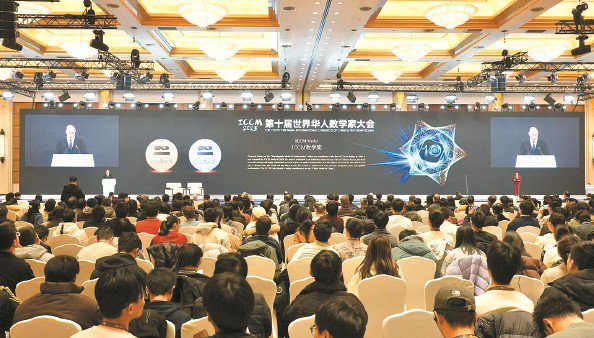
Group 1 - The main focus of current mathematical research includes areas such as analysis/probability, algebra/number theory, and geometry/topology, with a significant emphasis on Partial Differential Equations (PDE) [3] - PDE research addresses systems described by multi-variable functions or vector fields that adhere to physical laws, with many classical problems being answered while numerous unsolved issues remain [3][4] - The famous Millennium Prize Problems include the Navier-Stokes existence and smoothness problem and the construction of Yang-Mills quantum field theory, both of which are significant unsolved problems in mathematics [4] Group 2 - The relationship between mathematics and contemporary technologies like AI and quantum technology is highlighted, with potential breakthroughs in quantum computing possibly leading to significant advancements in algorithms and computational power [5] - Two research directions in the intersection of mathematics and AI are identified: "Math for AI," which focuses on the mathematical foundations of AI technologies, and "AI for Math," which explores how AI can assist in mathematical research [5][6] - Recent advancements in "AI for Math" include using AI to find approximate solutions to PDEs, conducting mathematical experiments, and automating mathematical proofs, with AI models showing capabilities in writing proofs and formalizing them [5][6][7] Group 3 - The impact of AI on foundational mathematics is currently limited, primarily addressing specific problems rather than generating original proofs, but future developments in AI may change the landscape of mathematical research [7] - The importance of mathematical literacy for contemporary youth is emphasized, focusing on skills such as logic, statistics, analysis, and structuring, which are essential for navigating an increasingly complex information environment [8][9]

探访2025年北京高考评卷现场:数学难度与往年持平,语文重视文言文知识积累
Bei Jing Shang Bao· 2025-06-16 12:56
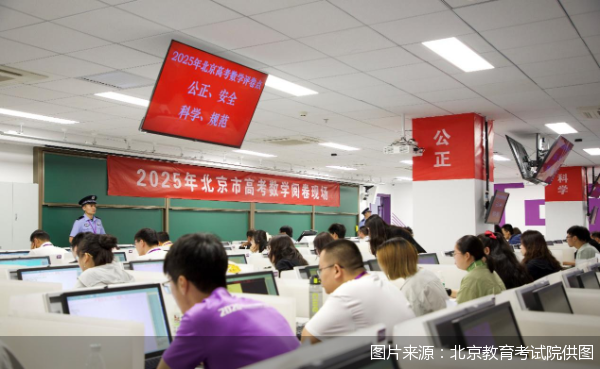
Group 1 - The 2025 Beijing college entrance examination (Gaokao) evaluation work began on June 11 and is expected to conclude by June 24, with a total of 1,660 evaluators organized across six evaluation points [3][8] - The number of mathematics exam papers evaluated this year has increased by approximately 10,000 compared to last year, with the overall difficulty of the mathematics paper being moderate [3][4] - The mathematics paper emphasizes the assessment of students' mathematical literacy and innovative abilities, focusing on foundational knowledge and rational thinking [3][4] Group 2 - The Chinese language examination maintains a stable format, with a focus on classical literature and the understanding of cultural values [5][6] - The essay topics for the Chinese language exam are designed to resonate with contemporary themes, encouraging students to reflect on their experiences and societal issues [6] - A total of 360 experts and evaluators are involved in the Chinese language evaluation process, ensuring a comprehensive assessment [6][8] Group 3 - The evaluation sites are under strict security management, with measures such as metal detectors and 24-hour video surveillance to ensure data security [8] - The evaluation process includes a dual-review system for all subjects, with additional reviews for papers that exceed a certain threshold of discrepancies [8][9] - The results of the examination are scheduled to be released by June 25, along with the minimum admission scores for various batches [9][10]