新能源汽车电池回收

Search documents
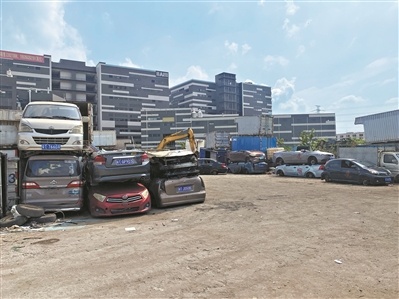
民声调查丨新能源汽车报废后,“退役”电池去哪儿?
Guang Zhou Ri Bao· 2025-10-13 07:55
Core Insights - The rapid growth of new energy vehicles (NEVs) in China has led to an increasing number of vehicles entering the scrapping phase, raising concerns about battery recycling and management [1][4][6] Group 1: Current Status of NEVs - As of June 2023, the total number of NEVs in China reached 36.89 million, accounting for 10.27% of the total vehicle population [1] - The first batch of NEVs is now reaching the end of their lifecycle, with many early models facing performance issues and battery degradation [4][6] Group 2: Challenges in Battery Recycling - The low recycling rate of NEV batteries has become a significant concern as more vehicles are scrapped [1][4] - There is a risk of unregulated small workshops profiting from battery recycling, which poses safety and environmental hazards [6] Group 3: Future Projections - The scrapping volume of NEVs is expected to increase rapidly in the next 5 to 8 years, potentially matching the growth rate of new vehicle sales [4][6] - If one million NEVs are scrapped, it could result in approximately 500,000 tons of batteries needing recycling [6] Group 4: Recommendations for Improvement - Strengthening regulations and standards for battery recycling processes is essential, including the implementation of producer responsibility [7] - Establishing a comprehensive recycling network and utilizing technology for monitoring battery flow can enhance efficiency [7] - Advancements in automated dismantling technology and improved recycling methods are necessary to maximize the economic benefits of battery reuse [7] - A robust regulatory framework is needed to ensure compliance and combat illegal battery disposal practices [7]

活力中国调研行丨一图读懂:新能源汽车电池“退休”后去哪了?
Xin Hua Wang· 2025-08-12 06:38
Core Insights - The article discusses the potential value of retired electric vehicle batteries and their recycling process, emphasizing that they do not have to be discarded as waste [8]. Group 1: Battery Classification - Retired batteries can be categorized into two types: "Sub-healthy" batteries with a capacity between 40% and 80% [2], and "Fully retired" batteries with a capacity below 40% [4]. Group 2: Reuse Initiatives - There are various applications for retired batteries, including energy storage systems, Automated Guided Vehicle (AGV) batteries, forklift batteries, mobile power sources, and solar street lights [6]. - Batteries that cannot be reused must undergo disassembly and recycling, which involves physical crushing, hydrometallurgy, and extraction of recyclable materials such as nickel, cobalt, and lithium [6].