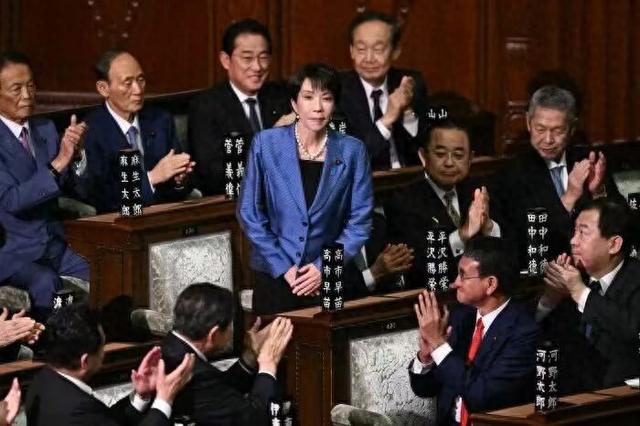
日本修宪黩武

Search documents
牛弹琴:高市赌赢了,日本更危险了
Xin Lang Cai Jing· 2026-02-08 23:41
Core Viewpoint - The recent election results in Japan, where the ruling Liberal Democratic Party (LDP) secured over two-thirds of the seats in the House of Representatives, indicate a significant shift in the political landscape, raising concerns about potential risks associated with this overwhelming victory [2]. Group 1: Risks of Constitutional Revision - With the LDP holding a supermajority, there is a possibility that Prime Minister Kishi may push for constitutional amendments, including transforming the Self-Defense Forces into a "National Defense Force" and accelerating Japan's "normalization" as a nation [4]. - The lack of a thorough historical reckoning may lead Japan down a path of increased military expansion, higher defense spending, and a potential pursuit of offensive weapons, including nuclear capabilities, which could exacerbate tensions in the region, particularly regarding Taiwan [5][6]. Group 2: Risks of Populism - The election results do not reflect a complete shift of Japanese society towards the far-right; rather, it highlights the decline of the center-left and the rise of extreme right-wing populism, aligning with broader trends observed in Western societies [7][8]. - The rise of populism may lead to irrational decision-making driven by emotional appeals rather than rational discourse, posing risks for Japan's future direction [9]. - There is a concern that Kishi may further revise educational materials to glorify Japan's militaristic past, which could contribute to a more extreme nationalist sentiment [10][11]. Group 3: Economic Risks - Kishi's primary focus will likely be on domestic economic issues, and she may implement large-scale fiscal stimulus measures and unprecedented quantitative easing to address inflation and public welfare challenges [13]. - While such measures may yield short-term benefits, they carry unpredictable risks, reminiscent of the "Truss moment" in the UK, where excessive government spending led to a financial crisis [13]. - The delicate balance between economic stimulation and stability is crucial, as missteps could lead to severe economic consequences [13]. Group 4: Political Dynamics - Kishi's ability to navigate the political landscape is notable, as her recent electoral success demonstrates her political acumen and willingness to take risks [16]. - However, governance cannot rely solely on political gambles, and the current political climate in Japan necessitates a realistic assessment of the situation [17]. - Internal dissent within the LDP is evident, with reports indicating that 70% of party members do not favor Kishi, suggesting that her popularity may be fleeting and could lead to her being abandoned if she loses support [18].