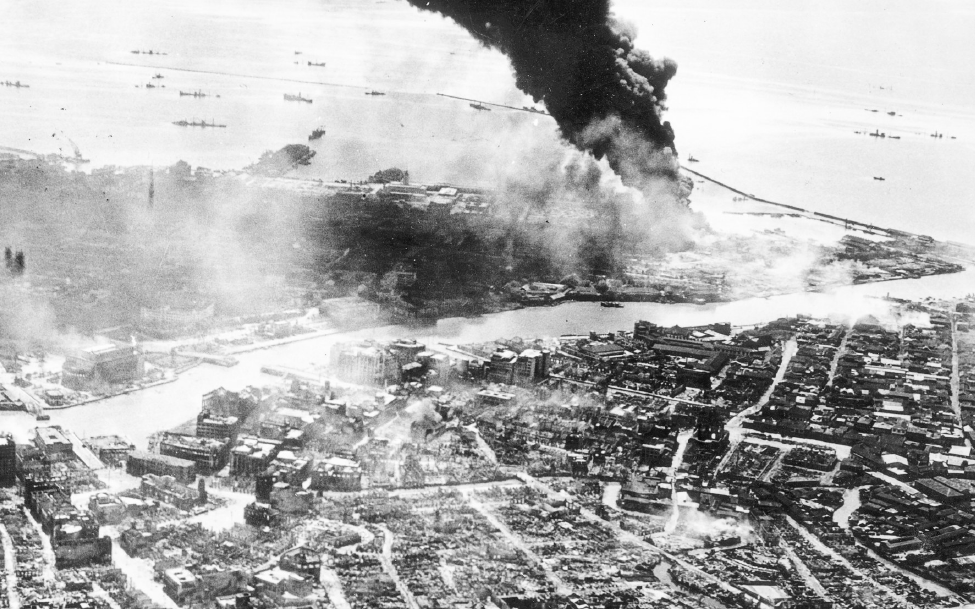
日本南进政策

Search documents
【史海回眸】马尼拉大屠杀,一个月内10万平民丧生
Huan Qiu Shi Bao· 2025-12-25 22:54
Core Viewpoint - The Manila Massacre during World War II resulted in the deaths of over 100,000 civilians, marking a significant historical atrocity that requires remembrance and dialogue to prevent the resurgence of fascism [1][5]. Group 1: Historical Context - The Philippines was occupied by Japan in 1942, leading to the exploitation of local resources for military needs [3]. - The situation for Japan deteriorated in 1944-1945, with significant defeats in battles such as the Mariana and Leyte Gulf, leading to the eventual approach of American forces to Manila [3]. - Manila was considered a strategic location for Japan, serving as a critical point in their "Southern Advance Policy" [3]. Group 2: The Manila Massacre - The Battle of Manila began on February 3, 1945, with Japanese forces resorting to extreme violence against civilians as they faced defeat [4]. - From February 4 to 10, 1945, Japanese troops committed widespread atrocities, including the mass murder of refugees and brutal acts against women and children [4]. - Over the course of the month-long battle, at least 100,000 civilians were killed, averaging more than 3,000 deaths per day [4]. Group 3: International Response - The international community condemned the atrocities of the Manila Massacre, leading to the collection of evidence and the creation of reports on the events [5]. - The Manila War Crimes Trials, initiated by the United States, sought to hold Japanese commanders accountable for their actions, culminating in the execution of General Yamashita [5]. - The Manila Massacre is compared to the Nanjing Massacre, emphasizing the need for global dialogue to remember and learn from these historical events [5].