日本对美投资

Search documents
高市早苗的头上,还悬着一个巨大的麻烦……
Xin Lang Cai Jing· 2026-02-12 15:26
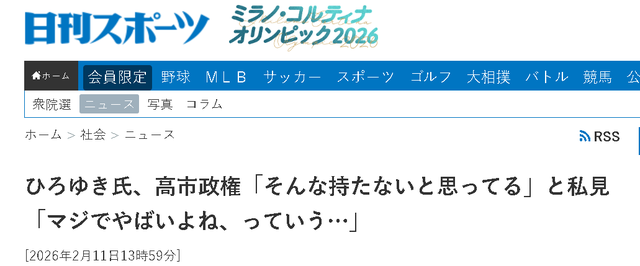
Core Viewpoint - The article discusses concerns regarding the sustainability of Prime Minister Sanna Takashi's government in Japan, particularly in light of her party's recent electoral victory and the challenges posed by economic commitments to the United States [1][3]. Group 1: Political Context - The Liberal Democratic Party (LDP), led by Prime Minister Sanna Takashi, secured a majority in the recent House of Representatives election in Japan [1]. - Influential internet personality Hiroyuki Nishimura, a critic of Takashi's policies, expressed skepticism about the longevity of her administration, suggesting it may not last long [1]. Group 2: Economic Commitments - Nishimura highlighted a significant issue for Takashi's government: a commitment to invest 80 trillion yen in the U.S. as promised to former President Trump [1][3]. - Despite Trump's initial support for Takashi, there is growing dissatisfaction regarding the slow progress of this investment [3]. Group 3: Economic Risks - Nishimura pointed out that Japan's foreign reserves are insufficient to cover the 80 trillion yen investment, implying that Takashi would need to convert yen to dollars, which could lead to a depreciation of the yen [4]. - The potential consequences of this currency exchange include rising import costs for energy, food, and daily goods, leading to worsening inflation [4]. - To combat inflation, the Bank of Japan may need to raise interest rates, which could increase the yield on Japanese government bonds, exacerbating the country's already slow economic growth and rising debt levels [4]. Group 4: Future Outlook - Nishimura warned that if Takashi's policies lead to economic failure, she could face pressure to resign before the next scheduled House election in four years [5]. - Economic experts and media outlets have raised alarms about the risks associated with Takashi's policies, suggesting that her victory could place Japan in a precarious situation [5].

特朗普近期访日,见高市早苗
日经中文网· 2025-10-21 05:41
Group 1 - The core viewpoint of the article highlights President Trump's upcoming visit to Japan and Malaysia, focusing on discussions regarding Japan's defense spending and investment in the U.S. [2][4] - The U.S. and Japan signed a memorandum in September regarding Japan's investment of $550 billion in the U.S., indicating a strengthening economic relationship [4] - Discussions are expected to include Japan's energy imports from Russia, with the U.S. urging Japan to halt these imports, as Russia accounts for 9% of Japan's total LNG imports [4] Group 2 - The article mentions that NATO has set a defense spending guideline of 5% of GDP, while Japan's current target is 2%, which the U.S. finds insufficient [5] - Trump's previous comments suggest that he views the U.S.-Japan security arrangement as one-sided, emphasizing the need for Japan to increase its defense budget [5] - The upcoming ASEAN summit in Malaysia is also noted as part of Trump's itinerary before his visit to Japan [6]