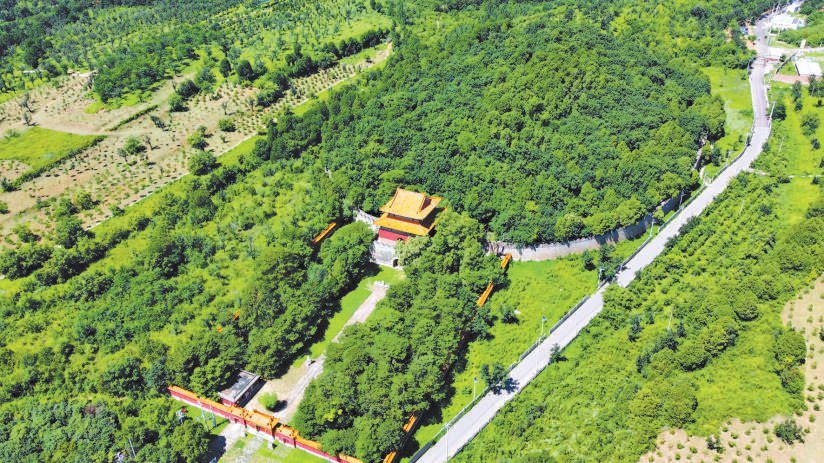
明献陵营建

Search documents
明献陵为何最简朴
Bei Jing Wan Bao· 2025-10-08 06:51
Core Viewpoint - The article discusses the historical context and architectural features of the Ming Dynasty's Xianling, the tomb of Emperor Zhu Gaochi, emphasizing its simplicity and the circumstances surrounding the emperor's death [1][5][13]. Summary by Sections Historical Context - Zhu Gaochi, who reigned for less than nine months, died unexpectedly at the age of less than fifty, leading to various rumors about his death, including poisoning and humiliation by officials [1][2][3]. - The emperor's death is linked to his health issues, including obesity and physical ailments, which may have contributed to his sudden demise [3][5]. Architectural Features - Xianling was constructed rapidly, taking only three months, and was characterized by its frugality, as indicated by Zhu Gaochi's will, which called for a simple burial [5][6]. - The layout of Xianling influenced subsequent tombs, establishing a tradition of simplicity that persisted until the construction of Yongling [5][10]. Design Elements - The main structures of Xianling, such as the Qionghua Hall, were less grand compared to other tombs, with fewer rooms and simpler designs [6][8][9]. - The architectural features, including the absence of elaborate stone carvings and reduced scale of the entrance gates, reflect a shift towards a more modest approach in imperial tomb construction [8][9][11]. Legacy - Zhu Gaochi is remembered as a benevolent ruler, with his policies focused on the welfare of the people, which earned him a positive historical reputation despite his short reign [13][15]. - His legacy continued through his son, Emperor Zhu Zhanji, who upheld similar values of governance, contributing to the "Renxuan Era" known for its focus on public welfare [15].