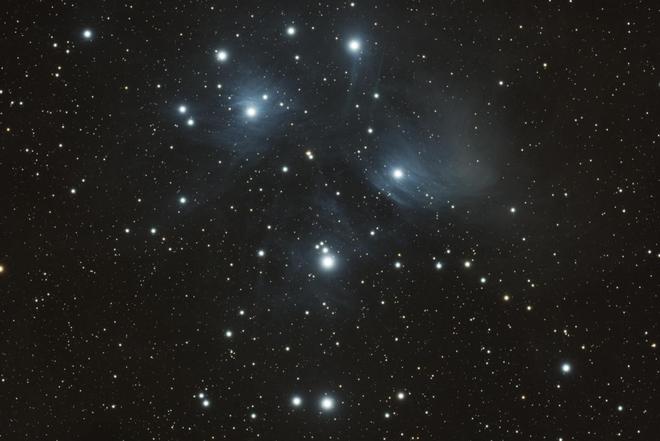
昴星团

Search documents
星空有约丨天象大戏“月掩昴星团”陪你跨年
Xin Hua Wang· 2025-12-29 10:00
Core Viewpoint - The article discusses the astronomical event of the moon covering the Pleiades star cluster on December 31, 2025, which will be visible across China as a unique way to celebrate the New Year [1][6]. Group 1: Event Details - The Pleiades star cluster, located in Taurus, has an overall brightness of approximately 1.6 magnitude, making it easily visible to the naked eye and a favorite among astronomy enthusiasts [2]. - The moon will pass in front of the Pleiades star cluster, temporarily obscuring some of its stars, with this phenomenon occurring between 21:00 and 22:00 on December 31 [6][7]. - The moon phase on December 31 will be a gibbous moon, which means it will be bright enough to obscure the stars of the Pleiades, making it advisable for observers to use telescopes or binoculars for better visibility [7]. Group 2: Observational Conditions - There are four opportunities in 2025 to observe the moon covering the Pleiades, with the best conditions occurring on March 5 and August 16, when the moon is less bright [6]. - The brightness of the moon significantly affects the visibility of the Pleiades, with a fuller moon providing more light that can obscure the stars [6]. - For optimal viewing, it is recommended to find locations with minimal light pollution, such as rural areas, to enhance the experience of this celestial event [7].

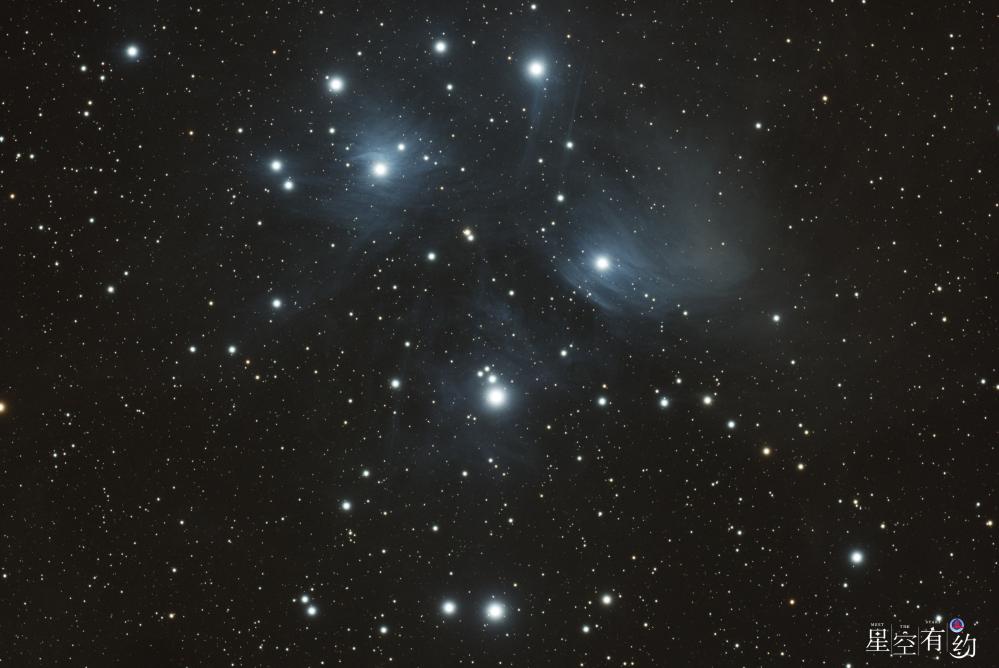
星空有约|天象大戏“月掩昴星团”陪你跨年
Xin Hua She· 2025-12-29 09:30
Core Viewpoint - The article discusses the astronomical event of the Moon covering the Pleiades star cluster on December 31, 2025, which will be visible across China, providing a unique opportunity for public observation and appreciation of celestial phenomena [1][2]. Group 1: Event Details - The Moon will cover the Pleiades star cluster, an event that occurs when the Moon passes in front of the cluster, temporarily obscuring some of its stars [1]. - This event is part of a series of four occurrences in 2025, with the other dates being March 5, August 16, and November 6 [1]. - The visibility of the Pleiades will be affected by the Moon's phase, with the best viewing conditions occurring when the Moon is less bright [1]. Group 2: Observation Recommendations - On December 31, the Moon will be in the waxing gibbous phase, which may hinder visibility due to its brightness [2]. - Observers are advised to use small telescopes or binoculars for better viewing and to find locations with minimal light pollution, such as rural areas [2]. - The event is expected to take place between 21:00 and 22:00, making it accessible for nationwide observation [2].
11月6日上演月掩昴星团,请准备好望远镜!
Xin Hua She· 2025-11-04 07:23
Core Points - The article discusses the lunar occultation of the Pleiades star cluster, providing an opportunity for public observation on November 6 [1][4]. Group 1: Pleiades Star Cluster - The Pleiades star cluster, located in Taurus, is one of the closest and brightest open star clusters, typically visible to the naked eye with six to seven bright stars [2]. - The confirmed number of stars in the Pleiades cluster exceeds one thousand [2]. Group 2: Lunar Occultation Events - The moon's orbit around the Earth, known as the ecliptic, allows for multiple lunar occultations of the Pleiades throughout the year, with four notable occurrences in 2023 [4]. - The specific dates for observable lunar occultations in 2023 are March 5, August 16, November 6, and December 31 [4]. Group 3: Observational Conditions - The visibility of the Pleiades during the lunar occultation is affected by the moon's phase, with smaller moon phases providing better visibility of the stars [8]. - On November 6, the moon will rise above the Pleiades, starting to obscure it around 10 PM, with the event lasting approximately two hours [8].