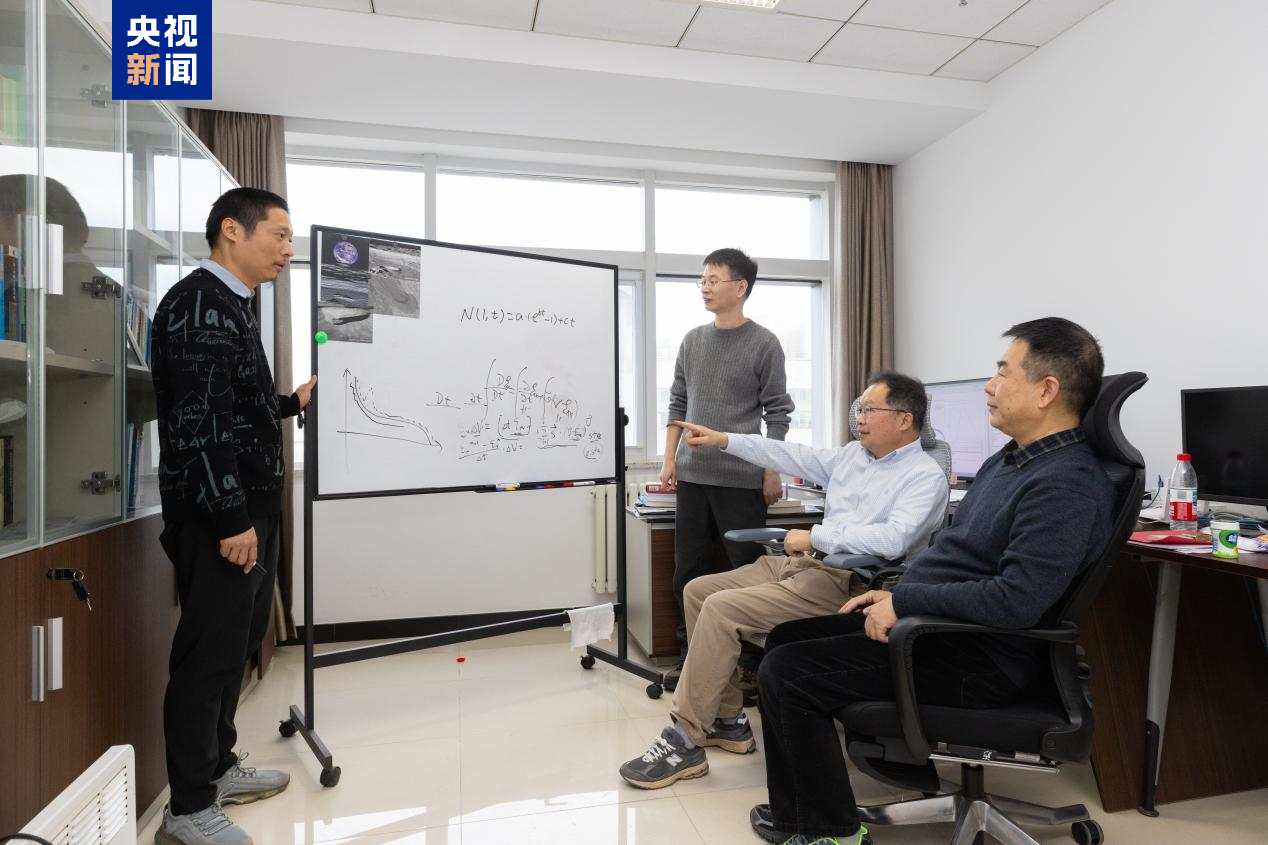
晚期重轰击假说

Search documents
【新华社】嫦娥六号月背样品新研究成果改写月球撞击史
Xin Hua She· 2026-02-09 03:40
Core Viewpoint - Chinese scientists have optimized a decades-old lunar impact history model using samples from the far side of the Moon, confirming that the impact flux on both the near and far sides is essentially consistent, and that the early impact flux shows a smooth decline, which does not support the "Late Heavy Bombardment" hypothesis [1] Group 1 - The research was conducted by scientists from the Institute of Geology and Geophysics and the Aerospace Information Research Institute of the Chinese Academy of Sciences [1] - The study utilized samples from the Chang'e 6 mission along with lunar remote sensing images to revise the long-standing lunar impact crater chronology model [1] - The findings indicate that the impact flux on the Moon's near and far sides is fundamentally similar, challenging previous assumptions about lunar bombardment history [1]

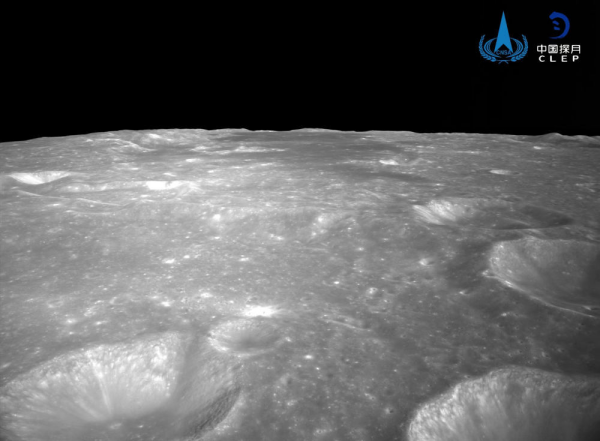
嫦娥六号月背样品新研究成果改写月球撞击史
Huan Qiu Wang Zi Xun· 2026-02-06 12:23
Core Viewpoint - Chinese scientists have optimized a decades-old lunar impact history model using samples from the far side of the Moon, confirming that the impact flux on both the near and far sides is essentially consistent, and that the early impact flux shows a smooth decline, which does not support the "late heavy bombardment" hypothesis [1] Group 1 - The research was conducted by scientists from the Institute of Geology and Geophysics and the Aerospace Information Research Institute of the Chinese Academy of Sciences [1] - The study utilized samples from the Chang'e 6 mission along with lunar remote sensing images to revise the long-standing lunar impact crater chronology model [1] - The findings indicate that the early impact flux on the Moon has a smooth decline, contradicting previous theories regarding a late heavy bombardment [1]
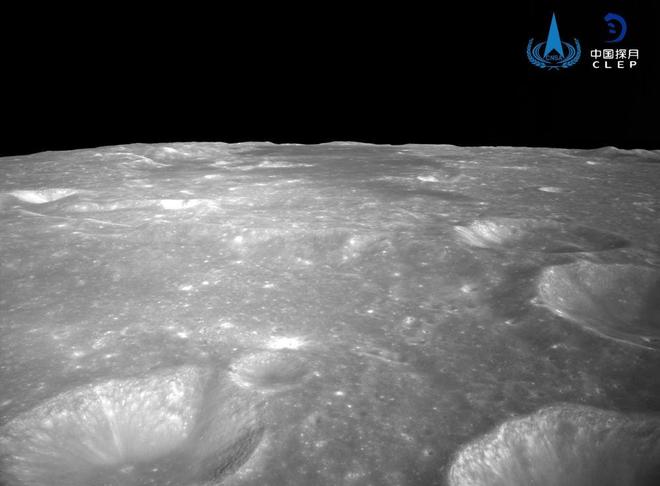
嫦娥六号月背样品最新研究成果 改写月球撞击史
Yang Shi Xin Wen· 2026-02-05 08:23
Core Viewpoint - Chinese scientists have optimized a decades-old lunar impact history model using samples from the far side of the Moon, confirming that the impact flux on both the near and far sides is consistent and that early impact flux shows a smooth decline, contradicting the "late heavy bombardment" hypothesis [1][6]. Group 1: Research Findings - The study published in "Science Advances" indicates that the lunar impact flux is uniform across both sides of the Moon, challenging previous assumptions about differential impact rates [1][6]. - The analysis of samples from the Chang'e 6 mission revealed two significant breakthroughs: a young basalt dated at approximately 2.807 billion years and an ancient rock at 4.25 billion years, providing a more comprehensive timeline for lunar evolution [3][6]. - The new model developed from the Chang'e 6 data refutes two major hypotheses regarding early lunar impacts, suggesting that the impact activity was a smooth decline rather than a chaotic period of heavy bombardment [6]. Group 2: Methodology and Implications - The research utilized lunar samples and remote sensing images to establish a reliable dating model, linking sample ages to impact crater densities [3][6]. - Prior to the Chang'e 6 mission, all lunar dating samples had significant limitations, primarily being sourced from the near side and lacking samples older than 4 billion years, which restricted understanding of the Moon's earliest history [4][6]. - The findings provide a more accurate "time scale" for lunar scientific research, establishing a global impact crater chronology model that enhances the understanding of the Moon's geological history [6].