智能交通系统(ITS)

Search documents
为城市路口道路交通“做规矩”的人
Xin Lang Cai Jing· 2025-12-20 06:42
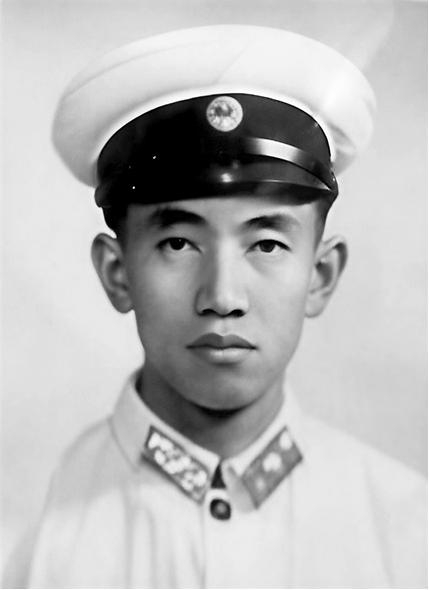
Core Viewpoint - The article highlights the significant contributions of Yang Peikun, a pioneer in China's traffic engineering discipline, emphasizing his role in advancing urban traffic management and signal control systems through practical experience and innovative research. Group 1: Early Life and Education - Yang Peikun was born in February 1932 and graduated from Tongji University in 1953, where he began his academic career [12] - He initially studied civil engineering at Fudan University, later transferring to Shanghai Jiao Tong University, and finally completing his education at Tongji University, where he specialized in road and traffic engineering [15][17] Group 2: Academic Contributions - Yang Peikun was instrumental in establishing the first urban construction department in China at Tongji University in 1956, marking a significant shift in academic focus towards urban traffic studies [18] - He developed the first national textbook on urban road traffic in 1961, which laid the foundation for systematic traffic engineering education in China [13][24] Group 3: Practical Experience and Research - Yang's unique approach involved practical observation as a traffic police officer to resolve theoretical ambiguities in traffic signal control, leading to the development of the "conflict point method" for calculating intersection capacity [20][22] - His research methodology emphasized the importance of grounding theory in practical experience, which became a cornerstone of his academic work [22] Group 4: Establishing Traffic Engineering as a Discipline - In 1978, Yang Peikun established the Traffic Engineering Research Room at Tongji University, the first of its kind in mainland China, which facilitated the development of advanced traffic engineering studies [23][24] - He played a crucial role in creating the first master's, doctoral, and postdoctoral programs in traffic engineering in China, further solidifying the discipline's academic framework [24][25] Group 5: Innovations in Traffic Management - Yang introduced the concept of "new-style intersections" after studying traffic management in the United States, which improved traffic flow efficiency in Chinese cities [27][28] - He authored the national standard for urban road intersection planning, which was published in 2011 and emphasized human-centered design principles [28] Group 6: Advancements in Intelligent Traffic Systems - Yang Peikun led the development of China's first adaptive traffic signal control system, marking a significant shift from reliance on imported technology to domestic innovation [29][30] - His contributions to intelligent transportation systems (ITS) laid the groundwork for future advancements in traffic management and control in China [30] Group 7: Ongoing Influence and Legacy - Even after retirement, Yang continues to contribute to traffic engineering discussions and research, demonstrating his enduring commitment to improving urban traffic systems [31][32] - His life’s work reflects a profound impact on the evolution of traffic engineering in China, transitioning the field from its nascent stages to a robust academic and practical discipline [32]

Ouster(OUST) - 2024 Q4 - Earnings Call Transcript
2025-03-20 23:25
Financial Data and Key Metrics Changes - In Q4 2024, the company generated $30 million in revenue with gross margins of 44%, marking the eighth consecutive quarter of meeting or exceeding guidance [11][26] - For the full year 2024, revenue reached $111 million, a 33% increase year-over-year, with a GAAP gross margin of 36%, up 2,600 basis points from the previous year [23][32] - The company ended the year with $175 million in cash and equivalents and zero debt, maintaining one of the strongest balance sheets in the industry [12][33] Business Line Data and Key Metrics Changes - Approximately 4,800 sensors were shipped in Q4 2024, with a sequential unit growth of 23%, driven by large volume purchases from automotive and robotics customers [26][27] - Software attached bookings grew over 60% in 2024, exceeding a double-digit percentage of total bookings in each quarter [16][17] Market Data and Key Metrics Changes - The company is tapping into the Intelligent Transportation Systems (ITS) market, estimating a demand for over 1 million lidar units across 300,000 signalized intersections in the U.S. [13] - The company is also working with major heavy equipment manufacturers like John Deere to support automation efforts in agriculture and construction [14] Company Strategy and Development Direction - The company aims to scale its software attached business, transform its product portfolio, and continue executing towards profitability in 2025 [35][44] - The focus for 2025 includes capturing more of the $19 billion smart infrastructure market and expanding the use case of the Blue City solution [36][37] Management's Comments on Operating Environment and Future Outlook - Management expressed optimism about the opportunities in high-performance, reliable 3D sensing solutions despite navigating volatility and uncertainty in the current climate [24][25] - The company expects to achieve revenue between $30 million and $32 million in Q1 2025, maintaining a long-term growth framework of 30% to 50% [34][44] Other Important Information - The company successfully executed against its 2024 business priorities, including expanding software solutions and advancing digital lidar hardware [16][19] - The introduction of new features like 3D Zone Monitoring and a cloud-based portal for Ouster Gemini is expected to enhance product usability and expand the addressable market [40][41] Q&A Session Summary Question: Insights on robotaxi and last-mile delivery markets - Management highlighted a resurgence in the robotaxi segment, driven by successful deployments from companies like Waymo, and noted positive trends in last-mile delivery robotics [50][54] Question: Competitive dynamics with China-based suppliers - Management stated that the competitive landscape has not significantly changed, and Ouster has maintained and grown market share while positioning itself as a strong Western provider [58][70] Question: Expected impact of tariffs - Management indicated that there are currently no expected disruptions to the supply chain due to tariffs, and the company is well-capitalized with low capital needs [116][118] Question: Details on backlog and future growth prospects - Management confirmed that the backlog supports continued growth in line with the long-term guidance of 30% to 50% [110][111] Question: Margin profile by vertical - Management noted that all four verticals are margin-positive and that software attached business is expected to enhance overall margin profiles [92][95]