物理AI

Search documents
英伟达搅动L4,自动驾驶开始“二级跳”
3 6 Ke· 2026-04-01 08:16
Core Insights - The article discusses the evolution of autonomous driving technology, highlighting a shift from traditional learning-driven approaches to a new paradigm termed "Physical AI," which focuses on understanding real-world causal relationships and physical laws [2][3] - NVIDIA is leading this transition by launching the DRIVE AV platform and partnering with major automotive companies to accelerate the commercialization of Level 4 autonomous driving by 2026 [1][5] Group 1: Technological Evolution - Autonomous driving has progressed through phases of rule-driven, data-driven, and now learning-driven development, enhancing environmental perception and path planning capabilities [2] - The concept of "Physical AI" emphasizes a system-level reconstruction that allows AI to interact with the physical environment through simulation and causal understanding [2][4] - The new architecture for autonomous driving systems shifts from "perception + large model inference" to "understanding + reasoning + decision-making," enabling better handling of complex traffic scenarios [3][4] Group 2: Commercialization Trends - The investment logic in the autonomous driving sector is transitioning from "vision narrative" to "effect verification," focusing on clear paths to technology implementation and financial returns [5] - There are emerging "hidden gold mines" in the autonomous driving space, particularly in areas like autonomous buses and trucks, which have not been fully explored compared to more competitive segments like Robotaxi [5][6] - Autonomous buses are positioned as a significant opportunity due to their ability to meet high-frequency demand in urban microcirculation and public transport, supported by policy and social value [6][9] Group 3: Market Potential and Applications - The global market for urban buses is projected to reach $432 billion by 2032, with intelligent upgrades creating a substantial market opportunity for autonomous buses [6] - The commercial viability of autonomous buses is enhanced by their application in various scenarios, including tourism, urban public transport, and industrial parks, each with distinct revenue models [7][10] - The integration of autonomous buses into public transport systems is accelerating, with multiple countries incorporating them into their public transport upgrade plans, providing a clear policy framework for commercialization [9][10] Group 4: Future Outlook - The period around 2026 is identified as a critical window for the autonomous driving industry, where the focus will be on companies' self-sustainability and clear commercialization paths [12] - The collaboration between major players like NVIDIA and leading automotive companies indicates a shift towards practical applications of autonomous driving technology, moving from theoretical concepts to real-world implementations [1][12] - The article suggests that the autonomous bus segment, while less glamorous than Robotaxi, is paving the way for sustainable commercialization and broader acceptance of autonomous driving technology [12]


600万无人配送订单,43家硬科技企业,美团尝试构建AI的“物理底座” | 电厂
Xin Lang Cai Jing· 2026-03-31 12:53
Core Insights - The technology sector is shifting focus from "token economics" to "AI infrastructure" as highlighted by NVIDIA's founder Jensen Huang, who emphasizes the growing demand for computing power and the emergence of "physical AI" as the next wave of artificial intelligence [1][14] - Meituan's CEO Wang Xing asserts that the digitalization of the physical world will be a crucial foundation for AI, positioning Meituan as a connector between offline business and the online world [2][12] Investment Strategy - Meituan has invested in over 40 hard-tech companies across five core sectors, including foundational computing, large models, embodied intelligence, smart hardware, and autonomous driving, with 28 of these companies becoming unicorns and 7 going public [5][17] - The company began its strategic investments in hard technology as early as 2018, acquiring a drone company and shifting its focus from consumer internet to hard tech [5][18] AI Integration - Meituan views AI's value as extending beyond generating intelligent dialogue to executing real-world tasks, emphasizing the importance of integrating AI into the physical world [4][16] - The company has maintained a high investment ratio in hard technology, reaching 64% in 2022, and has consistently kept this figure above 50% in subsequent years [18] Unique Positioning - Meituan's extensive network, covering over 2,800 cities and counties in China, provides a unique training ground for AI, enabling the collection of vast amounts of local life data [7][20] - The company has established strategic partnerships with firms like Galaxy General to develop robotic solutions for various sectors, showcasing its ability to leverage real-world scenarios for AI training [21][25] Technological Advancements - Meituan's investment in companies like Hesai Technology has led to the integration of advanced technologies such as solid-state LiDAR into its logistics operations, enhancing the capabilities of its delivery drones [22][24] - The company has successfully completed millions of orders using its autonomous vehicles and drones, demonstrating the practical application of its technological investments [25][27] Future Outlook - Meituan's strategy is aggressive, focusing on enhancing its AI capabilities to help businesses understand and transform the physical world, thereby creating a robust foundation for AI to thrive [12][27] - The company aims to build a comprehensive AI infrastructure that allows for real-world task execution, positioning itself as a leader in the next technological revolution [1][27]


冲刺“全球空间智能第一股” “杭州六小龙”之一群核科技通过港交所聆讯
Xin Lang Cai Jing· 2026-03-31 12:32
Core Viewpoint - Manycore Tech Inc. is set to become the first global company in the space intelligence sector to go public, marking a significant milestone for the tech industry in Hangzhou [2][3] Financial Performance - The company is projected to achieve a revenue of approximately 820 million yuan in 2025, with a gross margin rising to 82.2% [2][5] - Adjusted net profit for 2025 is expected to be 57.127 million yuan [2][6] - The net current liabilities are anticipated to increase from 3.806 billion yuan in 2024 to 4.252 billion yuan in 2025, with a significant portion being redeemable liabilities that will convert to equity post-IPO [6] Business Model and Strategy - Manycore Tech operates a subscription model, generating revenue primarily from software subscriptions for both enterprise and individual clients, with over 95% of revenue coming from residential, office, retail, and commercial projects [7] - The company plans to use the net proceeds from the IPO to implement international expansion strategies, enhance existing product functionalities, and invest in core technologies and infrastructure [7] Industry Trends - The space intelligence and world modeling sectors are viewed as the next frontier for AI, with Manycore Tech positioned to capitalize on this trend [2][3] - The company is developing a new generation of space intelligence solutions, including the SpatialVerse platform and the upcoming Aholo open platform, which will integrate various capabilities of space intelligence [3][4] Research and Development - Manycore Tech is increasing its investment in AI research and development, with a total of over 1 billion yuan allocated from 2023 to 2025 [7] - The company is focusing on vertical AI solutions, with a notable product being the 3D AI design tool "Cool Home E-commerce Studio," which is expected to see a 123% revenue growth in 2025 [7]


英伟达(NVDA):从AI芯片到算力工厂,生态壁垒持续巩固
CAITONG SECURITIES· 2026-03-31 10:55
Investment Rating - The report assigns an "Overweight" rating for the company for the first time [2]. Core Insights - NVIDIA is a global leader in AI chip market, with a clear product roadmap and a strong technological advantage over competitors [5]. - The company is deepening its software capabilities, enhancing its ecosystem and reducing inference costs through various initiatives [5]. - NVIDIA's diversified product offerings and strategic positioning in AI infrastructure are expected to drive significant revenue growth in the coming years [5]. Financial Performance and Growth Drivers - The company is projected to achieve revenues of $215.9 billion in FY26, with a 90% contribution from data center business [4][55]. - The expected revenue growth rates are 65% for FY26 and 66% for FY27, with net profit growth rates of 65% and 64% respectively [4]. - The non-GAAP gross margin is expected to remain high at 71.3% in FY26, reflecting strong pricing power [5][55]. Strategic Layout and Ecosystem Expansion - NVIDIA is transitioning from a chip supplier to an AI infrastructure provider, with a focus on AI factories and physical AI applications [10][71]. - The company is leveraging its CUDA ecosystem to maintain a competitive edge and enhance developer efficiency [42][48]. - The global data center capital expenditure is expected to exceed $1 trillion by 2028, with NVIDIA positioned to benefit significantly from this trend [5][62]. Product and Technology Development - The company is set to launch the Rubin architecture in 2026, which is expected to significantly enhance performance metrics [28][29]. - NVIDIA's product matrix includes offerings across gaming, data centers, automotive, and professional visualization, showcasing its comprehensive market coverage [14][16]. - The integration of Groq's technology is aimed at enhancing low-latency inference capabilities, further solidifying NVIDIA's market position [38][41].
2700GB高质量数据,训出空间智能SOTA,背后秘诀全栈开源
量子位· 2026-03-31 03:06
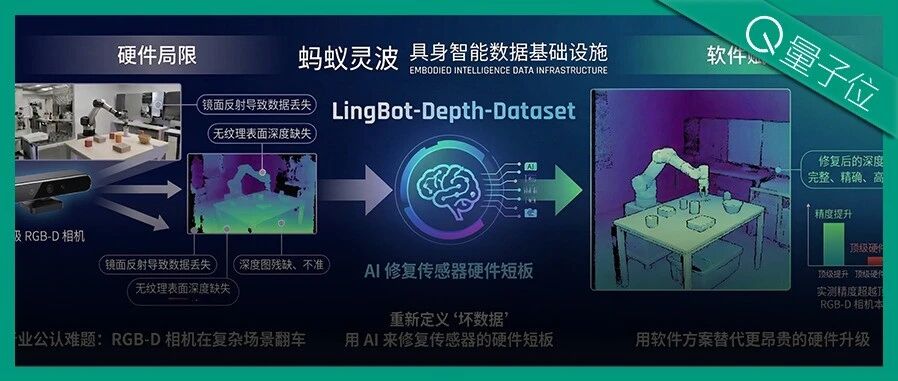
Core Viewpoint - The article emphasizes that the limitation of spatial intelligence in robotics is primarily due to insufficient data, which affects the generalization ability of models, leading to reliance on hardware solutions [1][2]. Group 1: Data Challenges in Robotics - The lack of reliable data sources has historically forced the industry to compensate by enhancing hardware capabilities, particularly in the use of RGB-D cameras for spatial perception [3][4]. - RGB-D cameras, while popular, face significant challenges in accurately perceiving environments, especially in the presence of reflective or transparent surfaces, which can lead to erroneous data [5][6][9]. Group 2: Introduction of LingBot-Depth-Dataset - Ant Group's LingBot-Depth-Dataset has been introduced as a solution to the data scarcity issue, comprising 2.71TB of data with 3 million pairs of labeled RGB-D data, including real and synthetic data from various environments [11][13][20]. - The dataset's diverse data distribution, collected from multiple depth cameras, enhances its applicability for training models in different scenarios, thus improving generalization [18][19]. Group 3: Advancements in Spatial Intelligence - The deployment of LingBot-Depth has enabled robots to effectively grasp transparent and reflective objects, a task previously deemed challenging [22]. - Following this, Ant Group has released additional models like LingBot-VLA and LingBot-World, which integrate visual, linguistic, and action capabilities, further advancing the field of embodied intelligence [24][25][28]. Group 4: Software vs. Hardware in AI Development - The article highlights a shift in focus within the industry towards prioritizing data and algorithm architecture over merely increasing the number and cost of sensors, as seen in the autonomous driving sector [30][31]. - This approach suggests that enhancing spatial intelligence through software methods can lead to more effective and cost-efficient solutions in robotics, aligning with the broader trend of prioritizing data-driven advancements [29][31].
海淀AI,集体开弓:少年极客、中年创客与ICU归来者
量子位· 2026-03-29 00:51
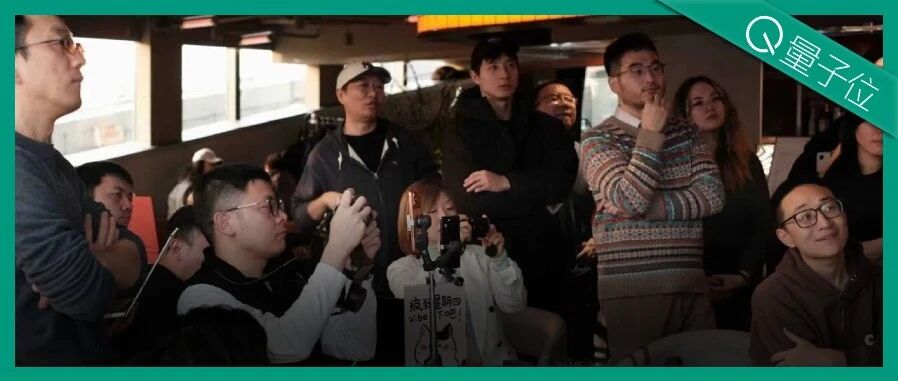
Core Viewpoint - The article highlights the vibrant development of the AI industry in Haidian, Beijing, particularly focusing on the AI Origin Community and its role in fostering innovation and entrepreneurship in the sector [2][6][10]. Group 1: AI Origin Community Development - The AI Origin Community was established in a 3 square kilometer area, with the East Rising Building renamed as the Origin Building, serving as a hub for AI talent and innovation [13][9]. - The community aims to attract AI-related enterprises by offering financial incentives, such as a "5+5" subsidy program, which has successfully drawn 115 AI companies to register [17][10]. - The transformation of the East Rising Building includes modern facilities like AI exhibition halls and collaborative spaces, enhancing the overall quality of the environment for startups [14][12]. Group 2: Entrepreneurial Stories - The article features the journey of entrepreneurs like Song Chongguo, founder of Mita Vision, who received support from local authorities and participated in community events to grow his AI startup focused on spatial intelligent interaction technology [20][18]. - Another entrepreneur, Liu Binxin, founded Beijing Xinying Technology, focusing on AI emotional companionship, and emphasized the importance of Haidian's supportive policies and talent density for his business [42][43]. - Both entrepreneurs faced challenges typical of startups but benefited from the resources and networking opportunities provided by the AI Origin Community [25][27]. Group 3: Academic Contributions - The article discusses the contributions of scholars like Jing Xiaojie, who is involved in cutting-edge AI research and has chosen to work in Haidian due to its conducive environment for innovation and collaboration [56][70]. - Jing's research focuses on World Models, aiming to enhance AI's understanding of the world through multi-modal data, reflecting the region's emphasis on advanced AI research [57][59]. - The talent pool in Haidian has reached 90,000, surpassing that of Silicon Valley and other major tech hubs, indicating its leading position in AI talent concentration [70].
人形机器人行业周报20260322:优必选与西门子签署战略协议,多家企业连获融资-20260328
Guolian Minsheng Securities· 2026-03-28 15:28
Investment Rating - The report suggests a focus on five key investment directions within the humanoid robotics industry, emphasizing opportunities for companies that can achieve revenue and profit realization first [4][23]. Core Insights - The humanoid robotics index experienced a decline of 5.87% from March 16 to March 20, while the Shanghai and Shenzhen 300 index fell by 2.19%. Year-to-date, the humanoid robotics index is down 5.58% [4][7]. - A strategic cooperation framework was signed between UBTECH and Siemens, aimed at enhancing the digitalization of production processes for humanoid robots [12]. - Huang Renxun announced deep collaborations with global robotics leaders at GTC 2026, focusing on the large-scale deployment of physical AI in various sectors [15]. - The Beijing Humanoid Robotics Innovation Center delivered 15 general-purpose robots to several universities and partners, promoting technology innovation [16]. Summary by Sections Market Overview - The humanoid robotics index's trading volume was 10,410 billion, a decrease of 7.81% compared to the previous week [4][7]. Industry Dynamics - UBTECH's partnership with Siemens aims to enhance production efficiency and product quality, supporting the goal of achieving a production capacity of 10,000 industrial humanoid robots [12]. - The collaboration with NVIDIA focuses on deploying physical AI in real-world applications, enhancing precision operations in various industries [15]. - The delivery of robots to educational institutions aims to foster collaboration between academia and industry [16]. Financing Dynamics - Digua Robotics completed a $120 million B1 round of financing, with total financing reaching $220 million, aimed at enhancing its technology base and accelerating multi-modal intelligent model development [20]. - Qingtian Rental announced a significant angel round financing, focusing on commercializing robot leasing services across various sectors [21]. - Ruisi Zhixin secured several hundred million in B+ round financing to advance AI visual sensor technology for robotics and autonomous driving applications [22]. Investment Recommendations - Emphasis on domestic supply chain opportunities as companies progress towards IPOs and scale production [23]. - Focus on hardware with cross-scenario capabilities, as diverse applications require adaptable solutions [23]. - Attention to the rapid iteration of robot software models and the demand for high-quality sensory inputs [23]. - The military and special-purpose robotic dog sectors are expected to see increased demand due to evolving security needs [24]. - The AMR sector is projected to grow significantly, with a focus on companies that possess algorithmic and core component advantages [25].
小鹏汽车改名,何小鹏称“在物理AI征途上把梦想变现实”
凤凰网财经· 2026-03-28 10:24
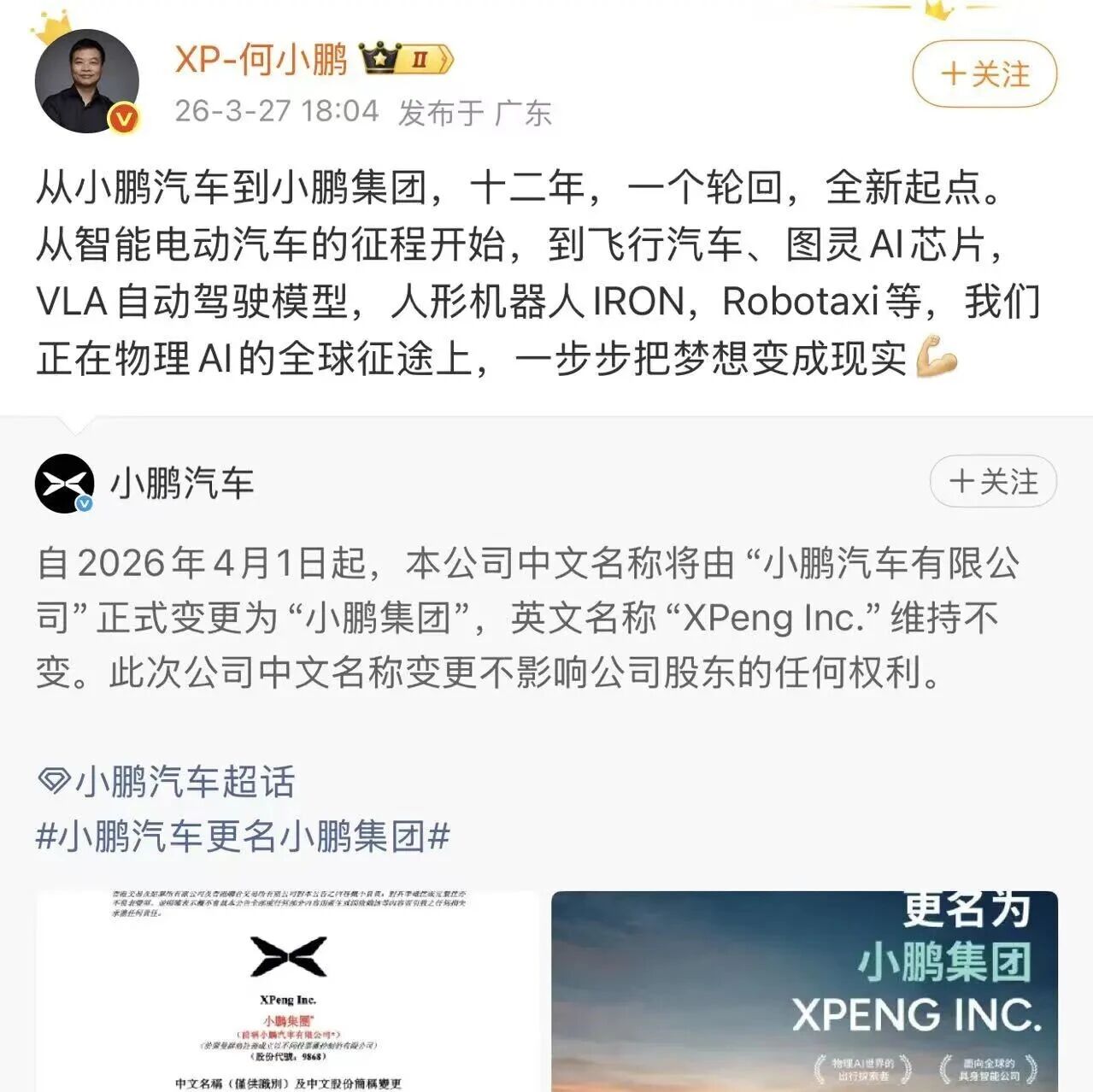
Group 1 - The core viewpoint of XPeng Motors is the rebranding from "XPeng Motors Limited" to "XPeng Inc." starting April 1, 2026, marking a new beginning for the company after twelve years of development in the smart electric vehicle sector [1] - XPeng's chairman and CEO, He Xiaopeng, emphasized the company's journey from smart electric vehicles to advancements in flying cars, AI chips, autonomous driving models, humanoid robots, and Robotaxi, indicating a commitment to turning ambitious dreams into reality [1]

迪士尼“雪宝”机器人灵动步态的核心动力,是这家公司的关节模组
机器人大讲堂· 2026-03-27 13:07
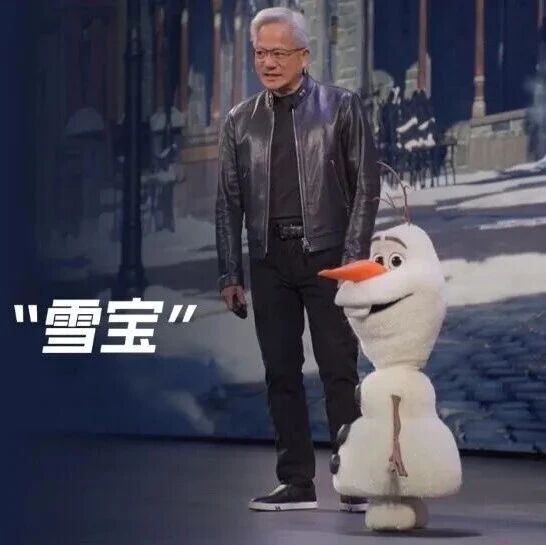
Core Viewpoint - The article highlights the advancements in physical AI showcased by Disney's robot Olaf at NVIDIA GTC 2026, emphasizing the collaboration with Unitree Technology for the robot's core driving system, marking a significant step towards the era of physical AI. Group 1: Robot Design and Structure - Olaf's robot version maintains the character's animated structure with a large head and slender neck, featuring a unique "floating gait" achieved through an asymmetrical leg design to address movement interference in a compact space [5]. - The robot weighs 14.9 kg and utilizes Unitree's high-performance motors, specifically the Unitree 8010-6 and Unitree 4010-25, to enable its distinctive movement [7]. Group 2: Motor Functionality and Control - Each leg of Olaf's robot is equipped with three degrees of freedom, allowing for hip rotation, knee movement, and foot extension, supported by Unitree motors that provide necessary torque for asymmetric walking [7]. - The neck motor, due to the robot's structural design, requires high torque output and rapid response, with the Unitree 4010-25 motor ensuring real-time expression control [7]. Group 3: Thermal Management and Noise Reduction - The outer fabric covering Olaf limits heat dissipation, prompting the research team to integrate real-time temperature feedback from Unitree motors into a reinforcement learning control strategy to maintain power stability during performances [9]. - The collaboration has led to a significant reduction in walking noise from 82 decibels to 64 decibels through advanced torque control and reinforcement learning algorithms [12]. Group 4: Historical Context and Future Implications - Unitree motors have been consistently featured in Disney's robotics projects, including the BD-X robot showcased in previous NVIDIA GTC events, indicating a long-term partnership in developing advanced robotic solutions [14]. - The evolution of physical AI and embodied intelligence technologies is increasing demands for hardware integration, response speed, and control precision, positioning Unitree as a key player in the global robotics development landscape [17].
独家 | 3个月融3轮,2026“物理AI”黑马诞生
投中网· 2026-03-27 02:30
Core Insights - The article discusses the emergence of DeepCybo, a company in the embodied intelligence sector, which has attracted over 60 investment institutions in just three weeks, indicating strong market interest and potential for growth [4][8]. - DeepCybo has successfully raised several rounds of financing, totaling several hundred million yuan, positioning itself as a key player in the embodied intelligence market for 2026 [4][8]. - The company has launched its new model, PhysBrain 1.0, which utilizes a "human-first perspective" data approach and has achieved state-of-the-art results in international evaluations [4][8]. Company Overview - DeepCybo is the first embodied intelligence enterprise incubated by Beijing Zhongguancun Academy and Zhongguancun Artificial Intelligence Research Institute, focusing on a unique "human-first perspective" technology route [4][8]. - The company has built a comprehensive data processing pipeline, accumulating approximately 300,000 hours of human real data and 100,000 hours of high-quality multimodal data in less than three months [8][12]. Technology and Innovation - The "human-first perspective" approach is not only a strategic direction for DeepCybo but also aligns with NVIDIA's recent focus on embodied intelligence, addressing industry challenges such as data scarcity and generalization [6][9]. - DeepCybo's PhysBrain 1.0 model demonstrates remarkable flexibility and adaptability, allowing robots to learn and adjust strategies in real-time, showcasing a significant advancement over traditional methods [11][18]. Team and Expertise - The founding team of DeepCybo consists of top experts in large models and practical embodied intelligence, including Chen Kai, who has extensive experience in AI and has led significant projects in the field [12][13]. - The team includes a diverse group of PhD graduates from leading institutions, contributing to a robust research and development environment that supports the company's innovative goals [17][18]. Market Position and Future Goals - DeepCybo aims to create a Chinese version of Generalist AI, focusing on building a general base model that is tailored to local industries, recognizing the importance of high-quality annotated data [15][16]. - The company is positioned to leverage its early advancements in the "human-first perspective" approach to gain a competitive edge in the rapidly evolving field of embodied intelligence [9][15].