智能体互联网(Internet of Agents)

Search documents
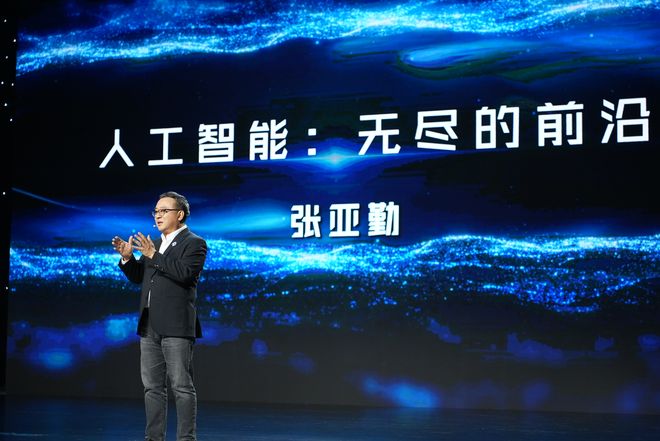
人工智能系列谈丨张亚勤:智能体AI如何影响人工智能发展的下一程?
Xin Hua She· 2025-12-12 06:52
Core Insights - The development of artificial intelligence (AI) is undergoing a profound paradigm shift, transitioning from mere technological breakthroughs to a new stage of deep industry integration and collaborative governance [3] - AI is acting as a core driving force, rapidly reconstructing productivity and production relationships while promoting deep integration across the physical, digital, and biological worlds [3][4] Industry Trends - The emergence of "Agentic AI" marks a new era where intelligent agents will possess enhanced goal-oriented capabilities, autonomous decision-making, and real-time interaction with their environments, with key performance indicators expected to grow exponentially [4] - The concept of the "Internet of Agents" will evolve, shifting the focus from "person-to-person" interactions to "agent-to-agent" interactions, potentially transforming various sectors such as finance, healthcare, and scientific research [5] Technological Development - AI is categorized into three levels: "Information Intelligence," which is close to achieving AGI within 3-4 years; "Physical Intelligence," expected to see breakthroughs in 5-10 years; and "Biological Intelligence," which may take 15-20 years to develop [6] - Achieving AGI requires new architectures and paradigms, including enhanced memory, evolutionary capabilities, and reasoning abilities to understand physical and biological worlds [6] Risk and Governance - The rise of AI capabilities is accompanied by increasing potential risks, necessitating global cooperation to address challenges such as malicious use in CBRN fields and safety hazards in autonomous systems [7][8] - The governance mechanisms are lagging behind technological advancements, highlighting the need for an efficient and inclusive governance system [7] Industry Restructuring - AI is fundamentally rewriting industry structures and business models, with significant impacts observed in sectors like energy, automotive, manufacturing, and healthcare [9] - Large enterprises leverage data and resources to develop large models, while small and medium-sized enterprises often utilize these models to solve real-world problems [9] China's AI Development Path - China is following a unique AI development path focused on optimizing computing power and model efficiency, with innovations like open-source models reducing entry barriers and breaking foreign monopolies [10][11] - Chinese AI models have reached the global first tier, with significant advancements in the "AI + application" domain, positioning China as a key player alongside the U.S. in the global AI landscape [11] Future Outlook - The transformation from generative intelligence to agentic leaps signifies an ongoing revolution in AI, reshaping economic forms and societal landscapes [12] - Emphasizing efficient, new architectures and open-source technology, while deepening vertical application scenarios, is crucial for China's competitive edge in the global AI arena [12]