月球水资源分布和演化

Search documents
【中国青年报】嫦娥六号月壤新成果 或能解释月球水来源
Zhong Guo Qing Nian Bao· 2025-10-22 03:28
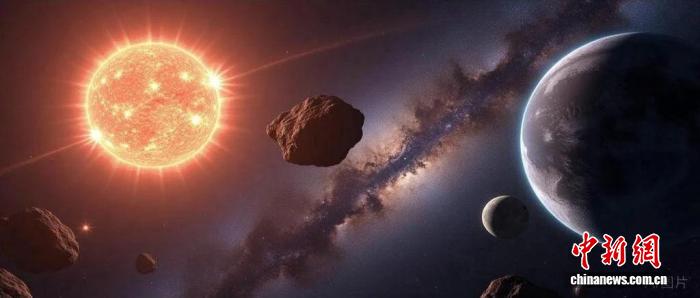
Core Insights - The research published by the Guangzhou Institute of Geochemistry of the Chinese Academy of Sciences on the Chang'e 6 lunar soil samples has provided new insights into the material migration mechanisms within the inner solar system and has opened new directions for future studies on lunar water resource distribution and evolution [1][2] Group 1: Research Findings - The research team, guided by Academician Xu Yigang and Researcher Lin Mang, identified impact residues from CI-type carbonaceous chondrites through systematic petrographic analysis and studies of olivine trace elements and oxygen isotopic compositions [1] - The identified fragments are products of the CI-type carbonaceous chondrite parent body impacting the lunar surface, melting, and then rapidly crystallizing [1] - The study established a systematic method for identifying extraterrestrial materials in meteorite samples [1] Group 2: Implications for Lunar Studies - The findings suggest that the previously detected water with positive oxygen isotopic characteristics in lunar samples is likely contributed by impacts from these types of chondrites, providing significant implications for future research on lunar water resources [2] - The research indicates that materials from the asteroid belt can migrate into the inner solar system, which is crucial for explaining the sources of water on the lunar surface [2]

【经济日报】嫦娥六号月壤中发现“天外信使”
Jing Ji Ri Bao· 2025-10-22 03:28
Core Insights - The research team identified impact residues from carbonaceous chondrites in lunar soil samples collected by the Chang'e 6 mission, enhancing understanding of planetary formation and evolution [1] Group 1: Research Findings - The study established a systematic method for identifying extraterrestrial samples containing meteoritic materials [1] - The identified fragments are believed to be products of carbonaceous chondrite parent bodies impacting the lunar surface, resulting in rapid cooling and crystallization after melting [1] Group 2: Implications - This research updates the understanding of material migration mechanisms within the inner solar system [1] - It provides new directions for future studies on the distribution and evolution of lunar water resources [1]
【中国新闻网】嫦娥六号月壤发现罕见陨石撞击残留 刷新太阳系物质迁移理论
Zhong Guo Xin Wen Wang· 2025-10-21 03:11
Core Insights - Chinese scientists have made significant progress in analyzing lunar soil samples from the Chang'e 6 mission, identifying rare impact remnants from CI-type carbonaceous chondrites [1][5] - The research establishes a systematic method for identifying extraterrestrial materials in samples, enhancing theories on material migration in the solar system and providing new directions for studying lunar water resources [1][6] Research Findings - The research team from the Guangzhou Institute of Geochemistry of the Chinese Academy of Sciences conducted detailed analyses of 2 grams of lunar samples, leading to the identification of impact remnants from CI-type carbonaceous chondrites [1][5] - CI-type chondrites are known for their volatile components, including water and organic materials, and are primarily found in the outer solar system [5] - The study indicates that the proportion of CI-type chondrites on the lunar surface is significantly higher than on Earth, suggesting that the contribution of carbonaceous chondrites to the Earth-Moon system's impact history may have been underestimated [5] Implications - The findings suggest that materials from the asteroid belt can migrate into the inner solar system, which has important implications for understanding the sources of water on the Moon [6] - The research proposes that previously detected water with positive oxygen isotopic characteristics in lunar samples may likely originate from impacts by CI-type chondrites [6]
【科技日报】嫦娥六号样品发现罕见“天外信使”
Ke Ji Ri Bao· 2025-10-21 03:11
Core Insights - The research from the Chang'e 6 lunar soil samples provides crucial clues about the origin of water on the Moon and confirms that asteroid fragments can travel from the outer solar system to the inner solar system [1][2] Group 1: Research Findings - A team led by Academician Xu Yigang and Researcher Lin Mang from the Guangzhou Institute of Geochemistry successfully identified impact remnants of CI-type carbonaceous chondrites in the Chang'e 6 lunar soil samples [2] - The study established a new method for effectively identifying extraterrestrial samples containing meteorite materials [2] - CI-type chondrites, which are rich in water and organic materials, are primarily found in the outer solar system, and their presence on the Moon is significantly higher than on Earth, suggesting that the contribution of carbonaceous chondrites to the Earth-Moon system may have been severely underestimated [2] Group 2: Implications - This discovery not only confirms the migration of materials from the outer solar system to the inner solar system but also updates the understanding of the mechanisms of material movement within the solar system [2] - The findings provide new directions for future research on the distribution and evolution of water resources on the Moon, indicating that previously detected water features in lunar samples may originate from impacts by these types of meteorites [2]
嫦娥六号样品发现罕见“天外信使”
Ke Ji Ri Bao· 2025-10-21 01:21
Core Insights - The research from China's Chang'e 6 lunar samples provides crucial clues about the origin of water on the Moon and the ability of outer solar system materials to travel to the inner solar system [1][2] Group 1: Research Findings - The team led by Academician Xu Yigang and Researcher Lin Mang from the Guangzhou Institute of Geochemistry successfully identified impact remnants of CI carbonaceous chondrites in the Chang'e 6 lunar samples [2] - The identified fragments are products formed from the melting and rapid cooling of the parent body of these chondrites after impacting the lunar surface [2] - A new method for effectively identifying extraterrestrial samples containing meteoritic materials was established [2] Group 2: Implications of Findings - CI chondrites, which are rich in water and organic materials, are primarily found in the outer solar system, and their presence on the Moon is significantly higher than on Earth [2] - This suggests that the contribution of carbonaceous chondrites to the Earth-Moon system may have been severely underestimated [2] - The findings confirm that materials from the outer solar system can migrate inward, providing new directions for future research on lunar water resources and their evolution [2]
嫦娥六号月壤发现罕见陨石撞击残留 刷新太阳系物质迁移理论
Zhong Guo Xin Wen Wang· 2025-10-20 23:25
Core Insights - Chinese scientists have made a significant discovery regarding lunar soil samples from the Chang'e 6 mission, identifying rare impact remnants from CI-type carbonaceous chondrites, which enhances the understanding of material migration in the solar system [1][3][6] Group 1: Research Findings - The research team from the Guangzhou Institute of Geochemistry established a systematic method for identifying extraterrestrial materials in lunar samples, which not only updates theories on solar system material migration but also provides new directions for studying lunar water resources [1][3] - The identified remnants are believed to be products of CI-type carbonaceous chondrite parent bodies that impacted the lunar surface, melted, and then rapidly crystallized [5][6] - CI-type chondrites, which are rich in water and organic volatile components, are found to have a higher proportion on the lunar surface compared to Earth, suggesting that the contribution of carbonaceous chondrites to the Earth-Moon system's impact history may be significantly underestimated [6][7] Group 2: Implications - The findings indicate that materials from the asteroid belt can migrate inward to the inner solar system, which is crucial for explaining the sources of water on the lunar surface [7] - The research suggests that previously detected water with positive oxygen isotope characteristics in lunar samples may likely originate from impacts by CI-type chondrites [7]