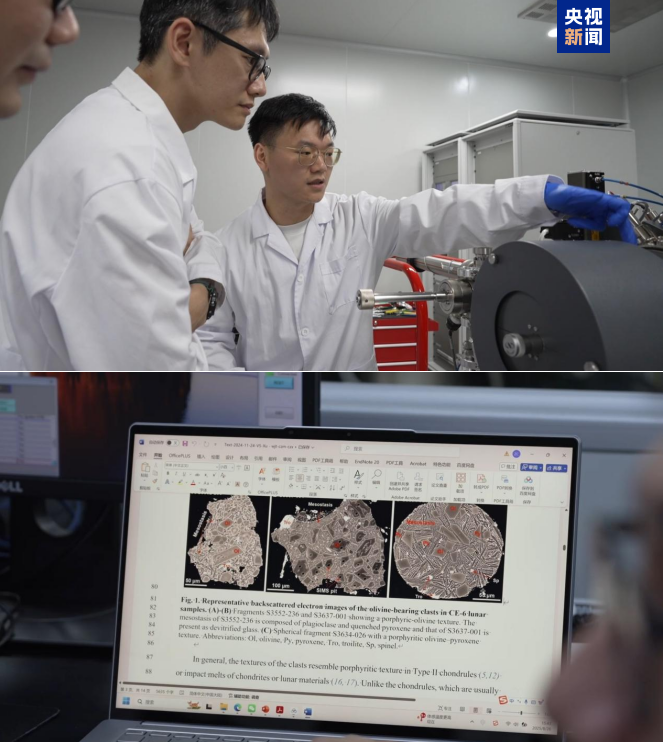
月球水来源

Search documents
【中国青年报】嫦娥六号月壤新成果 或能解释月球水来源
Zhong Guo Qing Nian Bao· 2025-10-22 03:28
Core Insights - The research published by the Guangzhou Institute of Geochemistry of the Chinese Academy of Sciences on the Chang'e 6 lunar soil samples has provided new insights into the material migration mechanisms within the inner solar system and has opened new directions for future studies on lunar water resource distribution and evolution [1][2] Group 1: Research Findings - The research team, guided by Academician Xu Yigang and Researcher Lin Mang, identified impact residues from CI-type carbonaceous chondrites through systematic petrographic analysis and studies of olivine trace elements and oxygen isotopic compositions [1] - The identified fragments are products of the CI-type carbonaceous chondrite parent body impacting the lunar surface, melting, and then rapidly crystallizing [1] - The study established a systematic method for identifying extraterrestrial materials in meteorite samples [1] Group 2: Implications for Lunar Studies - The findings suggest that the previously detected water with positive oxygen isotopic characteristics in lunar samples is likely contributed by impacts from these types of chondrites, providing significant implications for future research on lunar water resources [2] - The research indicates that materials from the asteroid belt can migrate into the inner solar system, which is crucial for explaining the sources of water on the lunar surface [2]

科学与健康丨月球水从何而来?嫦娥六号月壤发现新线索
Xin Hua She· 2025-10-22 00:27
Core Insights - The recent findings from China's Chang'e 6 mission provide new clues about the origin of water on the Moon, suggesting that it may come from impacts by CI carbonaceous chondrites [1][3] Group 1: Research Findings - Researchers from the Guangzhou Institute of Geochemistry identified impact residues from CI carbonaceous chondrites in a 2-gram lunar soil sample [1][4] - The study indicates that the water detected in lunar samples likely originates from these types of meteorite impacts, reshaping the understanding of lunar water sources [3][4] Group 2: Significance of CI Carbonaceous Chondrites - CI carbonaceous chondrites are known for their high water and organic material content, and their presence on the Moon is more significant than on Earth due to the lack of atmospheric and geological disturbances [2][3] - The findings confirm that these meteorites can reach the Earth-Moon system, providing critical evidence for the source of lunar water [3] Group 3: Methodology and Scientific Rigor - The research team demonstrated meticulous scientific methods by identifying the remnants of rare meteorites from a small lunar sample, showcasing China's capabilities in micro-analysis [4] - The study establishes a systematic approach for accurately identifying meteorite materials in extraterrestrial samples, laying the groundwork for future research [4]
月球水从何而来?嫦娥六号月壤发现新线索
Xin Hua She· 2025-10-22 00:26
Core Insights - The recent findings from China's Chang'e 6 lunar mission provide new clues about the origin of water on the Moon, suggesting that it may come from impacts by CI carbonaceous chondrites [1][3] - The research, led by a team from the Guangzhou Institute of Geochemistry, was published in the Proceedings of the National Academy of Sciences [1] Group 1: Lunar Water Source - The analysis of 2 grams of lunar soil revealed remnants from CI carbonaceous chondrites, indicating that these meteorites may have contributed to the water detected on the Moon [1][3] - CI carbonaceous chondrites are known for their high water and organic material content, and their presence on the Moon is believed to be more significant than on Earth [3] Group 2: Scientific Significance - This discovery provides critical evidence that these meteorites can reach the Earth-Moon system, enhancing understanding of lunar water sources [3] - The findings suggest that meteorite impacts not only shape the Moon's surface but also deliver valuable water and organic materials, guiding future research on lunar water distribution and evolution [3] Group 3: Research Methodology - The research team demonstrated meticulous scientific rigor by identifying the impact remnants from a mere 2 grams of lunar soil, showcasing advanced analytical techniques [4] - The study established a systematic method for accurately identifying meteorite materials in extraterrestrial samples, laying a foundation for future investigations [4] Group 4: Broader Implications - The Chang'e 6 mission continues to yield significant scientific results, expanding human understanding of the Earth-Moon system and solar system evolution [4] - The ongoing discoveries from the Moon's "natural archive" highlight China's growing prominence in planetary science on the global stage [4]
月球水从哪里来?嫦娥六号月壤样品获重大发现
Qi Lu Wan Bao· 2025-10-21 11:25
Core Insights - Chinese scientists have identified impact residues from CI carbonaceous chondrites in 2 grams of lunar soil samples from the Chang'e 6 mission, suggesting that water detected in lunar samples may originate from such meteorite impacts [1][3] - This research highlights the potential for material from the outer solar system to migrate inward, providing significant insights into the sources of water on the Moon's surface [1] Group 1: Scientific Findings - The analysis of lunar soil samples revealed that the fragments are products of CI carbonaceous chondrite parent bodies impacting the Moon's surface, melting, and then rapidly crystallizing [1] - CI carbonaceous chondrites are primarily found in the outer solar system and are rich in water and organic materials essential for life [1] Group 2: Implications for Future Research - The findings offer new directions for studying the distribution and evolution of water resources on the Moon, indicating that previously detected water with positive oxygen isotope characteristics may be linked to these meteorite impacts [1] - The Moon serves as a "natural archive" for preserving impact traces due to its lack of atmosphere and geological activity, making it an ideal location for studying meteorites [3]
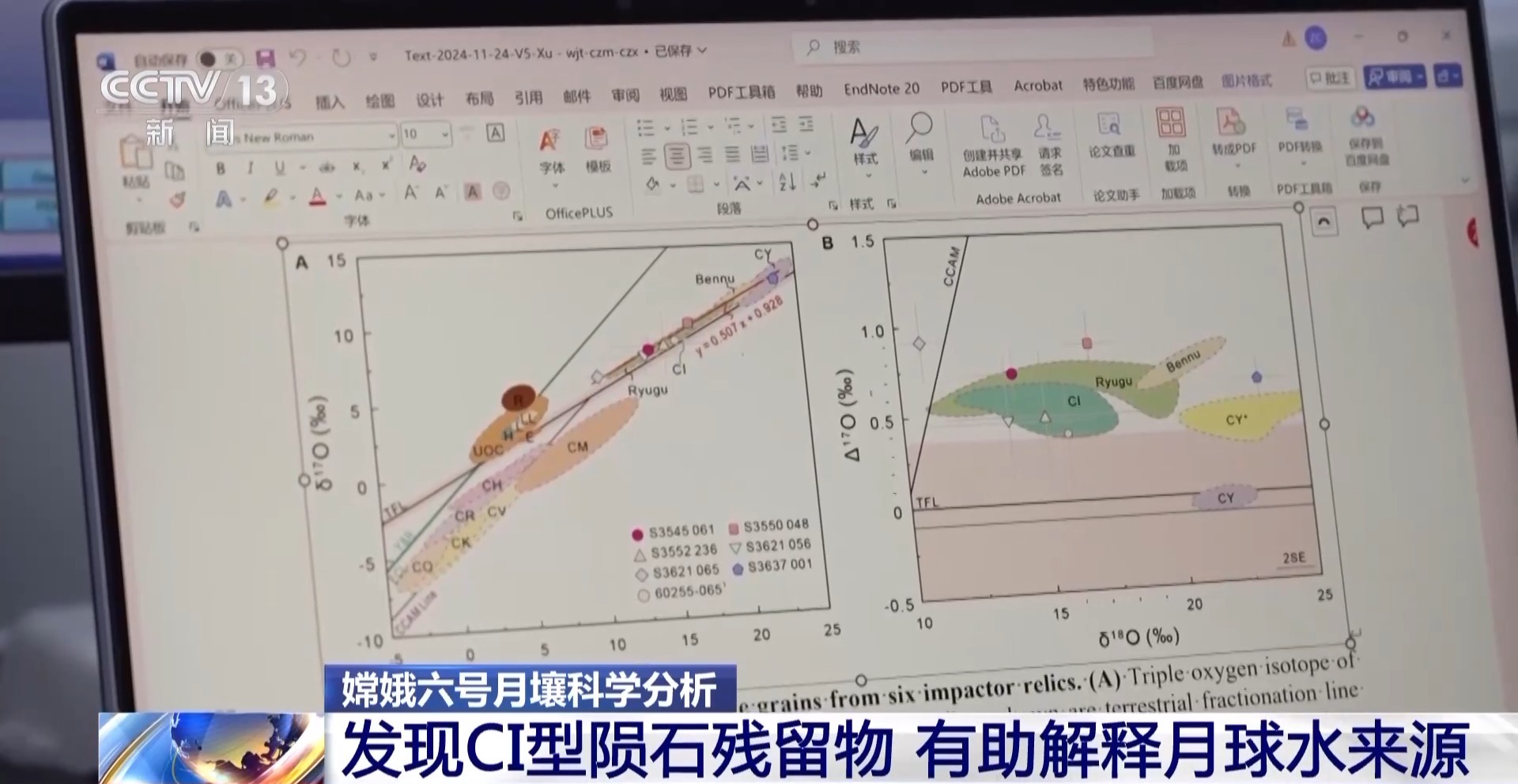
科学与健康|月球水从何而来?嫦娥六号月壤发现新线索
Xin Hua She· 2025-10-21 10:57
Core Insights - The discovery of new clues regarding the origin of water on the Moon has been made possible by the lunar soil samples returned by China's Chang'e 6 mission, indicating that water may come from impacts by CI-type carbonaceous chondrites [1][3] Group 1: Research Findings - The research team successfully identified impact residues from CI-type carbonaceous chondrites in a 2-gram lunar soil sample, suggesting that these meteorites may contribute to the water detected in lunar samples [1][4] - CI-type carbonaceous chondrites are known for their high water and organic material content, and their presence on the Moon is believed to be more significant than on Earth [3][4] - The findings provide critical evidence for understanding the source of lunar water, indicating that meteorite impacts not only shape the Moon's surface but also deliver valuable water and organic materials [3][4] Group 2: Scientific Significance - The research highlights the rigorous scientific approach of the team, showcasing their ability to extract significant information from a small sample size [4] - The study establishes a systematic method for accurately identifying meteorite materials in extraterrestrial samples, laying the groundwork for future research [4] - The ongoing discoveries from the Chang'e 6 mission continue to expand human understanding of the Earth-Moon system and the evolution of the solar system [4]
嫦娥六号月壤科学分析“上新”!撞击残留物有助解释月球水来源
Yang Shi Wang· 2025-10-21 08:03
Core Insights - A research team from the Guangzhou Institute of Geochemistry, Chinese Academy of Sciences, has identified impact residues from a type of carbonaceous chondrite known as "CI chondrite" in lunar samples from the Chang'e 6 mission, which are rich in water and other components. This discovery opens new avenues for studying the distribution and evolution of water resources on the Moon. The findings were published in the Proceedings of the National Academy of Sciences on October 21, Beijing time [1]. Group 1 - The research focused on a 2-gram lunar sample from Chang'e 6, where seven micro-fragments rich in olivine were identified. These fragments are products of CI chondrite parent bodies that impacted the Moon's surface, melted, and then rapidly crystallized [3]. - CI chondrites are primarily found in asteroids outside the solar system and are characterized by their high volatile content, including water and organic materials. The study revealed that the proportion of such chondrites on the Moon's surface is significantly higher than on Earth [3]. - This finding suggests that materials from the asteroid belt can migrate into the inner solar system and has important implications for understanding the sources of water on the Moon. Previous detections of water with positive oxygen isotope characteristics in lunar samples are likely derived from impacts by these chondrites [3]. Group 2 - Researcher Lin Mang from the Guangzhou Institute of Geochemistry stated that there are various hypotheses regarding the origin of lunar water, including local sources, solar contributions, and impacts from comets and asteroids. The discovery of water-rich chondrites indicates that their contribution to lunar water has been previously underestimated [5]. - Future research is needed to quantitatively assess how much water has been delivered to the Moon by these types of chondrites [5].
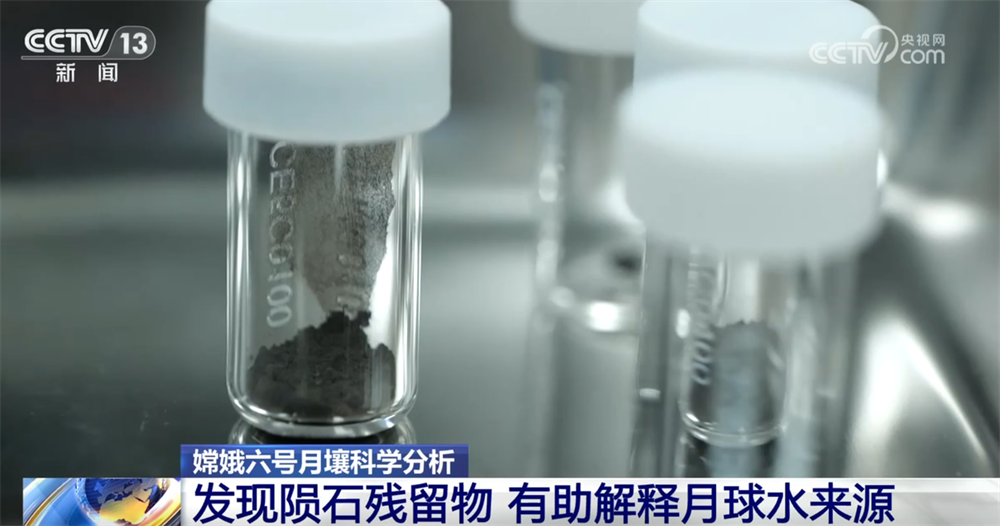
【央视新闻】月球水从哪里来?这一重要发现开辟新思路
Yang Shi Xin Wen· 2025-10-21 03:11
Core Insights - The research team from the Guangzhou Institute of Geochemistry, Chinese Academy of Sciences, identified impact remnants from a type of carbonaceous chondrite known as "CI-type" in lunar soil samples from the Chang'e 6 mission, which are rich in water and other components [2][3] - This discovery opens new avenues for studying the distribution and evolution of water resources on the Moon, suggesting that materials from the asteroid belt can migrate into the inner solar system and contribute to lunar water sources [2] Research Findings - The study focused on a 2-gram sample of lunar soil, where researchers precisely identified seven micro-fragments rich in olivine, formed from the melting and rapid cooling of CI-type carbonaceous chondrite parent bodies upon impact with the Moon's surface [2] - CI-type carbonaceous chondrites are primarily found in the outer solar system and are characterized by their high volatile content, including water and organic materials [2] - The proportion of these chondrites on the Moon's surface is significantly higher than that on Earth, indicating their potential contribution to lunar water sources [2] Future Research Directions - The research team plans to conduct further studies to quantify the amount of water that may have been delivered to the Moon by these types of chondrites, as their previous contributions to lunar water sources have likely been underestimated [3]
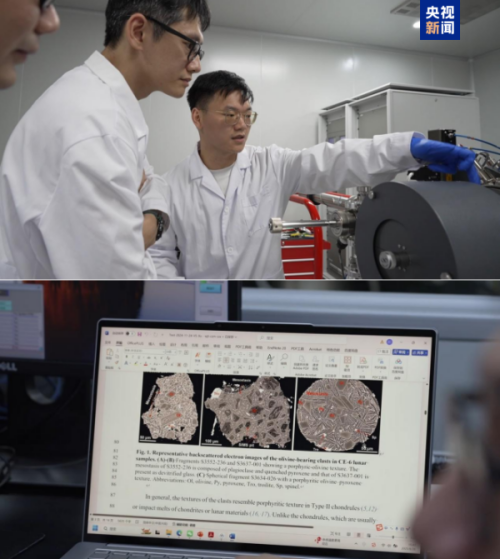
新华社消息|嫦娥六号月壤中发现陨石残留物有助解释月球水来源
Xin Hua She· 2025-10-21 02:34
Core Insights - The article discusses the recent developments in the financial sector, highlighting significant trends and shifts in investment strategies [2] Group 1: Financial Sector Trends - There has been a noticeable increase in mergers and acquisitions activity, with a reported growth of 15% year-over-year in deal volume [2] - Investment banks are adapting to changing market conditions by diversifying their service offerings, particularly in technology and sustainability sectors [2] Group 2: Company Performance - Major investment firms have reported a 10% increase in revenue for the last quarter, driven by strong performance in equity markets [2] - The article notes that firms focusing on ESG (Environmental, Social, and Governance) investments have outperformed traditional investment strategies, with a 20% higher return on investment [2]
嫦娥六号月壤中发现陨石残留物有助解释月球水来源
Xin Hua She· 2025-10-21 00:10
Core Insights - Chinese scientists have identified impact residues from CI carbonaceous chondrites in lunar samples collected by Chang'e 6, suggesting that water detected in lunar samples may originate from these meteorite impacts [1][2] - The research was published in the Proceedings of the National Academy of Sciences (PNAS) on October 21, 2023, highlighting the significance of lunar samples as a natural archive for studying extraterrestrial materials [1] Group 1 - The study reveals that CI carbonaceous chondrites, which are rare on Earth, contribute to the understanding of planetary formation and evolution due to their preservation on the Moon [1] - The research team, led by Academician Xu Yigang from the Guangzhou Institute of Geochemistry, established a systematic method for identifying extraterrestrial materials in lunar samples [1] - The findings indicate that the remnants of CI chondrites are products of their parent bodies impacting the Moon's surface, melting, and then rapidly crystallizing [1] Group 2 - The discovery suggests that materials from the outer solar system can migrate to the inner solar system, providing insights into the sources of water on the Moon's surface [2] - This research opens new avenues for future studies on the distribution and evolution of lunar water resources [2]
月球水从哪里来?这一重要发现开辟新思路
Yang Shi Xin Wen· 2025-10-20 22:10
Core Insights - A research team from the Guangzhou Institute of Geochemistry, Chinese Academy of Sciences, identified impact residues from a type of carbonaceous chondrite known as "CI-type" in lunar soil samples from the Chang'e 6 mission, which are rich in water and other components. This discovery opens new avenues for studying the distribution and evolution of water resources on the Moon [1][2]. Group 1 - The origin of lunar water has been debated, with hypotheses suggesting it could be indigenous or delivered by comets and asteroids. The recent findings indicate that CI-type carbonaceous chondrites, which are water-rich, contribute significantly to lunar water [2]. - The research focused on a 2-gram sample from the Chang'e 6 mission, where seven micro-fragments rich in olivine were identified. These fragments are products of CI-type carbonaceous chondrite parent bodies that impacted the Moon's surface, melted, and then rapidly crystallized [2]. - CI-type carbonaceous chondrites are primarily found in the outer solar system and are characterized by their volatile components, including water and organic matter. The study revealed that the proportion of such meteorites on the Moon's surface is significantly higher than on Earth, suggesting that materials from the asteroid belt can migrate into the inner solar system [2][3]. Group 2 - The contribution of these meteorites to lunar water has been previously underestimated. Future research is needed to quantify the amount of water delivered to the Moon by this type of meteorite [3].