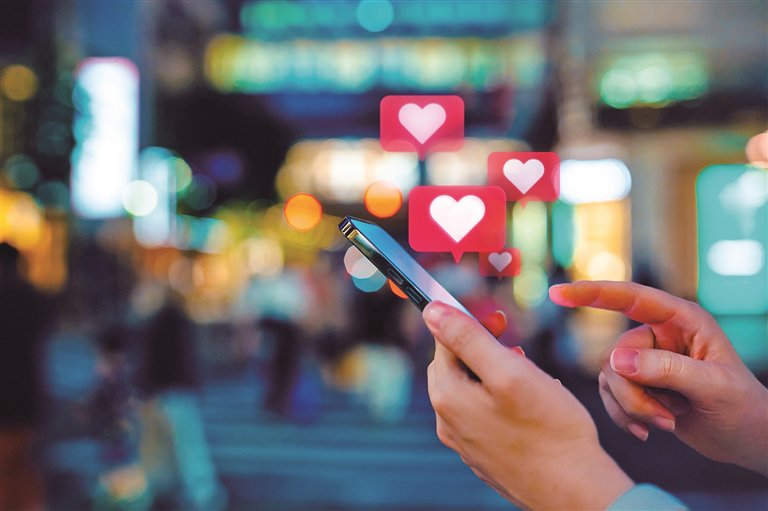
朋友圈点赞

Search documents
点赞:屏幕上的社交认同
Xin Lang Cai Jing· 2026-01-30 19:46
Core Viewpoint - The article discusses the impact of social media, particularly the act of "liking" in WeChat Moments, on individual emotions and self-perception, highlighting how this seemingly trivial action can significantly affect users' mental states and social interactions [1][3]. Group 1: The Nature of "Like" as a Gesture - The act of liking is described as a "mediated gesture" rather than a purely physical one, indicating that it is shaped by the media environment and social ecology [3][4]. - Historically, the emergence of new media has always led to the development of new gestures, with the "like" gesture being a recent addition that reflects the evolution of social recognition [3][6]. - The "like" gesture has quickly become a dominant form of social recognition, replacing various traditional gestures that were previously used for expressing approval [6][10]. Group 2: The Expansion of Social Connections - The WeChat Moments platform has significantly increased the potential for interpersonal connections, allowing for deeper interactions that were previously limited by physical space and context [8][9]. - The platform facilitates connections between strangers, enabling interactions that were once unimaginable, thus reshaping social dynamics [8][12]. - Existing relationships are also restructured, as the platform allows for easy retrieval and engagement with both new and old connections, enhancing social connectivity [9][10]. Group 3: The New Social Ecology - The new media space created by WeChat Moments has established a complex social environment characterized by increased interaction frequency and visibility of social relationships [10][11]. - The visibility of social connections through likes and comments creates a new social network that transcends traditional barriers, allowing for real-time interaction and recognition [10][11]. - This new ecology influences how individuals perceive and engage in social interactions, often requiring public acknowledgment of relationships through likes, which can lead to emotional fatigue [12][13].