
服务型投行

Search documents
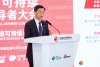
光大证券总裁刘秋明:践行金融使命,以服务型投行构筑可持续发展新生态
Xin Lang Zheng Quan· 2025-10-16 08:37
Core Viewpoint - The 2025 Sustainable Global Leaders Conference emphasizes the importance of the financial sector's role in sustainable development and its alignment with the real economy, as articulated by Liu Qiuming, President of Everbright Securities [1][3][4]. Group 1: Conference Overview - The 2025 Sustainable Global Leaders Conference is scheduled from October 16 to 18 in Shanghai, focusing on global action, innovation, and sustainable growth [1][4]. - The conference is co-hosted by the World Green Design Organization and Sina Group, with support from the Shanghai Huangpu District People's Government [4]. Group 2: Industry Insights - Liu Qiuming highlighted the transition of China's financial industry from "expansion" to "optimization and strengthening," presenting new opportunities for high-quality development in the capital market [3]. - The securities industry is positioned as a crucial hub connecting the capital market with the real economy, tasked with guiding resources towards advanced manufacturing and strategic emerging industries [3]. Group 3: Company Strategy - Everbright Group has established a strategic advantage through the integration of finance and industry, encompassing core financial services such as banking, securities, insurance, and asset management, alongside industrial companies in environmental protection and wellness [3]. - Everbright Securities, with a 30-year history, is committed to a "service-oriented investment bank" strategy, focusing on serving national strategies and the real economy while enhancing service quality in key sectors like advanced manufacturing and green environmental protection [3][4]. Group 4: Conference Participation - The conference will feature approximately 500 prominent guests, including around 100 international attendees, such as political figures, Nobel laureates, and leaders from Fortune 500 companies, showcasing a strong lineup of global expertise [4].


投行收费新政落地将满月:颠覆盈利逻辑 回归行业价值
Zhong Guo Jing Ji Wang· 2025-03-12 23:51
Core Viewpoint - The new regulations implemented on February 15 aim to decouple underwriting fees from IPO results, transitioning the fee structure from a results-oriented model to a process-oriented one, which significantly impacts the investment banking industry [1][3]. Group 1: Changes in Fee Structure - The regulations require a phased payment structure for underwriting fees, preventing a direct increase in fees based on the scale of issuance [1][2]. - The shift from a results-oriented to a process-oriented fee model means that investment banks will now charge for services rendered throughout the IPO process, regardless of the outcome [3][4]. - This change is expected to reduce the reliance on a single successful transaction for revenue, thereby lowering the income ceiling for individual projects [3][7]. Group 2: Impact on Service Logic - Investment banks are transitioning from being mere facilitators of listings to providing comprehensive services that add measurable value at each stage of the IPO process [4][5]. - The introduction of AI tools for due diligence necessitates a shift from traditional labor-intensive methods to knowledge-intensive approaches, enhancing the quality of services provided [4][5]. - Firms are encouraged to strengthen their professional capabilities and establish differentiated competitive advantages to better serve clients [4][5]. Group 3: Competitive Landscape - The implementation of the regulations is expected to create a more level playing field, reducing the prevalence of low-price competition and enhancing service quality across the industry [2][6]. - Larger firms may continue to maintain higher fee rates due to their brand and risk management capabilities, but they will also face increased operational costs [6][7]. - Smaller firms must develop unique strategies and talent management approaches to compete effectively, focusing on regional markets and specialized industries [6][7].