极端干旱事件风险

Search documents
我研究团队揭示西北干旱区东西部干湿变化分异的深层机制
Ke Ji Ri Bao· 2025-08-08 01:39
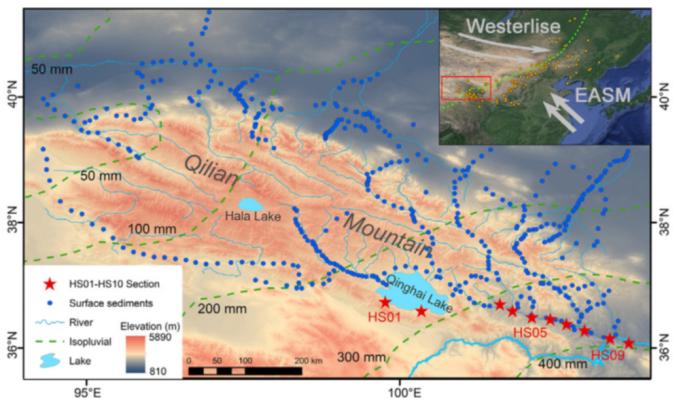
Core Insights - The research team led by Professor Li Yu from Lanzhou University successfully reconstructed the dry-wet variation process in the upper Yellow River region during the Holocene, revealing the main mechanisms controlling these changes over a long time scale [1][3][4] Group 1: Research Findings - The study published in the journal "Science Bulletin" highlights significant regional differences in water resource evolution in China's northwest arid areas, with the western region gradually becoming "warmer and wetter" since the 1960s, while the eastern upper Yellow River area has continued to experience "aridification" [3][4] - The research team established a lake evolution research network in the Qilian Mountains and accurately characterized the Holocene dry-wet evolution, noting that lake water levels rose from the late Ice Age to the early Holocene, peaked during the mid-Holocene, and have been declining since the late Holocene [3][4] Group 2: Climate Mechanisms - The primary controlling factor for the Holocene dry-wet changes in the region is identified as the interaction between tropical ocean and atmosphere (ENSO), with observations indicating a recent trend of warming and wetting in the northwest, but a potential increase in ENSO amplitude could alter hydrological patterns and increase the risk of extreme drought events [3][4] - The study also simulated the water cycle of lakes in the East Asia-Central Asia arid region since the last glacial maximum, revealing differing water resource evolution patterns on the eastern and western sides, attributed to variations in moisture transport from monsoons and westerly winds, as well as differences in lake evaporation effects [4]