柔版印刷

Search documents
行业聚焦:全球柔印机网纹辊行业Top 5生产商市场份额及排名调查
QYResearch· 2025-11-06 02:18
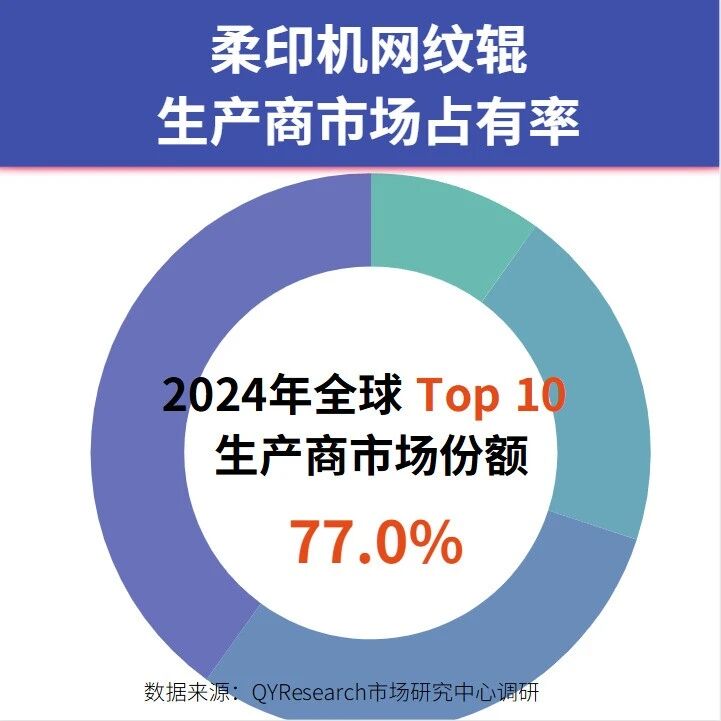
Core Viewpoint - The global anilox roller market for flexographic printing is projected to reach USD 130 million by 2031, with a compound annual growth rate (CAGR) of 6.5% in the coming years [4]. Market Overview - Anilox rollers are the core ink transfer components in flexographic printing, characterized by millions of precision micro-hole structures created through laser engraving [2]. - The market is primarily driven by flexible packaging, labels, and e-commerce small-batch diversified printing [12]. - The market has shown steady growth in recent years, influenced by raw material prices and precision processing capabilities [12][13]. Key Players - Major manufacturers in the global anilox roller market include Pamarco, Apex International, Simec Group, Harper Corporation, Zecher GmbH, Murata-Brg, Sandon Global, and Harris & Bruno International, among others [7]. - In 2024, the top ten manufacturers are expected to hold approximately 77% of the market share [7]. Product Segmentation - Ceramic anilox rollers dominate the market, accounting for about 90% of the share [9]. - These rollers are essential for flexographic printing and coating, featuring a high-hardness ceramic coating that ensures durability and high-quality printing results [9]. Application Areas - The planetary flexographic printing machine is the leading application market, holding around 67% of the market share [11]. - Narrow-web (below 1000mm) flexographic printing machines typically utilize shaft-type anilox rollers [11]. Market Dynamics - The primary growth driver is the strong demand from downstream sectors, particularly the packaging and label industries, which require high printing quality [15]. - The application of anilox rollers is expanding beyond traditional printing to emerging fields such as textile dyeing, coatings, and pharmaceuticals [15]. Challenges and Obstacles - The industry faces significant cost pressures due to the high-end equipment and precision manufacturing processes required for ceramic anilox rollers [16]. - A lack of unified industry product standards globally poses a challenge to market development [16]. - The increasing number of companies in the market has led to severe product homogeneity, intensifying competition in technology, branding, pricing, and service [16]. Development Trends - Technological advancements are focusing on higher line counts, more uniform sub-micron engraving, and durable ceramic or composite coatings [14]. - The integration of online monitoring, predictive maintenance, and digital ink mixing is expected to enhance stability and reduce downtime [14]. - Environmental considerations are driving the industry towards compatibility with UV/low VOC systems [14].