标准化壁垒

Search documents
市场趋势分析:DCM1000以及类似封装的SiC模块在电驱动领域遭遇淘汰的原因
Sou Hu Cai Jing· 2026-01-03 05:08
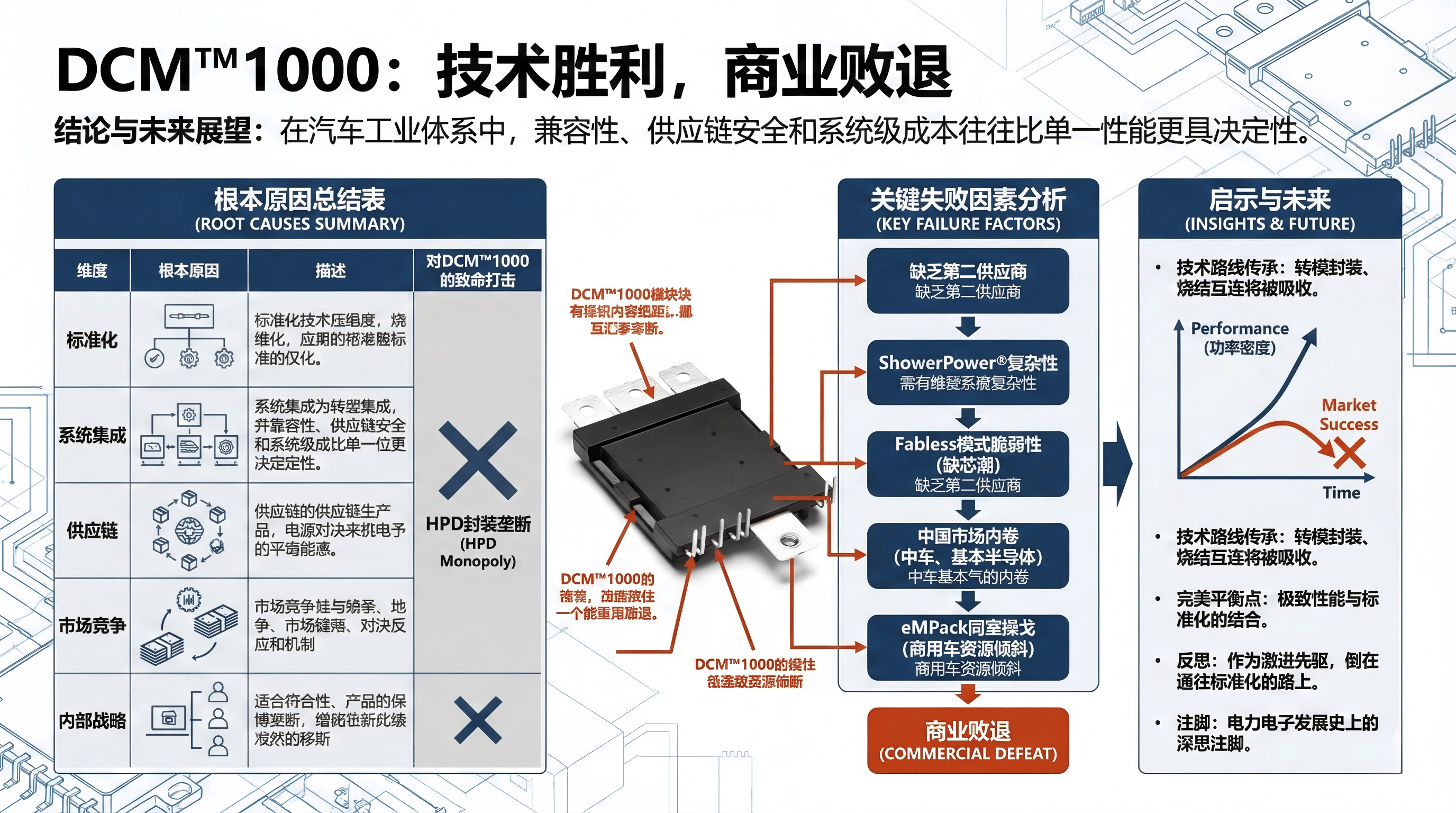
Core Viewpoint - The DCM™1000 technology platform from Danfoss Silicon Power (now Semikron Danfoss) has faced significant market challenges despite its impressive technical specifications, leading to its marginalization in both the Chinese passenger vehicle market and the global commercial vehicle sector [2][8][44]. Group 1: Technical Challenges - DCM™1000 integrates advanced technologies such as Transfer Molding, Danfoss Bond Buffer® (DBB®), and ShowerPower® 3D cooling, which theoretically enhance power density and cycle life compared to traditional modules [2][12]. - The platform's failure is attributed to a "system-level cost trap," "standardization barriers," and the vulnerability of the fabless packaging model during supply chain crises [7][44]. - The unique mechanical interface and cooling design of DCM™1000 have become integration obstacles rather than advantages, especially in the face of strong competition from established products like Infineon's HybridPACK™ Drive [8][15]. Group 2: Market Dynamics - The passenger vehicle market emphasizes standardization, which has hindered DCM™1000's ability to compete against established industry standards [15][21]. - In the Chinese market, rapid growth and a focus on cost have led to intense price competition, further marginalizing DCM™1000 [29][32]. - Local suppliers have gained a competitive edge by offering compatible modules with customization and lower prices, making DCM™1000 less attractive [29][33]. Group 3: Internal Strategic Issues - The merger of Semikron and Danfoss has led to internal product line conflicts, with a strategic shift towards the eMPack platform, further limiting DCM's market presence [34][40]. - DCM™1000's complex design has resulted in higher manufacturing costs and lower yield rates, making it less viable in a cost-sensitive market [39][45]. Group 4: Supply Chain Vulnerabilities - The fabless model, which relies on external chip suppliers, has become a significant weakness during chip shortages, impacting DCM™1000's market entry opportunities [37][38]. - The inability to secure a stable supply of chips has led potential customers to favor suppliers with guaranteed availability, such as Infineon and onsemi [38][44]. Group 5: Future Outlook - Although DCM™1000 has failed as a packaging platform, its advocated technologies may influence future product definitions, emphasizing the need for a balance between extreme performance and standardization [50].