欧洲军

Search documents
“一次又一次,欧洲领导人视而不见,但这次不一样”
Guan Cha Zhe Wang· 2026-02-14 14:33
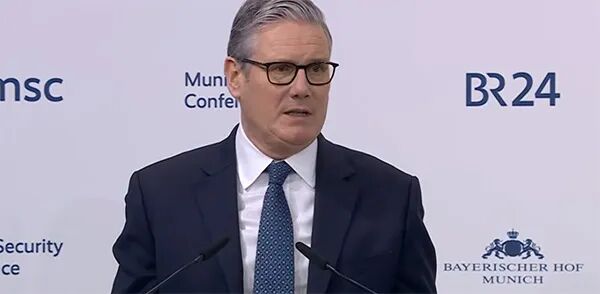
Core Viewpoint - The 62nd Munich Security Conference highlighted the need for Europe to become more self-reliant in defense, as articulated by UK Prime Minister Starmer, who called for a "more European NATO" to address security challenges posed by Russia [1][3]. Group 1: European Defense Strategy - Starmer emphasized that Europe must rely on its own strength and not solely depend on the US for security, advocating for a deeper integration within NATO [3]. - He pointed out the fragmentation and redundancy in European defense, which leads to inefficiencies and weakens overall security [4][6]. - Starmer described Europe as a "sleeping giant," asserting that its economic power is significantly greater than that of Russia [3]. Group 2: Military Collaboration and Initiatives - The UK plans to collaborate with the US, Canada, and other NATO allies to deploy carrier strike groups in the North Atlantic and Arctic regions, showcasing a strong commitment to Atlantic security [3]. - Starmer acknowledged the indispensable role of the US in European security but stressed the necessity for Europe to take responsibility for its own defense matters in the changing global landscape [3]. Group 3: Structural Challenges - Experts highlight that Europe's defense structure, composed of over 20 national armies, was not originally designed to defend the entire continent, leading to significant structural challenges [4][6]. - The establishment of a unified "European Army" is seen as a long-term possibility, which would require a unified command structure and be primarily under EU control rather than individual nations [6].