武术精神

Search documents
【功夫郑州奇遇记】 七年“武路”磨一剑!黔地少女嵩山追梦
Xin Lang Cai Jing· 2025-12-23 04:37
Core Viewpoint - The article highlights the journey of a 13-year-old girl, Qian Binbin, who has dedicated herself to martial arts training at the Shaolin Xiaolong Martial Arts School in Dengfeng, Henan, showcasing her growth and achievements in the sport over the past seven years [1][2][3]. Group 1: Personal Journey and Development - Qian Binbin left her home in Guizhou at the age of 6 to join the martial arts school, facing challenges in a new environment and rigorous training [2]. - With the support of her coaches and peers, she overcame initial difficulties and developed a strong foundation in martial arts, eventually joining the school's competitive training team in 2021 [2][3]. - Her determination and hard work led to significant achievements, including winning multiple awards in provincial competitions [3][4]. Group 2: Training and Future Aspirations - Qian Binbin has participated in numerous competitions since 2021, recently earning three second-place finishes at the 2025 Zhejiang Provincial Youth Martial Arts Routine Championship [3]. - She is now focused on preparing for the 2026 Zhejiang Provincial Games, viewing it as a critical opportunity to showcase her skills on a larger stage [3][4]. - The school emphasizes the importance of martial arts not only as a sport but also as a means for personal growth and development, providing a structured training environment to help students achieve their goals [4].


湾区“全”时刻 |全运起“武” 湾区人有何“武林秘籍”?
Yang Shi Xin Wen Ke Hu Duan· 2025-11-21 07:38
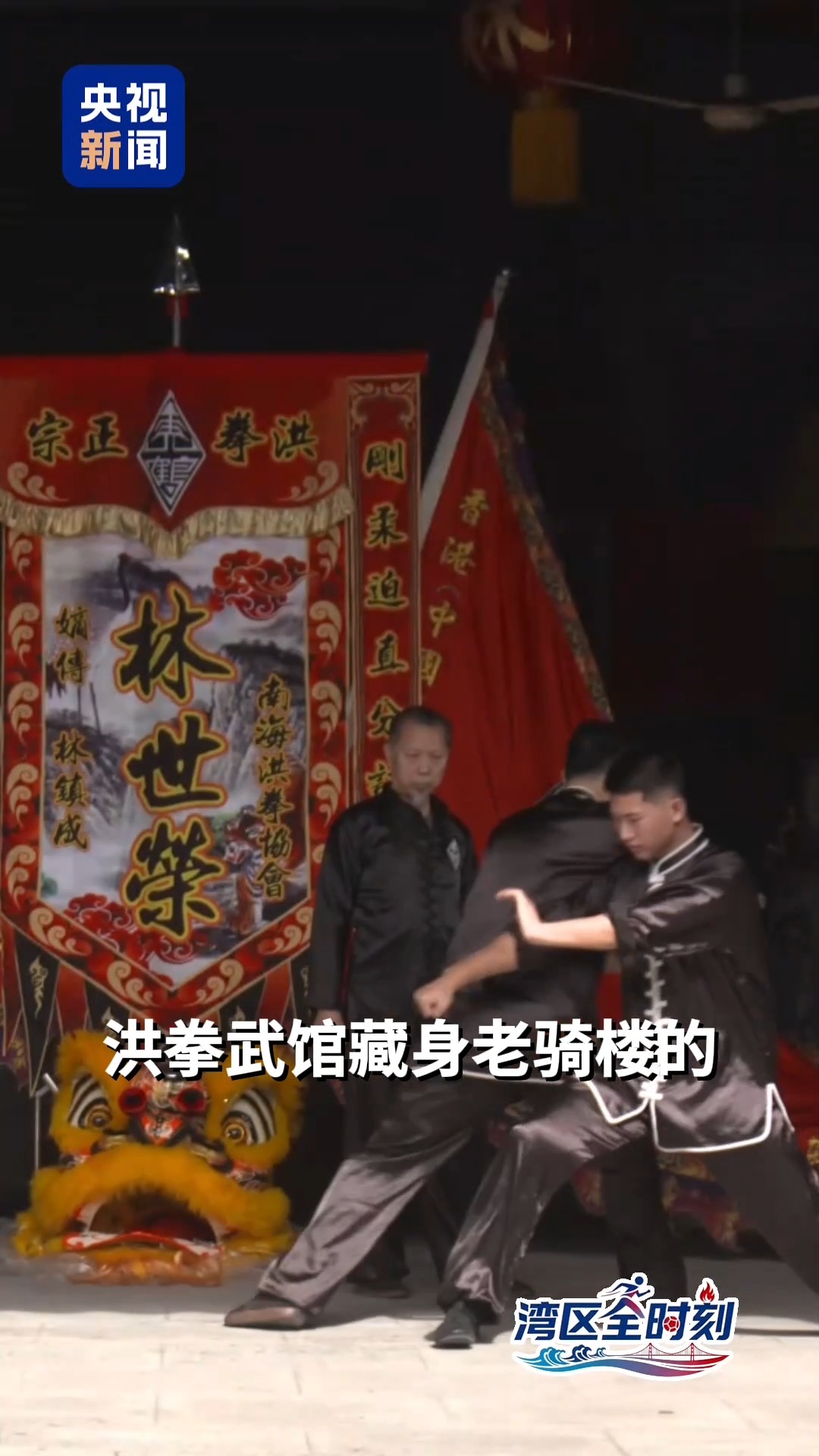
Core Viewpoint - The article highlights the significance of martial arts as a cultural and competitive element in the Guangdong-Hong Kong-Macau Greater Bay Area, showcasing its deep-rooted traditions and contemporary relevance in the region's identity [2][5][10]. Group 1: Martial Arts in the Greater Bay Area - Martial arts, particularly in the context of the Greater Bay Area, serve as a common language that transcends regional boundaries, with performances at events like the National Games expressing a collective passion for this traditional sport [2]. - In Foshan, known as the "hometown of Kung Fu," there are over 300 martial arts schools and more than 300,000 practitioners, indicating a robust martial arts culture that reflects the unique spirit of the Greater Bay Area [5]. - The presence of various martial arts styles, such as Wing Chun and Tai Chi, is evident in everyday life, with practitioners found in parks and community spaces, emphasizing that martial arts is not just about competition but also personal growth [10]. Group 2: Notable Personalities and Events - A notable figure is Liang Biying, a world champion who made a comeback after five years of retirement to compete in the 15th National Games, where she won a bronze medal in Tai Chi sword, showcasing resilience and dedication [8]. - Liang's journey reflects the challenges faced by athletes returning to competition after a hiatus, highlighting the importance of mental fortitude and training in achieving success [8].
“顶流”全运会吉祥物是怎样“练”成的?揭秘“喜洋洋”“乐融融”背后的武术少年
Yang Guang Wang· 2025-11-14 04:04
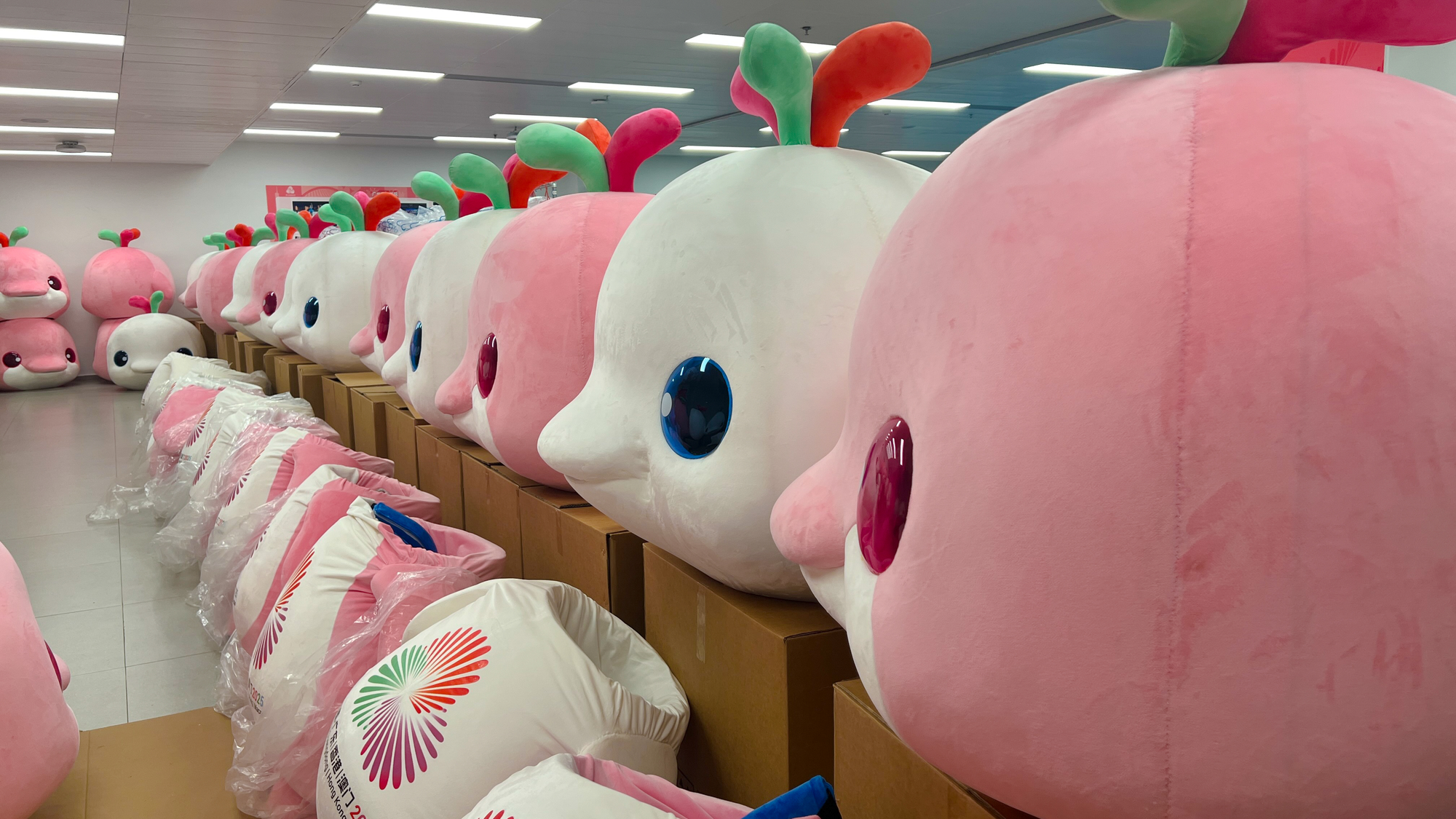
Core Viewpoint - The mascots "Xi Yang Yang" and "Le Rong Rong" of the 15th National Games have gained immense popularity due to their lively performances and engaging presence, performed by a group of martial arts students from Henan Shaolin Epo Martial Arts School [1][9]. Group 1: Performance and Training - The mascots' costumes weigh 8 kilograms, requiring significant physical strength and agility from the performers, which the martial arts students possess due to their extensive training [2][4]. - Initial training included martial arts elements, but the final performance allowed the students to showcase their natural movements, leading to a more dynamic and engaging presentation [4][9]. - The students trained for eight to nine hours daily, including five to six hours wearing the heavy mascot costumes, overcoming challenges such as heat and fatigue during rehearsals [6][13]. Group 2: Impact and Reception - The mascots' performances have been described as "the most extroverted mascots in history," capturing the audience's attention and affection [1][9]. - The creative and spontaneous actions of the performers, such as playful movements and humorous interactions, contributed to their viral success on social media [9][10]. - The experience of performing at a national event is seen as a significant honor for the martial arts students, reflecting their dedication and resilience [13].
这支八十年历史的龙狮队,有一个特别的名字
Xin Hua Wang· 2025-08-22 20:38
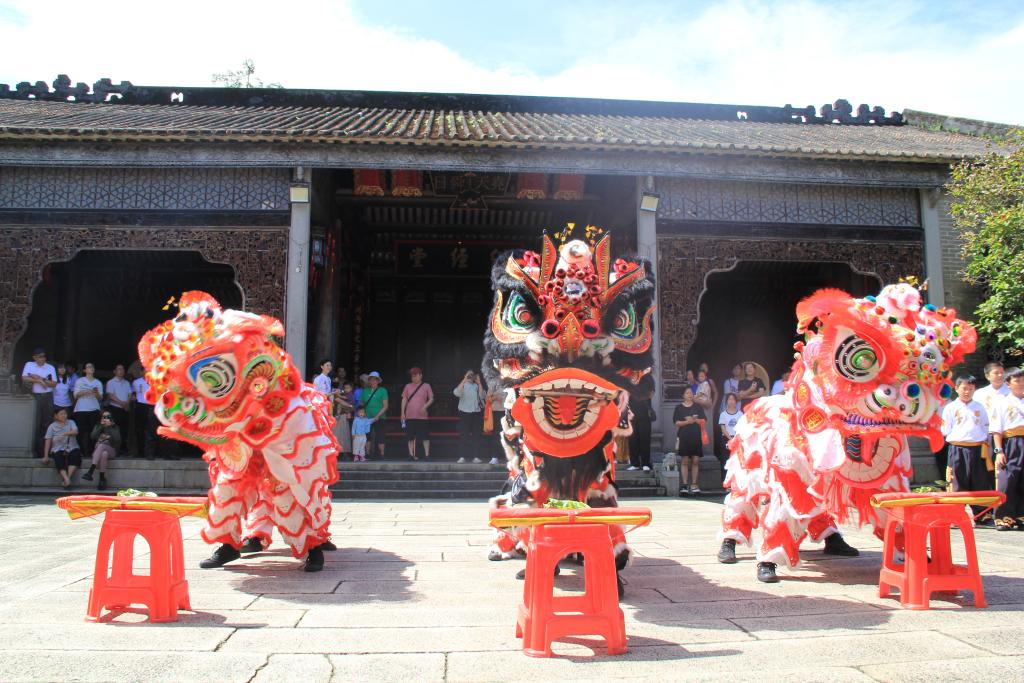
Core Viewpoint - The celebration of the 80th anniversary of the "Victory" lion dance team in Beishan Village highlights the cultural significance and historical continuity of this tradition, which has evolved alongside the village's economic development and community cohesion [1][2][4]. Group 1: Historical Significance - The "Victory" lion dance team was established in 1945 to commemorate the end of World War II and has maintained its name and spirit for 80 years [2]. - The team embodies martial arts spirit and patriotism, with members practicing traditional forms like Cai Li Fo boxing and lion dance [2]. Group 2: Community and Cultural Development - The lion dance team serves as a vital link within the community, fostering a sense of belonging and participation among villagers [2][4]. - The village has transformed economically since the reform and opening-up, becoming a hub for investment and collaboration with Hong Kong and Macau [4]. Group 3: Modernization and Innovation - Recent efforts have focused on revitalizing historical buildings and promoting local brands, leading to the establishment of over 230 businesses in the village [5]. - The lion dance team has adapted to modern influences, with new leadership and training methods enhancing its traditional practices [5].