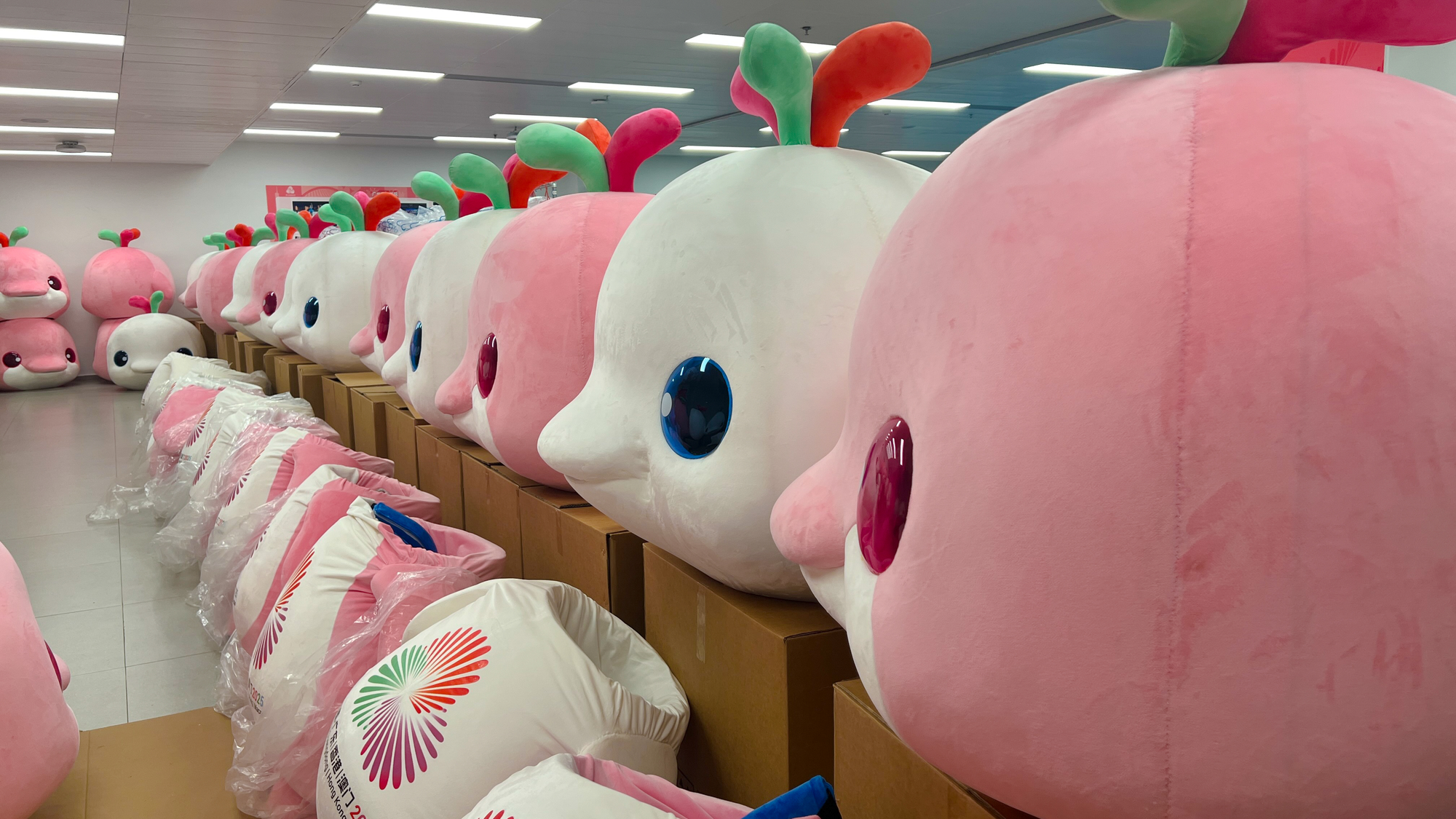
全运会吉祥物喜洋洋和乐融融

Search documents
一“豚”难求,全运IP靠情绪价值出圈
Nan Fang Du Shi Bao· 2025-11-16 00:29
Core Insights - The mascots "Xi Yang Yang" and "Le Rong Rong" have gained significant popularity during the ongoing 15th National Games, showcasing their ability to engage audiences and create emotional value [1][2] - The design of the mascots emphasizes a bridge of empathy between the public and the characters, allowing for a shared imaginative experience that enhances their appeal [2][3] Group 1: Mascot Design and Impact - The mascots were designed without specific gender or personality traits, allowing for broader public interpretation and engagement [1] - The design team incorporated elements from the Chinese white dolphin, with the mascots' colors and features symbolizing emotional and physical expressions during performances [1][2] Group 2: Performance and Public Engagement - The success of the mascots is largely attributed to the dynamic performances by young, creative individuals, including street dancers and university volunteers, who brought spontaneity and relatability to the characters [2] - Public participation in creating new nicknames and meanings for the mascots reflects the value of collaborative imagination in enhancing their cultural significance [2] Group 3: Commercial and Cultural Implications - The emotional value generated through interactions is likely to translate into commercial success, as evidenced by the high demand for related merchandise [3] - The potential for the mascots to evolve from event-specific icons to integral parts of urban culture in the Greater Bay Area suggests a promising future for their brand and cultural impact [3]
“顶流”全运会吉祥物是怎样“练”成的?揭秘“喜洋洋”“乐融融”背后的武术少年
Yang Guang Wang· 2025-11-14 04:04
Core Viewpoint - The mascots "Xi Yang Yang" and "Le Rong Rong" of the 15th National Games have gained immense popularity due to their lively performances and engaging presence, performed by a group of martial arts students from Henan Shaolin Epo Martial Arts School [1][9]. Group 1: Performance and Training - The mascots' costumes weigh 8 kilograms, requiring significant physical strength and agility from the performers, which the martial arts students possess due to their extensive training [2][4]. - Initial training included martial arts elements, but the final performance allowed the students to showcase their natural movements, leading to a more dynamic and engaging presentation [4][9]. - The students trained for eight to nine hours daily, including five to six hours wearing the heavy mascot costumes, overcoming challenges such as heat and fatigue during rehearsals [6][13]. Group 2: Impact and Reception - The mascots' performances have been described as "the most extroverted mascots in history," capturing the audience's attention and affection [1][9]. - The creative and spontaneous actions of the performers, such as playful movements and humorous interactions, contributed to their viral success on social media [9][10]. - The experience of performing at a national event is seen as a significant honor for the martial arts students, reflecting their dedication and resilience [13].