
民主主义

Search documents
“高市时间”会走向特朗普化吗?
日经中文网· 2026-03-15 00:32
Core Viewpoint - The article discusses the political style of Japan's Prime Minister, Kishi Sanae, comparing it to the "Trump Time" approach of rapid decision-making, while emphasizing the importance of thorough discussion and consensus in democratic processes [4][6]. Group 1: Political Decision-Making - Kishi Sanae emphasizes the need for swift decision-making while also acknowledging the importance of listening to diverse opinions and ensuring a thorough discussion process [4][5]. - The article highlights the tension between the desire for quick conclusions and the necessity of quality deliberation in political decision-making, particularly in the context of Japan's current political landscape [5][6]. Group 2: Comparison with Other Leaders - The article draws parallels between Kishi Sanae and former U.S. President Trump, noting that both leaders create a sense of urgency in their political actions, but warns against neglecting the legislative process [6]. - In contrast, Italian Prime Minister Meloni is presented as a leader who balances speed with realism, suggesting that effective governance requires coordination and a measured approach rather than just rapid decision-making [6]. Group 3: Legislative Dynamics - The ruling party in Japan holds a significant majority in the House of Representatives, which increases the temptation to make quick decisions without broad consensus [5]. - The article points out that the current political climate may lead to a rush in passing the 2026 budget, with the ruling party attempting to shorten the usual deliberation period, raising concerns about the quality of legislative scrutiny [5].

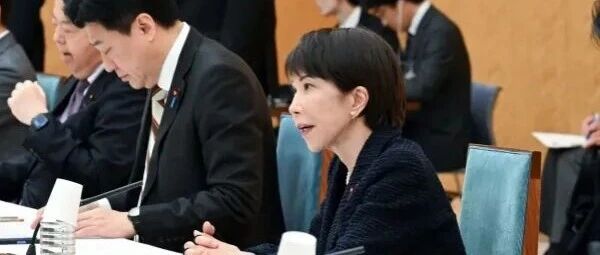
两大日媒批特朗普干涉日本内政:前所未闻,不可容忍
Xin Lang Cai Jing· 2026-02-07 06:20
Core Viewpoint - The article discusses the controversy surrounding U.S. President Trump's support for Japanese Prime Minister Kishi Sanae ahead of the upcoming Japanese House of Representatives election, which has drawn criticism from Japanese media as interference in domestic politics [1][5]. Group 1: Media Reactions - Major Japanese newspapers, including the Nikkei and Asahi Shimbun, have published editorials condemning Trump's actions as unprecedented and inappropriate, arguing that it undermines the fairness of elections and violates the principle of non-interference in domestic affairs [1][5]. - The Nikkei explicitly urged Trump to refrain from making unnecessary comments that could influence election outcomes, emphasizing the importance of respecting the political independence of nations [1][5]. Group 2: Implications of Trump's Support - Trump's support for Kishi is interpreted as an attempt to secure favorable terms in future U.S.-Japan negotiations, particularly in areas such as defense spending and trade [5][6]. - The article highlights that Trump's administration has shown a pattern of supporting right-wing governments globally, raising concerns about potential regime changes and the implications for international stability [2][5]. Group 3: Upcoming Elections - The Japanese House of Representatives election is set to begin on February 8, with the ruling coalition currently holding 233 out of 465 seats. Kishi is banking on her high approval ratings and promises of tax cuts and increased fiscal spending to expand the coalition's majority [7]. - Despite concerns over Kishi's tax cut proposals causing investor anxiety, polls suggest that her coalition may still achieve a slight majority in the upcoming election [7]. Group 4: International Context - The article notes that Trump's unilateral foreign policy approach and disregard for international law have raised alarms in the international community, with calls for medium-sized countries to unite against such bullying [6]. - It emphasizes the need for Japan to assert its principles, including democracy and the rule of law, in dealings with the Trump administration, acknowledging the challenges posed by the current geopolitical landscape [6].
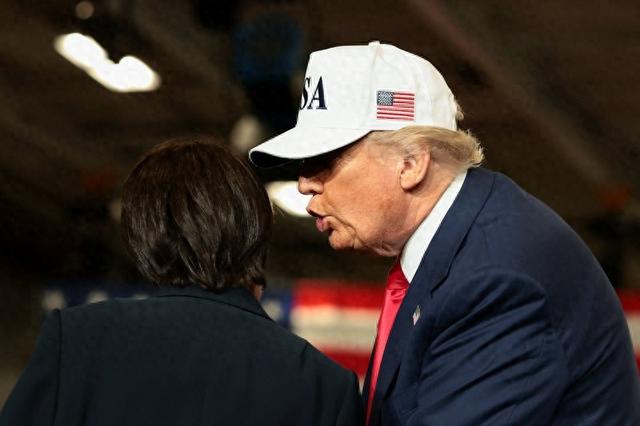
被视作李在明重要“政治导师”,韩国前总理李海瓒在越南逝世
Huan Qiu Shi Bao· 2026-01-26 22:55
Core Viewpoint - The passing of Lee Hae-chan, a significant figure in South Korean politics and a mentor to current President Lee Jae-myung, marks a profound loss for the Democratic Party and the broader political landscape in South Korea [1][3][4]. Group 1: Political Influence and Legacy - Lee Hae-chan was a key player in the rise of four Democratic Party presidents over the past 40 years, recognized as a "founding father" and "kingmaker" in South Korean politics [3]. - He served as the Minister of Education under President Kim Dae-jung and was known for his controversial educational reforms, which included breaking the reliance on test scores for university admissions [3]. - Lee was instrumental in the Democratic Party's overwhelming victory in the 2020 National Assembly elections, securing 180 seats, which solidified his status as a "godfather" within the party [4]. Group 2: Impact on the Democratic Party - Even after stepping back from frontline politics, Lee continued to influence party operations, particularly during the rise of Lee Jae-myung, providing crucial support amid internal party challenges [4]. - His death is seen as a significant loss for the Democratic Party, which may struggle to find a figure capable of mediating internal divisions and maintaining party unity [4]. Group 3: Contributions to South Korea-China Relations - Lee Hae-chan was recognized as a proponent of improving South Korea-China relations, having served as a special envoy to China during the Moon Jae-in administration [4][5]. - His efforts in fostering diplomatic ties were acknowledged by the Chinese government, which expressed condolences following his passing [5]. Group 4: Funeral Arrangements - Lee's funeral will take place from January 27 to 31 and will be conducted as a public memorial, reflecting his contributions to the nation and society [5].
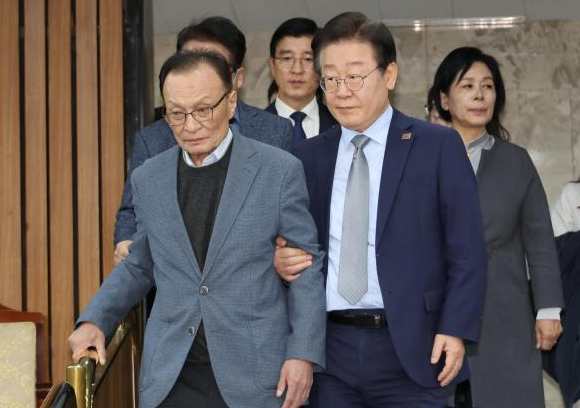
尹锡悦被韩国特检组求刑十年
Xin Lang Cai Jing· 2025-12-27 02:14
Core Viewpoint - The South Korean special investigation team has requested a 10-year prison sentence for former President Yoon Suk-yeol, marking the first sentencing recommendation in relation to the "12.3 emergency martial law" case, with a court ruling expected on January 16, 2024, which may influence subsequent trials [1][2]. Group 1: Legal Proceedings - The special investigation team has categorized the case into three parts, recommending a 5-year sentence for obstructing the execution of an arrest warrant, 3 years for infringing on the rights of state councilors and providing false information to the media, and 2 years for retroactively creating martial law documents [1]. - The court session on this case is the first of four related trials concerning Yoon Suk-yeol, with the outcome potentially serving as a "barometer" for future judgments [1]. Group 2: Severity of Charges - The prosecution emphasized the unprecedented nature of the charges, highlighting that the former president's actions severely undermined South Korea's legal order and caused significant harm to the citizens who trusted him [2]. - The special investigation team noted that Yoon Suk-yeol's actions, including physical obstruction of court orders and evidence destruction, led to a state of instability akin to anarchy, severely damaging the country's image and constituting a grave violation of the rule of law [2]. Group 3: Political Reactions - The Democratic Party of Korea expressed that the prosecution's request confirms the necessity of holding power accountable for constitutional violations, viewing it as a step towards restoring justice [3]. - Civil society groups have called for a severe sentence, arguing that Yoon Suk-yeol's actions not only undermined democracy but also obstructed lawful arrest orders, emphasizing the importance of judicial accountability in this case [4].
尹锡悦被韩国特检组求刑十年,韩国执政党:此次求刑不是终点,而是开始
Huan Qiu Shi Bao· 2025-12-26 23:01
Group 1 - The core point of the article is that the South Korean special investigation team has requested a 10-year prison sentence for former President Yoon Suk-yeol for his involvement in the emergency martial law incident on December 3, which is the first sentencing request in four related trials [1][3] - The court is set to announce its verdict on January 16, which may serve as a "barometer" for subsequent related trials [1] - The special investigation team emphasized the severity of the crimes, stating that the actions of the former president severely undermined the legal order in South Korea and caused significant harm to the citizens who trusted him [3][4] Group 2 - The case against Yoon is divided into three parts: a 5-year sentence for obstructing the execution of an arrest warrant, a 3-year sentence for infringing on the rights of state councilors and providing false information to the media, and a 2-year sentence for fabricating martial law documents [3] - The prosecution highlighted that the former president's actions, including the privatization of the presidential guard and organized obstruction of court orders, are unprecedented and represent a serious violation of the law [3][4] - The Democratic Party of Korea has stated that the prosecution's request confirms the principle that those who trample on constitutional order must be held accountable, viewing it as a return to justice [5]
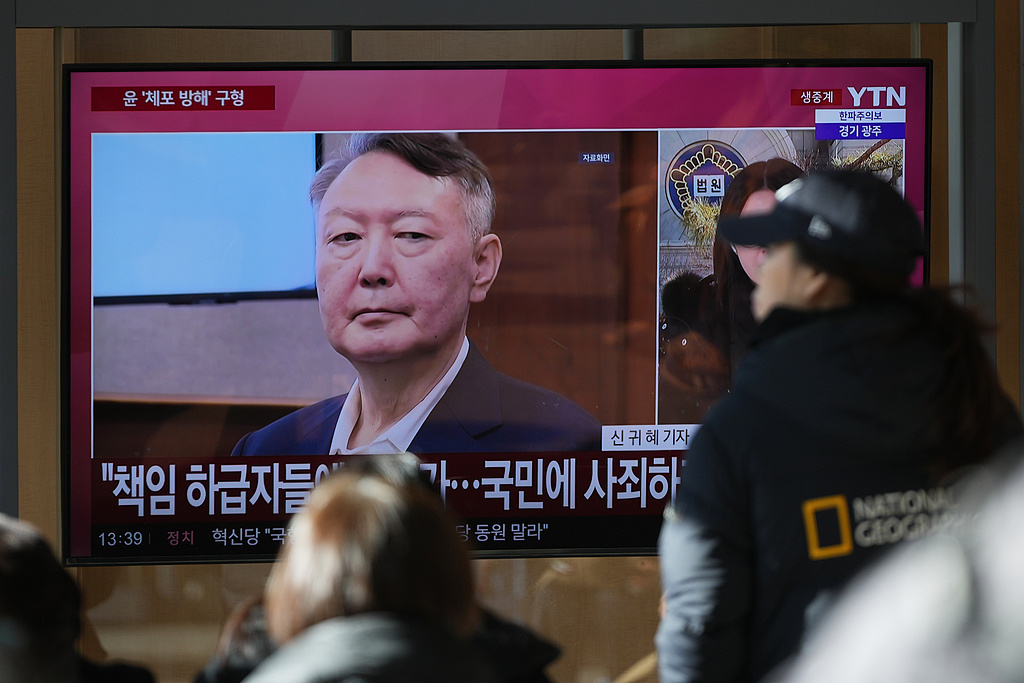
韩国总统:将把12月3日定为国民主权日
Xin Hua She· 2025-12-03 06:09
Core Viewpoint - The South Korean government has designated December 3 as National Sovereignty Day to commemorate the citizens' courage and actions in preventing an emergency martial law declaration in December 2024 [1] Group 1: Government Actions - President Lee Jae-myung announced the establishment of National Sovereignty Day to allow citizens to reflect on their democratic values and actions at least once a year [1] - The government is continuing investigations and trials against participants in the internal turmoil, emphasizing the need for accountability for those who undermined constitutional order [1] Group 2: Historical Context - On December 3, 2022, then-President Yoon Suk-yeol issued an emergency martial law declaration, which led to a motion for impeachment passed by the National Assembly on December 14, resulting in the suspension of his presidential powers [1] - Yoon Suk-yeol was arrested on January 15, 2023, marking the first time a sitting South Korean president was detained, and was subsequently removed from office by the Constitutional Court on April 4, 2023 [1]