民族自尊

Search documents
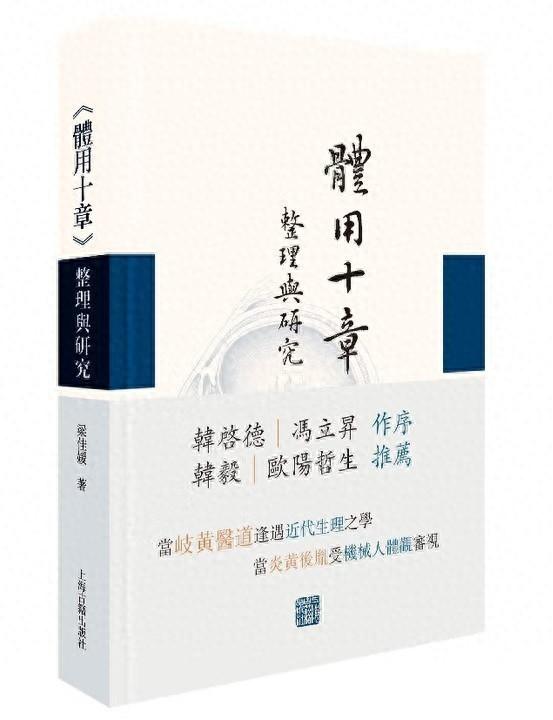
《〈体用十章〉整理与研究》——微观史中的宏大叙事
Xin Lang Cai Jing· 2026-01-05 00:09
Core Argument - The book "整理与研究" by Liang Jiayuan explores the cultural and academic power dynamics involved in the introduction of Western medicine to late Qing China, using the overlooked physiological text "体用十章" as a focal point [2][3]. Group 1: Research Approach - The author employs a "small to large" research methodology, situating "体用十章" within the broader context of the impact of Western sciences on late Qing society [3]. - The book reveals how the introduction of Western knowledge interacted with other social thought dimensions, reinterpreting the process of Western physiological knowledge's arrival in China [3][4]. Group 2: Translation and Cultural Implications - The translation of "体用十章" involved significant alterations, including the omission of certain chapters that conflicted with Christian doctrine, reflecting the translators' intent to promote Christianity while introducing modern knowledge [4][5]. - The title "体用" carries dual meanings, referring to both the structure and function of the body, and subtly alluding to the contemporary discourse of "中学为体,西学为用" [7][8]. Group 3: Influence of Traditional Chinese Medicine - The book highlights the profound influence of traditional Chinese medical thought on the translation of Western medical texts, indicating that the translators' understanding was shaped by Confucian principles [6][7]. - The terminology used in "体用十章" reflects a blend of Western scientific concepts and traditional Chinese medical frameworks, showcasing the complexities of cross-cultural knowledge transfer [6][7]. Group 4: Historical Context and National Identity - The evolution of national pride in the context of Western medicine's introduction is a central theme, with historical figures like Hua Tuo being re-evaluated in light of Western surgical practices [5]. - The book discusses how the translation of "体用十章" and its reception were influenced by the socio-political climate of the time, including the desire to assert national identity against foreign encroachment [5][6]. Group 5: Academic Contribution - The work corrects long-standing historical inaccuracies and raises significant questions about cultural colonialism, hidden missionary activities, and cognitive adaptation in the context of China's modernization [8]. - It serves as a critical resource for understanding the transformation of Chinese thought and culture during the late Qing period, making it essential reading for those interested in the history of science and cultural exchange [8].