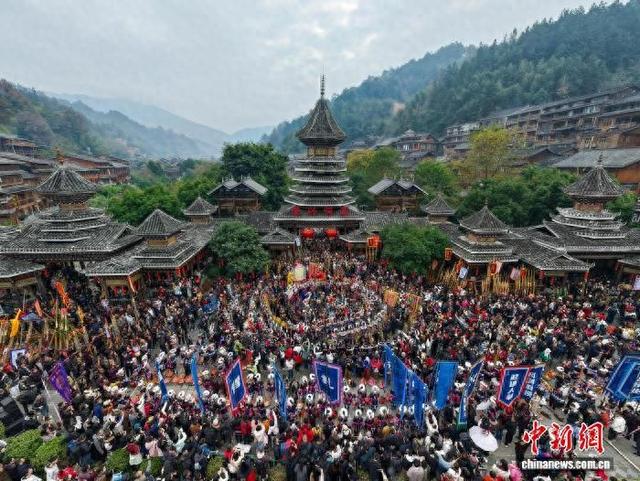
民族节庆文化

Search documents
让民族特色在利用中更加鲜亮
Xin Lang Cai Jing· 2025-12-28 19:25
Core Viewpoint - The articles emphasize the importance of preserving and promoting ethnic culture in Guizhou, highlighting the need for innovative development and creative transformation of cultural heritage to strengthen national unity and identity [1][2][3]. Group 1: Cultural Development Strategies - The 20th Central Committee of the Communist Party of China has proposed strategic tasks to stimulate cultural innovation and development, particularly focusing on the integration of minority cultures into the broader Chinese cultural framework [1]. - Guizhou's "Four Major Cultural Projects" include initiatives to promote the transmission and development of ethnic cultures, aiming to enhance the value of diverse cultural heritages [1][2]. Group 2: Festival and Tourism Promotion - The "Minority Festival Support and Promotion Plan" aims to leverage festival culture as a means to showcase and celebrate the rich diversity of ethnic traditions, with events like the "Three March" cultural tourism festival attracting participation from various ethnic groups [2][3]. - Festivals are being developed into immersive tourism projects that connect different regions, enhancing local economies and fostering cultural identity through shared experiences [2][3]. Group 3: Protection of Intangible Cultural Heritage - Guizhou is recognized as a major province for intangible cultural heritage, with initiatives to support the establishment of production-oriented protection bases for ethnic crafts and traditional arts [4][7]. - The approach to heritage protection emphasizes a balance between preservation and development, encouraging community engagement in cultural practices such as the Dong people's choral singing and Miao people's flying songs [4][6]. Group 4: Modernization and Market Integration - There is a focus on bridging traditional ethnic arts with contemporary aesthetics to appeal to younger audiences, integrating cultural elements into modern products and designs [5][6]. - The promotion of ethnic crafts through market-oriented strategies aims to enhance their visibility and economic viability, encouraging the fusion of traditional techniques with modern fashion [7]. Group 5: Collaborative Development and Resource Sharing - The strategy includes fostering collaboration among different ethnic groups and regions to create a synergistic platform for the development of traditional crafts, avoiding competition and promoting a diverse cultural landscape [7]. - Initiatives to establish a comprehensive promotional system for ethnic crafts aim to enhance their influence and ensure sustainable cultural transmission and innovation [7].
这里天天在过节?探秘“百节之乡”贵州黔东南州
Xin Lang Cai Jing· 2025-12-23 10:48
Core Viewpoint - The article highlights the vibrant festival culture in the Qiandongnan Miao and Dong Autonomous Prefecture of Guizhou, particularly in Liping County, where numerous ethnic celebrations create a lively atmosphere that attracts both locals and tourists [1][3]. Cultural Significance - Qiandongnan is home to a rich diversity of ethnic groups, including Miao and Dong, with over 390 annual festivals, of which more than 120 are large-scale events, earning it the title "Hometown of Hundreds of Festivals" [3][5]. - Festivals are deeply intertwined with agricultural practices, social interactions, and cultural rituals, reflecting the community's values of unity, hard work, and respect for nature [6][5]. Economic Impact - The festivals significantly boost local tourism and economic development, with the 2025 Sister Festival in Taijiang attracting 496,100 visitors and generating a total tourism revenue of 517 million yuan [8]. - The integration of traditional festivals with modern tourism strategies creates a positive cycle of "promoting travel through festivals and enhancing festivals through travel" [8]. Youth Engagement - There is a growing involvement of young people in cultural celebrations, with many actively participating in festival preparations and using social media to promote their heritage [8]. - The engagement of the younger generation in showcasing their culture contributes to the preservation and revitalization of traditional practices [8].