
非物质文化遗产保护

Search documents
“非遗奶茶”回归了本真
Xin Lang Cai Jing· 2026-02-24 23:26
Core Viewpoint - The article highlights the importance of protecting intangible cultural heritage in commercial practices, showcasing a case where a tea brand was found to be using "intangible cultural heritage" labels without proper authorization, leading to regulatory actions and a shift towards compliance and respect for cultural heritage [1][2]. Group 1: Regulatory Actions - In November 2025, the Danjiangkou City Procuratorate identified that a tea brand was misleadingly marketing its products as "intangible cultural heritage tea" without proper authorization, which could mislead consumers and disrupt market order [1][2]. - The procuratorate collaborated with relevant administrative departments to address the unauthorized use of "intangible heritage" in marketing, suggesting regulatory inspections and enhanced protection of intangible cultural heritage intellectual property [2]. Group 2: Compliance and Authorization - By December 15, 2025, the tea brand signed an authorization agreement with the rights holder of the intangible cultural heritage, marking a transition from "unauthorized use" to "legitimate authorization" [2]. - The authorization is viewed as a commitment to respect intangible cultural heritage and consumer trust, with clear authorization information now serving as a new trust symbol for the tea brand across all its stores [2]. Group 3: Market Impact - The case illustrates the collaborative efforts between procuratorial and administrative bodies to protect intangible cultural heritage and regulate market practices, emphasizing the responsibility and commitment associated with the use of "intangible heritage" labels [2]. - Customers now perceive the "intangible heritage" label not just as a unique feature but as a responsibility and promise from the brand [2].
司法守护,让年画“连年有余”
Xin Lang Cai Jing· 2026-02-15 00:02
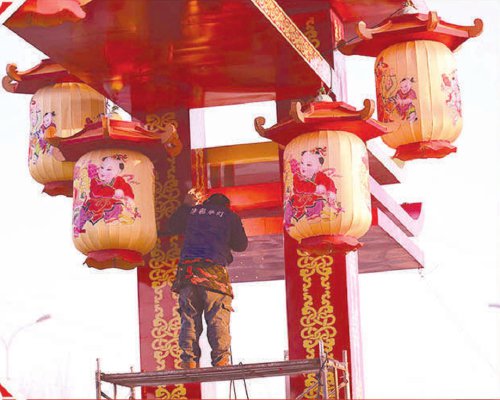
Core Viewpoint - The article highlights the cultural significance and ongoing challenges faced by the Yangliuqing woodblock New Year paintings, a national intangible cultural heritage, as practitioners work to preserve and promote this traditional art form during the festive season [11][13]. Group 1: Cultural Heritage - Yangliuqing woodblock New Year paintings have a history of over 400 years and are characterized by distinct Tianjin cultural features, serving as a living fossil of local culture [11]. - The most representative theme in Yangliuqing paintings is the "New Year doll," which symbolizes prosperity and good wishes through its imagery, such as a doll holding a fish and a lotus flower [11]. Group 2: Challenges in Preservation - Practitioners, including the sixth-generation inheritor Huo Qingshun and seventh-generation inheritor Zhang Hong, face challenges such as counterfeit products and insufficient transmission of skills [11]. - The local prosecutor's office has taken action to protect these intangible cultural heritage projects by issuing recommendations to administrative departments and conducting inspections of 127 businesses [13]. Group 3: Community Engagement and Support - The prosecutor's office has organized meetings with representatives and volunteers to understand the current situation and difficulties faced by heritage protectors and inheritors [13]. - Huo Qingshun has been appointed as a special liaison to help gather information on cases related to the paintings and provide professional support for legal matters [13].

火笔绘出东方美
Xin Lang Cai Jing· 2026-02-15 00:02
Core Viewpoint - The article highlights the preservation and promotion of Nanyang lacquer painting, a national intangible cultural heritage, through the efforts of local artisans and legal support from the Wolong District Procuratorate, which has led to a reduction in counterfeit products and an expansion of training programs for new artisans [4][5][7]. Group 1: Cultural Heritage and Artisanship - Nanyang lacquer painting, also known as "烙花" or "fire pen painting," has a history of over 2000 years and is recognized as a representative school of Chinese lacquer painting [4]. - The Nanyang lacquer painting factory serves as a national-level protection unit for this intangible cultural heritage, producing works that have participated in international exhibitions and won awards [4]. - Artisans at the factory are currently focused on creating popular works featuring horse elements for the upcoming Spring Festival [4]. Group 2: Legal Support and Anti-Counterfeiting Efforts - The Wolong District Procuratorate has initiated a "public interest litigation + intangible cultural heritage protection" model to address issues of counterfeiting, leading to the discovery of over 20 illegal merchants and administrative penalties for more than 10 individuals [5]. - Following the legal actions, the situation regarding counterfeit Nanyang lacquer paintings has significantly improved, allowing artisans to focus on their creative work [7]. Group 3: Training and Expansion - The factory has expanded its training programs, establishing teaching sites in regions such as Xinjiang and Guangdong, training nearly 100 apprentices across more than 20 batches [7]. - The product range has diversified from simple lacquered chopsticks to include silk, wooden boards, and gourd lacquer paintings, with products now exported to over 50 countries and regions [7].

大柴旦切实做好非遗保护传承工作
Xin Lang Cai Jing· 2026-02-12 19:35
Core Viewpoint - The Dazhai Dan Administrative Committee in the Haixi Mongolian and Tibetan Autonomous Prefecture emphasizes the protection of intangible cultural heritage as a key strategy for rural revitalization and cultural prosperity, focusing on both protection and development, as well as inheritance and innovation [1] Group 1: Activities and Engagement - A total of 16 public participation activities have been organized, including embroidery, paper-cutting, stone carving, and traditional music performances, to promote intangible cultural heritage [1] - Educational initiatives have been implemented through the "Three Advances" campaign, which includes traditional culture entering schools, communities, and military camps, utilizing live demonstrations, videos, and skill transmission to engage audiences [1] Group 2: Online Promotion and Outreach - The "Internet + Intangible Cultural Heritage Protection" action plan has been launched to enhance online promotion, encouraging inheritors to use platforms like Douyin and Kuaishou for heritage transmission and publicity [1] - Efforts are being made to conduct a comprehensive survey of representative inheritors of intangible cultural heritage, including their lineage, teaching practices, talent cultivation, and promotional activities [1] Group 3: Inheritor Identification - The Dazhai Dan region has identified one provincial-level representative inheritor and 17 county-level representative inheritors, along with 13 new inheritors being discovered [1]
建议提案办理见成效丨同题共答同向发力,为检察履职注入新动能——最高人民检察院高质量办理代表委员建议提案
Xin Hua She· 2026-02-12 08:55
Group 1 - The core viewpoint emphasizes the importance of transforming representatives' suggestions into actionable measures by the Supreme People's Procuratorate, enhancing the effectiveness of legal supervision and public interest litigation [1][2][3] - The Supreme People's Procuratorate has effectively integrated representatives' suggestions into its case handling, particularly in the area of protecting intangible cultural heritage, demonstrating a proactive approach to legal enforcement [2][3] - In 2025, the Supreme People's Procuratorate completed the handling of 213 representatives' suggestions and 76 committee proposals from the National Committee of the Chinese People's Political Consultative Conference, all within the stipulated time frame [2] Group 2 - The collaboration between representatives and the Supreme People's Procuratorate has led to innovative measures in public interest litigation, particularly in safeguarding labor rights, showcasing a comprehensive approach to legal supervision [3][4] - The Supreme People's Procuratorate has established a system to address labor rights protection through public interest litigation, responding to suggestions from representatives and enhancing the legal framework for labor rights [3][4] - Continuous communication between representatives and the Supreme People's Procuratorate has resulted in practical measures for the protection of minors, reflecting a commitment to effective implementation of legislative suggestions [6]
深度关注丨寻味中国年
Zhong Yang Ji Wei Guo Jia Jian Wei Wang Zhan· 2026-02-09 23:59
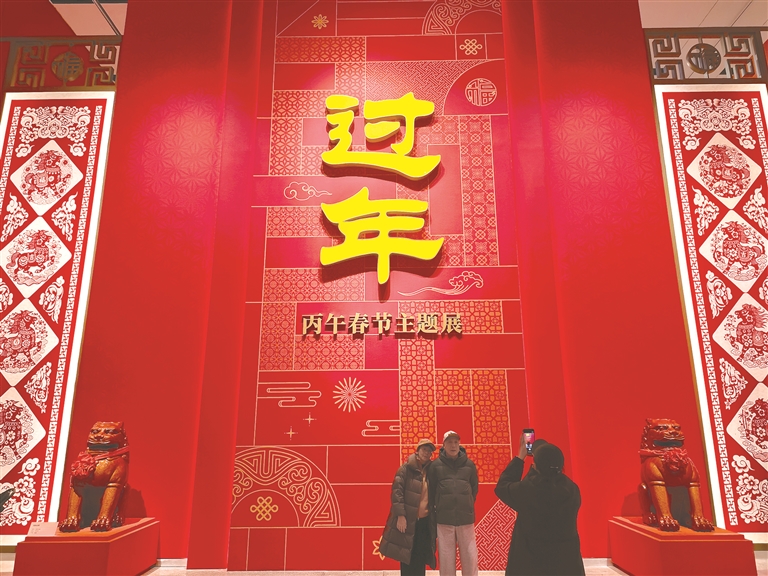
Core Viewpoint - The article highlights the increasing popularity of intangible cultural heritage (ICH) during the Chinese New Year celebrations, emphasizing the significance of traditional customs and practices in enhancing cultural confidence and community bonding [21][22][23]. Group 1: Event Overview - The "Over New Year - Year of the Horse Spring Festival Theme Exhibition" is being held at the China Intangible Cultural Heritage Museum, featuring various activities to celebrate the Spring Festival [6][7]. - The exhibition consists of four main sections: "Historical Sequence," "Galloping Forward," "Food is Heaven," and "Light Turns Spring Radiance," showcasing over a hundred representative ICH projects related to the Spring Festival [7][8]. Group 2: Cultural Significance - The Spring Festival is recognized as a vital platform for the transmission and promotion of traditional culture, reflecting the cultural confidence and identity of the Chinese people [22][23]. - The inclusion of the Spring Festival in the UNESCO list of intangible cultural heritage in 2024 marks a significant achievement in the protection and promotion of ICH in China [7][23]. Group 3: Community Engagement - Various interactive activities, such as traditional handicraft experiences and food tasting, are organized to engage the public and enhance their understanding of cultural traditions [9][10]. - The event aims to create a festive atmosphere, allowing visitors to experience the joy and warmth of the Spring Festival through hands-on participation [15][20]. Group 4: Future Directions - The article emphasizes the need for continued efforts in the systematic protection of intangible cultural heritage, encouraging community involvement and the integration of ICH into modern life [16][23]. - The growing global influence of the Spring Festival reflects the expanding reach of Chinese culture, with many countries recognizing it as a public holiday [12][22].
斩断“非遗代办”灰产,守护文化传承本真
Xin Lang Cai Jing· 2026-02-08 19:33
Core Viewpoint - The rampant practice of charging for "intangible cultural heritage certificates" online undermines the seriousness and authority of intangible cultural heritage, necessitating societal vigilance and rectification [1] Group 1: Current Situation - Online platforms are offering "fast-track" services for obtaining intangible cultural heritage certificates, with prices ranging from hundreds to thousands of yuan, including claims of bypassing traditional requirements [1][2] - The existence of fake associations and fabricated materials by these agencies highlights a complete industrial chain that profits from the issuance of false certificates, disrupting the legitimate order of intangible heritage applications [2] Group 2: Factors Contributing to the Issue - Demand-side motivations include businesses and individuals seeking quick profits by leveraging the "intangible heritage" label for market advantages without genuine commitment to skill development [3] - Supply-side issues arise from agencies exploiting public ignorance about the application process, creating false qualifications and materials, while online platforms fail to enforce strict oversight [3] - Regulatory weaknesses exist in tracing fake certificates and monitoring agencies, allowing fraudulent practices to proliferate [3] Group 3: Consequences of the Current Situation - The fraudulent practices harm genuine inheritors and projects, undermining their efforts and discouraging their commitment to cultural preservation [4] - The cultural value and social credibility of intangible heritage are diminished as the public's respect for these certifications wanes [4] - Market order and cultural ecology are disrupted, misleading consumers and creating an environment that prioritizes form over substance in heritage protection [4]
以光影传播高原之美
Xin Lang Cai Jing· 2026-02-06 00:21
Core Viewpoint - The article highlights the dedication and achievements of a grassroots journalist, Renqing Lezhi, who has been documenting and promoting the unique cultural heritage of Huangnan Tibetan Autonomous Prefecture through various media projects, emphasizing the importance of preserving and sharing local stories and traditions with a broader audience [2][4]. Group 1: Achievements and Recognition - Renqing Lezhi has been awarded the "Qinghai Good Person" dedication award for his contributions to journalism and cultural preservation [2]. - His work "Yutu" received the third prize at the Qinghai News Awards and was recognized at the 10th Asian Micro Film Art Festival for its excellence in documentary filmmaking [4]. Group 2: Cultural Projects - The project "Hotog June Festival" involved three years of filming across 17 villages to authentically capture the local customs, resulting in a bilingual short video in Tibetan and Chinese [2]. - Renqing Lezhi's documentary work aims to showcase the unique cultural heritage of the region, such as the "Yutu" performance, which is a national intangible cultural heritage [3][4]. Group 3: Future Plans - Renqing Lezhi plans to create new documentaries, including "Longwu River: Flowing Memories and Life" and "The Carnival of Hotog June Festival," to further explore and present the cultural narratives of his hometown [5]. - He is also working on translating his works into English to reach a wider audience and share the beauty of Huangnan with the world [5].

【人民日报】黑龙江同江市加强赫哲族伊玛堪保护传承 “我们的歌,会一直唱下去”
Ren Min Ri Bao· 2026-02-04 23:53
Core Viewpoint - The article highlights the successful preservation and promotion of the Hezhe ethnic group's intangible cultural heritage, specifically the oral tradition of "Imakan," which has been recognized by UNESCO and is being actively taught and performed to ensure its survival and relevance in modern society [1][3]. Group 1: Cultural Heritage Recognition - The "Imakan" of the Hezhe ethnic group was included in the UNESCO Representative List of the Intangible Cultural Heritage of Humanity in December 2025, marking a significant achievement in the protection of intangible cultural heritage in China [1]. - The "Imakan" protection plan was also listed in the "Excellent Protection Practice" catalog, showcasing a dual success in both recognition and practical preservation efforts [1]. Group 2: Preservation Efforts - The Hezhe ethnic group lacks a written language, making "Imakan" a crucial method for language transmission and cultural preservation [1]. - The establishment of the Hezhe Cultural Heritage Protection Center in 2006 has been pivotal in the systematic documentation and digital collection of "Imakan," resulting in over 40 published volumes, including "The Hezhe Imakan Recital" [2]. - The center has developed a four-level archival system to ensure comprehensive documentation of "Imakan" practices and practitioners [2]. Group 3: Educational Initiatives - The establishment of "Imakan" training institutes in Tongjiang City has led to the enrollment of over 60 students, with ongoing efforts to enhance teaching methods and student engagement [3]. - Recent initiatives include the introduction of "Imakan" into local primary schools, with nearly 3,000 students participating in learning activities over the past three years [4]. Group 4: Community Engagement and Future Prospects - The collaboration between local artists and cultural preservationists aims to create "Imakan" stage plays, linking cultural transmission with tourism development to promote rural revitalization [3]. - The community's efforts are focused on combining the cultivation of successors with improving the living standards of the Hezhe people, ensuring the longevity of "Imakan" [3].
非遗认证岂能沦为流水线生意
Xin Lang Cai Jing· 2026-02-02 19:05
Core Viewpoint - The article highlights the exploitation of intangible cultural heritage (ICH) in China, where fraudulent certification practices undermine the authenticity and value of traditional skills and crafts [1][2][3] Group 1: Current Issues - There is a growing trend of online platforms offering "ICH certificates" for a fee, ranging from hundreds to thousands of yuan, which raises concerns about the legitimacy of these certifications [1] - Some businesses are falsely marketing ordinary products as "ICH techniques," leading to consumer deception and a crisis of trust in ICH protection [2] - The root cause of these issues lies in the loss of control over certification rights, with unauthorized agencies creating a "black market" for certifications [2] Group 2: Proposed Solutions - Legal measures should reinforce that only cultural and tourism departments have the authority to certify ICH, with strict penalties for those issuing false certificates [3] - A national unified ICH certification database is recommended to verify certificate numbers, styles, and issuing organizations, along with the use of AI technology for monitoring [3] - Public education is essential to expose the nature of "pay-for-certification" scams and enhance the public's ability to discern authenticity [3]