水稻无胚性状分子机制

Search documents
【新华社】中国科学家揭示水稻“无胚”之谜
Xin Hua She· 2025-08-04 01:03
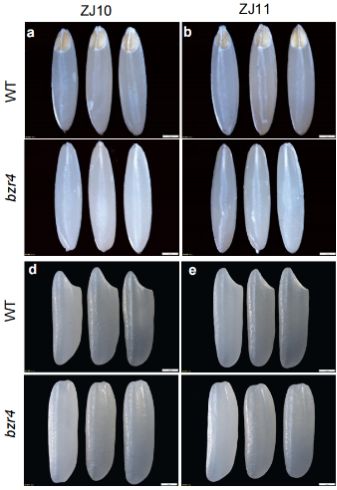
Core Insights - A research team from the Northeast Institute of Geography and Agroecology of the Chinese Academy of Sciences and the Yazhou Bay National Laboratory has discovered regulatory genes for "embryo-less" rice, which is expected to significantly enhance the quality and storage durability of rice [1] Group 1: Research Findings - The embryo is the starting point of rice life, while the endosperm serves as the main storage for starch and protein, providing nutrition for embryo germination [1] - The study identified key regulatory gene OsBZR4, which can produce 60% to 100% embryo-less seeds through mutations in different cultivated varieties [1] - By regulating the OsBZR4 gene, temperature-sensitive embryo-less rice germplasm can be developed, improving both the yield of polished rice and its storage durability [1] Group 2: Implications for Rice Breeding - This research fills a gap in the molecular mechanism study of embryo-less traits in rice, providing valuable genetic resources for rice breeding [1] - The findings are expected to enhance polished rice yield and storage capacity, contributing to food security and improved rice quality [1] - The research results have been published online in the international academic journal "Nature Communications" [1]

中国科学家揭示水稻“无胚”之谜
Xin Hua She· 2025-08-02 04:07
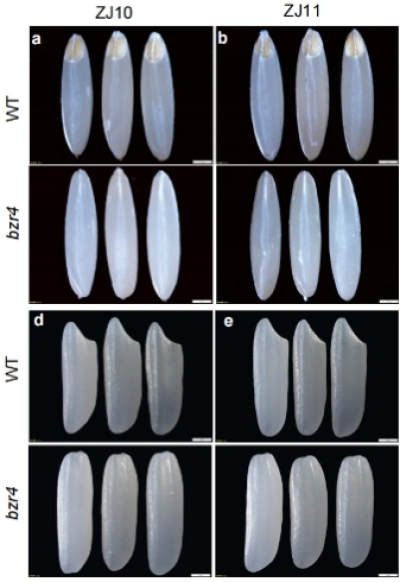
Core Insights - A research team from the Northeast Institute of Geography and Agroecology of the Chinese Academy of Sciences and the Yazhou Bay National Laboratory has discovered regulatory genes for "embryo-less" rice, which is expected to significantly enhance the quality and storability of rice [1][3] Group 1: Research Findings - The embryo is the starting point of rice life, while the endosperm serves as the main storage for starch and protein, providing nutrition for embryo germination [1] - The study identified the key regulatory gene OsBZR4 responsible for the embryo-less trait in rice, elucidating its mechanism of action [1] - Mutations in the OsBZR4 gene across different cultivated varieties can produce 60% to 100% embryo-less seeds, indicating a substantial potential for improving rice yield and storage quality [1] Group 2: Implications for Rice Breeding - This research fills a gap in the molecular mechanism study of embryo-less traits in rice, providing valuable genetic resources for rice breeding [3] - The ability to cultivate temperature-sensitive embryo-less rice germplasm could lead to increased yield of high-quality rice and improved storability, contributing to food security and enhanced rice quality [3]