水稻

Search documents
农林牧渔行业周报第11期:全国均价跌破10元 KG,产能去化加速
HUAXI Securities· 2026-03-23 13:30
Investment Rating - The industry rating is "Recommended" [3] Core Insights - The report emphasizes the importance of seed industry revitalization, highlighting government support and the need for technological self-reliance in seed production [1][11] - In the pig farming sector, the average price of pigs has dropped to 9.96 CNY/kg, reflecting a 0.90% decrease week-on-week, primarily due to oversupply and seasonal demand decline [2][12] - The report suggests that the pig farming industry is likely to accelerate capacity reduction due to widespread losses, with specific recommendations for companies in the breeding and feed sectors [5][12] Summary by Sections Planting Industry - The Ministry of Agriculture and Rural Affairs is focusing on seed industry revitalization, aiming for technological independence and improved seed quality [1][11] - Key companies recommended for investment include Beidahuang and Suqian Agricultural Development, as well as leading seed companies like Dabeinong and Longping High-Tech [1][11] Pig Farming - The average price of pigs is currently 9.96 CNY/kg, with a significant decline in profits for self-bred and purchased piglets, leading to a forecasted acceleration in capacity reduction [2][5][12] - Companies recommended for investment in the pig farming sector include Muyuan Foods, New Hope Liuhe, and WH Group, among others [5][12] Market Data - The report tracks key agricultural product prices, noting that corn is priced at 2453.27 CNY/ton, with a week-on-week increase of 0.54% [22][23] - The average price of wheat is reported at 2595.63 CNY/ton, reflecting a week-on-week increase of 1.34% [25][26] - The average price of cotton in Xinjiang is 16670 CNY/ton, with a week-on-week increase of 0.85% [41][42]


农林牧渔行业周报第11期:全国均价跌破10元/KG,产能去化加速-20260323
HUAXI Securities· 2026-03-23 11:32
Investment Rating - Industry Rating: Recommended [3] Core Insights - The report emphasizes the importance of seed industry revitalization, highlighting the need for technological independence and self-sufficiency in seed sources. The government is committed to enhancing the strength of seed enterprises and optimizing the market environment for seed resources [1][12]. - In the pig farming sector, the average price of live pigs has dropped to 9.96 CNY/kg, reflecting a 0.90% decrease week-on-week. This decline is attributed to oversupply and seasonal demand fluctuations, leading to increased pressure on large-scale farms to reduce inventory [2][13]. - The report suggests that the pig farming industry is likely to accelerate capacity reduction due to widespread losses, with specific recommendations for companies in the breeding and feed sectors that are expected to benefit from cost improvements and higher future output elasticity [5][13]. Summary by Sections Planting Industry - The Ministry of Agriculture and Rural Affairs is focusing on seed industry revitalization, emphasizing the need for organized and systematic research and breeding efforts. The goal is to enhance the quality of seed resources and promote the commercialization of breeding technologies [1][12]. - Key companies recommended for investment in the planting sector include Beidahuang and Suqian Agricultural Development, as well as leading seed companies like Dabeinong and Longping High-Tech [1][12]. Pig Farming - The average price of live pigs has decreased to 9.96 CNY/kg, with a significant drop in profits for self-bred and purchased piglets, indicating a challenging market environment [2][5][13]. - The report highlights the need for capacity control measures among pig farming enterprises to better align supply and demand, with specific companies recommended for investment, including Muyuan Foods, New Hope Liuhe, and WH Group [5][13]. Key Agricultural Products - Corn: The average price is 2453.27 CNY/ton, with a week-on-week increase of 0.54% [26]. - Wheat: The average price is 2595.63 CNY/ton, reflecting a week-on-week increase of 1.34% [29]. - Soybeans: The average price is 4277.37 CNY/ton, remaining stable week-on-week [42].

中国科学院最新研究论文,登上Science封面
生物世界· 2026-03-20 08:00
Core Viewpoint - The research identifies the key gene EBT1 responsible for the perennial growth habit of wild rice, revealing the genetic basis for the transition from perennial to annual growth in cultivated rice [3][10]. Group 1: Research Findings - The study successfully cloned the EBT1 gene, which is crucial for the perennial growth habit of wild rice, and demonstrated that changes in its expression pattern were key to the transition during rice domestication [3][10]. - The research utilized 446 samples of perennial wild rice to study traits associated with perennial growth habits, highlighting the structural characteristics of herbaceous plants, such as extensive tillering and vegetative reproduction, which are absent in modern cultivated rice [6][7]. - The team identified a gene locus containing tandem microRNA156 genes (MIR156BC) and analyzed how dynamic changes in miR156 abundance promote the perennial growth habit of wild rice [7][8]. Group 2: Mechanisms and Implications - The study found that unlike modern annual rice varieties, the MIR156BC in wild rice can reset its expression during the development of tillers after flowering, linked to increased chromatin accessibility and reduced repressive epigenetic marks [8][10]. - By combining the EBT1 gene with known creeping growth genes PROG1 and TIG1, the researchers successfully enabled annual cultivated rice to largely replicate the perennial growth habit of wild rice, demonstrating survival for at least two years in field conditions [8][10]. - This research provides new insights into the genetic basis of perennial traits in cereal crops and paves the way for the development of sustainable perennial rice varieties [10].


白沙完成春耕备耕面积超3万亩
Hai Nan Ri Bao· 2026-02-28 04:06
Core Viewpoint - The agricultural sector in Baisha Li Autonomous County is actively engaged in spring plowing and preparation, with significant progress reported in the cultivation of rice and corn, indicating a strong start to the agricultural season [1] Group 1: Agricultural Progress - The spring plowing and preparation work in Baisha has commenced early and is advancing rapidly, with over 30,000 acres completed so far [1] - Farmers are utilizing over 1,000 agricultural machines, which enhances efficiency and reduces labor in the planting process [1] Group 2: Resource Availability - The county has stocked 34.6 tons of seeds for rice and corn, ensuring sufficient supply for the spring planting needs [1] - Fertilizer and other agricultural supplies are reported to be abundant and prices stable, meeting the production requirements for the season [1] Group 3: Support and Guidance - Agricultural technicians will be deployed to provide guidance on seedling management and pest control, reinforcing the foundation for stable and abundant grain production throughout the year [1]
春天早来一步 对农作物是利是弊
Xin Lang Cai Jing· 2026-02-27 22:33
Group 1 - The early arrival of spring in Sichuan, with meteorological spring starting on February 13, is 18 days earlier than the average, impacting agricultural activities [1] - Farmers in Yibin City are actively preparing for the planting season, with many starting their tasks earlier than usual, although some farmers report that the timing remains similar to previous years [1] - Agricultural experts warn of potential indirect impacts from the early spring, including increased pest and disease risks due to a dry winter and poor soil moisture conditions affecting crop emergence [1] Group 2 - Experts advise farmers to be cautious of potential late spring cold snaps that could lead to diseases like damping-off, emphasizing the need for protective measures [2] - Meteorological forecasts indicate a likelihood of significant temperature drops in late March, which could result in late spring cold events [2] - Farmers are encouraged to utilize favorable weather for land preparation and moisture retention, and to consider techniques like plastic film covering to mitigate the effects of potential cold snaps [2]
水稻种植大户有了新帮手
Xin Lang Cai Jing· 2026-02-27 22:33
Core Viewpoint - The agricultural sector in Luzhou County is experiencing a significant transformation with the adoption of automation and advanced machinery in rice seedling cultivation, aiming to enhance efficiency and reduce labor costs [1][2][3] Group 1: Agricultural Automation - The introduction of electric push-pull greenhouses and automated seedling production lines has improved efficiency by over 40% compared to manual labor, reducing labor costs by 200 yuan per acre [1][3] - The automated seedling production line can assemble 800 to 1000 trays of seedlings per hour, with seedlings being transferred to a temperature-controlled dark room for germination [2] Group 2: Production Goals and Techniques - The first batch of seedlings is expected to be transplanted by the end of March, with plans to cultivate over 2,000 acres using various planting methods including direct seeding, broadcasting, and machine transplanting [2] - The overall mechanization level for rice planting in the county is projected to reach over 80% this year, indicating a significant shift towards more efficient agricultural practices [3] Group 3: Labor and Resource Management - The involvement of younger generations in agriculture, such as the return of Liu Daoguo's son to assist in operations, highlights a trend of integrating family resources to enhance agricultural productivity [3] - The Luzhou County Agricultural and Rural Bureau emphasizes the importance of machinery in improving the efficiency and quality of spring farming preparations, aiming to optimize agricultural structure and increase grain yield and quality [3]
(新春走基层)广东太和镇:绿肥还田 生态效益双丰收
Zhong Guo Xin Wen Wang· 2026-02-27 14:08
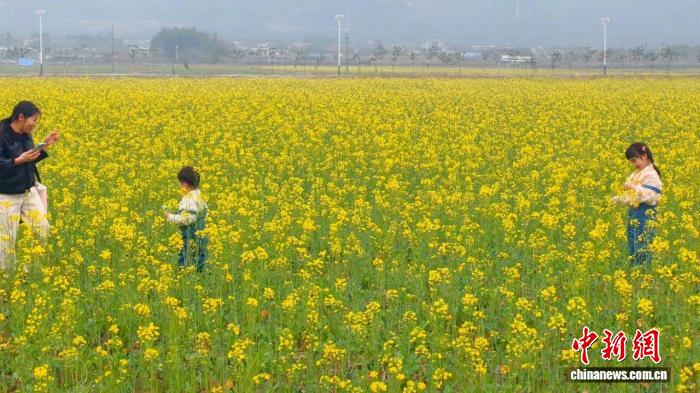
Core Viewpoint - The article highlights the ecological and agricultural benefits of using green manure in Taihe Town, Guangdong, showcasing a sustainable agricultural model that enhances soil fertility and reduces costs while promoting green development [1][4]. Agricultural Practices - Taihe Town has implemented a green manure strategy by planting 2,000 acres of purple vetch and creating a 1,000-acre canola flower sea, forming a 3,000-acre "green manure matrix" [3]. - Purple vetch, through symbiosis with nitrogen-fixing bacteria, can add 10 to 30 kilograms of nitrogen fertilizer per acre to the soil, while canola roots help activate deep soil nutrients [3]. Crop Production Plans - For the current year, Taihe Town plans to cultivate 9,582 acres of food crops, including 7,344 acres of rice, 2,026 acres of tubers, and 212 acres of corn, alongside 3,012 acres of peanuts and 10,709 acres of various vegetables [4]. - The integration of green manure and full mechanization is expected to reduce rice cultivation costs to 780 yuan per acre, enhancing efficiency and lowering expenses [4]. Sustainable Development - The practice of returning green manure to the soil not only improves soil quality but also reduces pollution, contributing to long-term ecological sustainability [4]. - The transformation of the flower sea into nutrient-rich soil exemplifies the shift from aesthetic appeal to agricultural productivity, reinforcing the commitment to green agriculture [4].
抢农时、抓育秧,广东打好春耕备耕第一仗
Nan Fang Nong Cun Bao· 2026-02-27 10:01
Core Viewpoint - Guangdong province is actively preparing for spring farming, focusing on early rice seedling cultivation and establishing new centralized seedling centers to ensure a successful agricultural year [2][3][4]. Group 1: Agricultural Preparation - Over 13 million acres of early rice seedlings are being cultivated in Guangdong, with 175 new centralized seedling centers established [2]. - Farmers are seizing favorable weather conditions to prepare fields, ensuring a solid foundation for agricultural production in the new year [3][4]. - The use of modern agricultural machinery, such as tractors and drones, is enhancing the efficiency of spring farming operations [10][12]. Group 2: Crop Management and Soil Health - Farmers are implementing green manure practices, such as planting purple vetch and rapeseed, to improve soil quality and reduce fertilizer usage [15][17]. - The agricultural plan for 2026 in Qingyuan includes 9,582 acres of food crops, with a focus on rice, sweet potatoes, and corn, alongside over 10,700 acres of various vegetables [21][22]. - The cost of rice planting is expected to be reduced to 780 yuan per acre, aiming for both cost reduction and yield improvement [23]. Group 3: Community Engagement and Support - In Yunfu, community efforts are focused on clearing irrigation channels and preparing for spring farming, with local residents actively participating in these initiatives [44][50]. - The Yunfu Agricultural Production Materials Circulation Association is mobilizing resources to ensure a steady supply of seeds, fertilizers, and pesticides for farmers [55][56]. - The establishment of a "spring farming preparation vanguard team" in Yunfu is enhancing community involvement in agricultural activities [48][54]. Group 4: Technological Advancements - The Guangdong First Field core area in Jiangmen is utilizing smart agricultural technology for seedling cultivation, with a capacity to supply 220,000 trays of high-quality seedlings annually [64][71]. - The integration of digital control systems in seedling centers is significantly improving seedling uniformity and supporting mechanized transplanting [70][72]. - Jiangmen is committed to leveraging digital technology to enhance agricultural productivity and ensure food security [72][74]. Group 5: Resource Management - In Heyuan, modern seedling greenhouses are being utilized to ensure a continuous supply of quality seedlings for local farmers [80][81]. - Agricultural resource companies in Longchuan are preparing sufficient stocks of fertilizers, pesticides, and seeds to meet the upcoming spring farming demands [83][85]. - The distribution of agricultural materials is being organized to ensure timely delivery to farmers, facilitating their preparation for the busy farming season [86].

评论丨从“两业协同”感悟广东乡村振兴的三重境界
Nan Fang Nong Cun Bao· 2026-02-24 07:35
Core Viewpoint - The article discusses the integration of manufacturing and service industries in Guangdong as a key strategy for rural revitalization, highlighting the transformation of agriculture and the emergence of new talent and urban-rural connections. Group 1: Industry Integration - The deep integration of agriculture with manufacturing and service industries is redefining the value boundaries of "three rural issues" [10][11] - The Jiangmen Xinhui Agricultural Machinery Service Center has established a service system covering the entire rice industry chain, with an annual service area exceeding 30,000 acres [12][13] - The use of advanced agricultural equipment and technologies, such as drones and robots, is becoming prevalent, with the central government's recent policy promoting AI in agriculture [17][18] Group 2: Talent Development - The concept of "investing in people" is extending from urban areas to rural regions, with training programs transforming former workers into professional managers in rural operations [27][29] - The implementation of a "rural craftsman" title evaluation system aims to recognize and standardize skills across various fields, with a target of over 10,000 skilled talents by the end of 2025 [32][33] - The demand for talent in cold chain logistics is rising due to the intelligent transformation of the seafood processing industry, linking education with industry needs [38][39] Group 3: Urban-Rural Connectivity - The "Hundred Thousand Project" has led to significant breakthroughs in county-level revitalization, with Bo Luo County projected to exceed a GDP of 100 billion yuan by 2025 [43][44] - Industrial strong counties like Huizhou and Zhaoqing are accelerating their efforts to join the "100 billion club," with notable industrial outputs [45][46] - The integration of industry and tourism is expanding income channels for farmers, moving beyond traditional agriculture to include processing and service sectors [55][56]
乡韵依旧、家园常新,这是内蒙古和美乡村的模样
Xin Lang Cai Jing· 2026-02-17 11:13
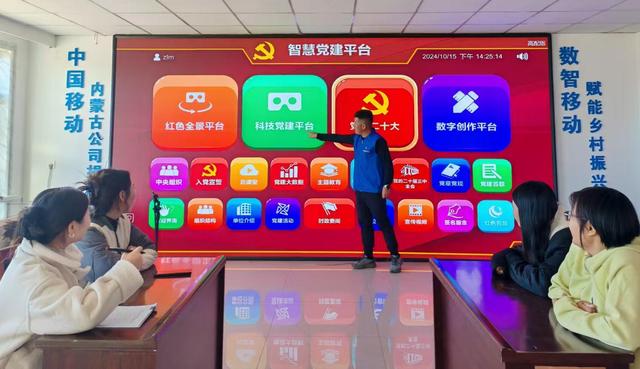
Core Viewpoint - The articles highlight the positive transformations in rural areas of Inner Mongolia, focusing on housing improvements, income growth through cooperative farming, and advancements in digital infrastructure, all contributing to a better quality of life for residents during the Spring Festival. Group 1: Housing Improvements - The story of Yu Chunlong, a poverty monitoring household, illustrates the impact of housing upgrades, as he moved into a new 96-square-meter brick house before the Spring Festival, enhancing his family's living conditions and overall happiness [2] - The Inner Mongolia government has been actively working to connect poverty alleviation efforts with rural revitalization, improving policies in various sectors such as housing, employment, and healthcare to ensure stability and development [2] Group 2: Income Growth - The "Unified Planting and Shared Prosperity" model in Dalate Banner has allowed farmers like Shi Haishu to benefit from cooperative farming, leading to significant income increases. For instance, he earned 33,600 yuan from his 30 acres of land through cooperative management and an additional 42,000 yuan from infrastructure projects [3] - This model promotes the integration of resources and labor, enabling small farmers to participate in larger agricultural industries, thus enhancing collective income and financial stability for both households and village collectives [3][4] Group 3: Digital Infrastructure and Community Engagement - The establishment of a smart party building room in Wushen Yihe Village has facilitated community engagement through digital means, allowing residents to enjoy shared experiences like watching the Spring Festival Gala together [5][6] - The integration of digital technology in rural governance and services, such as remote medical care and e-commerce, is transforming rural life, with significant improvements in infrastructure like high-speed internet and modern facilities [7] Group 4: Overall Rural Development - Inner Mongolia aims to maintain over 10 million acres of grain planting area by 2025, achieving stable production and ensuring food security through cooperative farming practices [4] - The region has made substantial progress in rural infrastructure, with 99.8% of administrative villages having access to fiber optics, and significant improvements in water supply and waste management, contributing to enhanced living conditions [7]