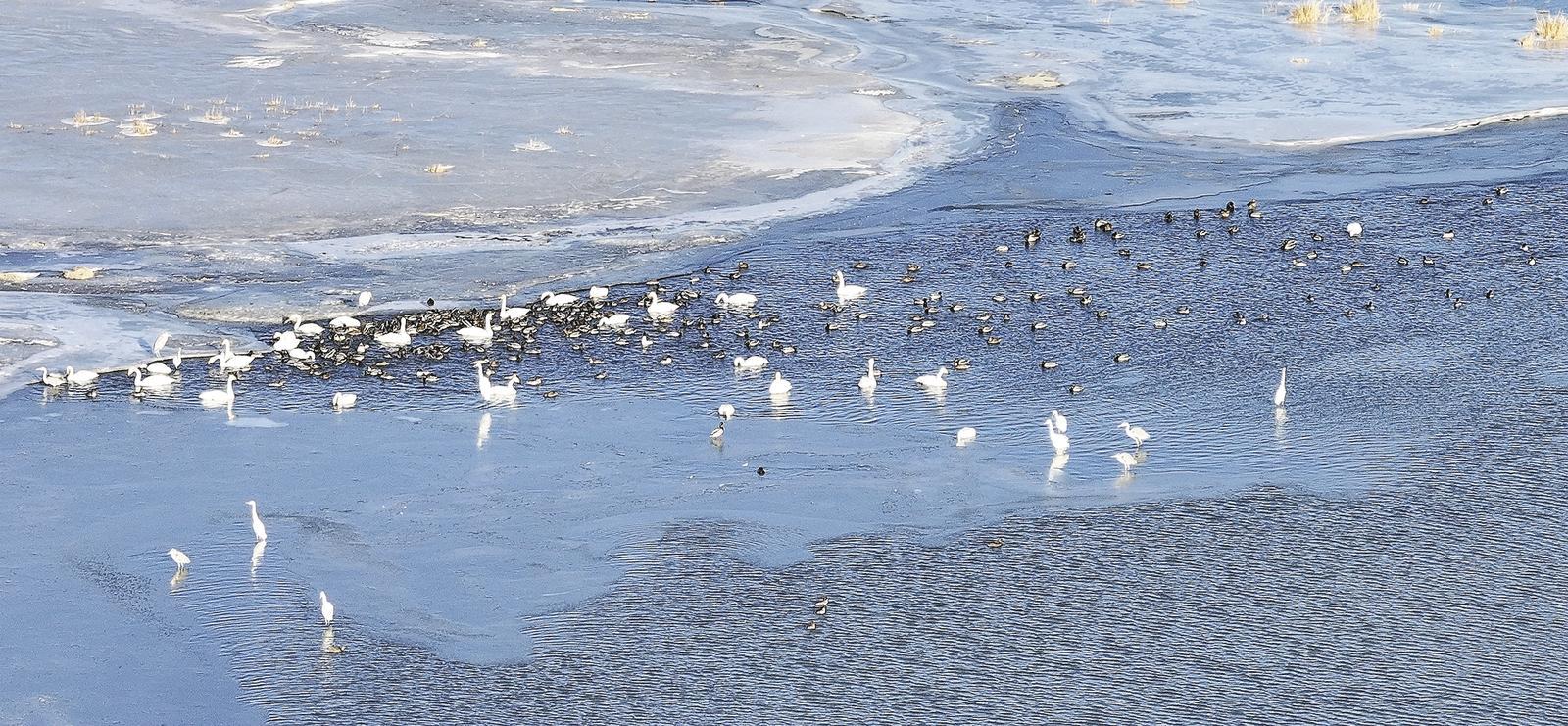
水鸟监测

Search documents
贵德:赤麻鸭成越冬水鸟“主力军”
Xin Lang Cai Jing· 2026-01-23 17:51
Core Insights - The article reports on a significant increase in the number and variety of wintering waterbirds in the Guo De County of Qinghai Province, with a total of 1,692 birds recorded, marking a substantial growth compared to the previous year [1] Group 1: Monitoring Overview - The winter waterbird survey was conducted by provincial, state, and county forestry and grassland departments starting January 13, 2026 [1] - The monitoring covered six sampling points along a total length of 51 kilometers, including locations such as Songbaxia and the Guo De Yellow River National Wetland Park [1] Group 2: Species and Population Data - A total of 24 species from 7 families were recorded, with 9 new species added compared to the same period in 2025, and an overall increase in numbers by 64.59% [1] - The population composition shows that ducks are the most prevalent, with 15 species totaling 1,612 individuals, accounting for 95.27% of the total count [1] - Among the recorded species, the red-headed duck was the most numerous, with 693 individuals, representing 40.96% of the total wintering waterbirds [1] Group 3: Conservation Status - The survey identified 16 individuals of the national first-class protected species, the white-tailed eagle, and four second-class protected bird species, including 354 whooper swans and 2 lesser white-fronted geese [1]
翩翩远行客 偏偏爱青海
Xin Lang Cai Jing· 2026-01-09 18:43
Core Viewpoint - The article highlights the winter bird monitoring efforts at the Tiange Wetland in Qinghai Province, emphasizing the challenges faced by migratory birds due to harsh weather conditions and the importance of preserving their habitats [9][10][12]. Group 1: Bird Monitoring and Observations - The monitoring team recorded a total of 11 bird species and 216 individual birds during their observations at the Tiange Wetland [11]. - The presence of a small area of open water amidst the ice provided a crucial habitat for various water birds, despite the overall decrease in their numbers compared to previous years [10][12]. - The monitoring revealed that the harsh winter conditions have led to a significant reduction in available habitats for water birds, forcing them to coexist with predators like eagles and vultures in limited spaces [12][13]. Group 2: Ecological Significance - The continued presence of water birds in the region serves as an indicator of the ecological health of the area, suggesting that the environment remains suitable for their survival [13]. - The article emphasizes the importance of protecting these migratory birds and their habitats, encouraging public involvement in conservation efforts [13].