
汉代文明

Search documents
不断刷新认知的“海昏之最”
Xin Hua She· 2026-01-16 15:37
Core Insights - The archaeological discoveries at the Haihunhou State site in Nanchang have significantly expanded the understanding of Han Dynasty civilization, showcasing its unique historical position and cultural richness [1][4]. Group 1: Archaeological Findings - The Haihunhou site is noted for being the most complete Western Han marquis cemetery, with significant artifacts including the earliest known image of Confucius and a record-breaking number of gold items [1][4]. - A newly discovered Western Han decree document provides insights into the decision-making process behind the abolition of the Haihunhou State, highlighting the differences in the process compared to other states [4]. - The site has yielded over 480 gold artifacts weighing more than 115 kilograms, including five gold pieces inscribed with evidence of the "gold tribute" system, reflecting the political dynamics of the time [4][9]. Group 2: Cultural and Economic Impact - Liu He, the last marquis, was relocated to the economically significant region of Yuzhang, contributing to local labor force growth and the introduction of agricultural techniques [5][9]. - The archaeological findings include remnants of five edible plants, indicating a blend of northern and southern agricultural practices, and the largest known bronze distillation apparatus from the Han era, suggesting advanced distillation techniques [8][9]. - The discovery of the earliest steel acupuncture needles demonstrates the advanced metallurgy of the Han period, with implications for medical practices [9]. Group 3: Confucianism and Cultural Legacy - The site has produced the most complete version of the "Book of Songs" from the Qin and Han periods, along with other significant Confucian texts, which serve as physical evidence of the transmission of Confucian culture following Emperor Wu's promotion of Confucianism [9][10]. - Artifacts such as a lacquer mirror featuring the earliest depiction of Confucius suggest personal reflections on Confucian ideals by Liu He, potentially reshaping perceptions of Confucian society during the Western Han [10]. - The ongoing research and publication of archaeological reports from the Haihunhou site are expected to deepen the understanding of Chinese civilization's core values and cultural confidence [10].

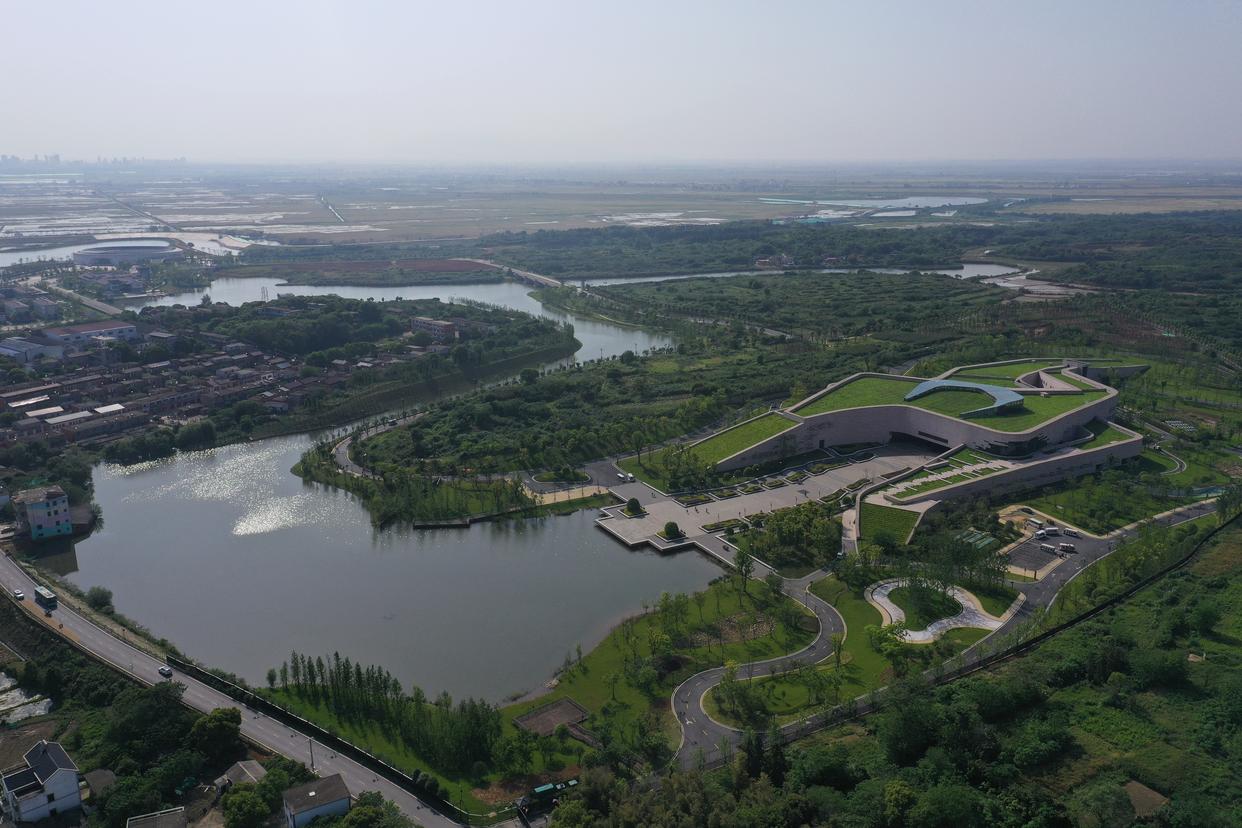
北京大葆台遗址博物馆开放半年,专题博物馆如何描绘汉代文明?
Zhong Guo Xin Wen Wang· 2025-12-22 06:42
Core Insights - The Beijing Dabaotai Archaeological Site Museum opened in May 2023 and has attracted approximately 180,000 visitors in its first six months, maintaining high visitor interest for about five months [1] Group 1: Museum Features and Design - The museum covers an area of 7,600 square meters, with an exhibition area of 2,800 square meters, featuring a basic exhibition hall and temporary exhibition halls [4] - The museum showcases the Han Dynasty civilization through the "Huangchang Tizou" burial system and significant artifacts, providing a comprehensive view of the Han culture in the Beijing area [3][4] - The design includes elevated viewing platforms and interactive touch screens to enhance visitor engagement and understanding of the burial site's layout and significance [2] Group 2: Exhibition Strategy - The museum aims to attract both local and out-of-town visitors through its basic exhibitions and a series of temporary exhibitions, such as "Han Wind Lihua" and "Wenjing Governance," which highlight the material and spiritual achievements of the Han Dynasty [5] - The museum plans to introduce temporary exhibitions from other regions to present a broader perspective of Han culture, encouraging visitors to explore museums across the country [5][7] Group 3: Future Developments - The Dabaotai Museum is one of three museum areas under the Beijing Archaeological Site Museum, with plans for future exhibitions and community engagement activities, including a New Year's event in 2026 [6][7] - The museum's vision includes enhancing the visitor experience by linking exhibitions across different historical periods, allowing visitors to experience a journey through 3,000 years of history in Beijing [7]
穿越时空!西班牙小哥在徐州博物馆触摸两汉文明
人民网-国际频道 原创稿· 2025-08-06 03:40
Core Viewpoint - The Xuzhou Museum serves as a vivid representation of the unique and rich historical and cultural heritage of Xuzhou, showcasing Han culture through various artifacts and exhibits [1] Group 1: Museum Exhibits - The museum features a grand display of Han terracotta warriors, illustrating the impressive military might of the Han dynasty with a formation reminiscent of "one million armored troops" from the Chu state [1] - Exquisite Han stone carvings depict lively scenes of banquets, music, dance, and transportation, reflecting the diverse aspects of life during the Han dynasty [1] - Various bronze ritual vessels and elegant jade ornaments highlight the exceptional craftsmanship of the Han era [1] Group 2: Cultural Significance - The museum is not only a collection point for Han artifacts but also serves as a spiritual landmark for decoding the regional civilization of Xuzhou [1] - Visitors, including international guests, experience the enduring charm of Chinese culture and the warmth of Han civilization through direct interaction with the exhibits [1]