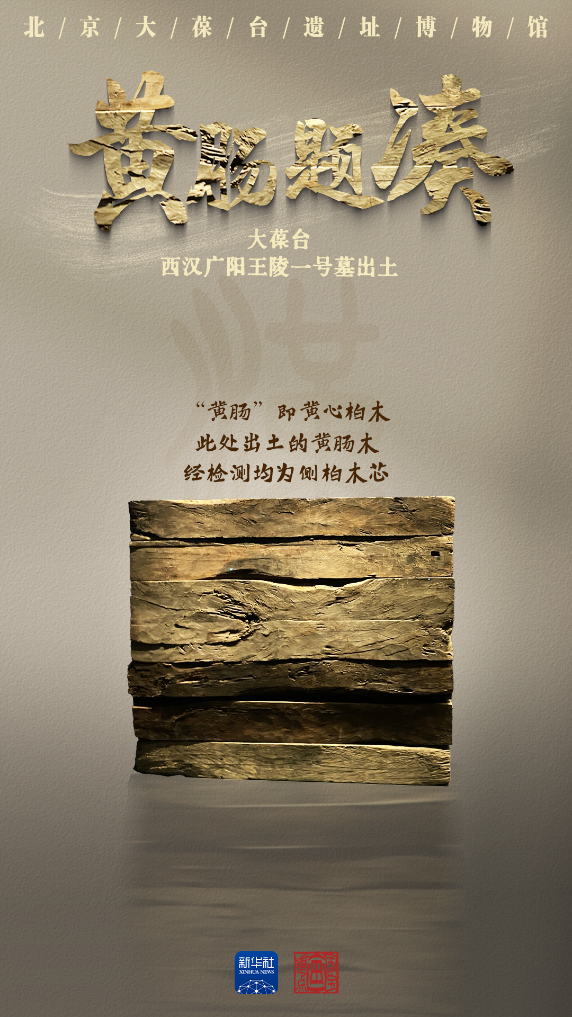
黄肠题凑

Search documents
北京大葆台遗址博物馆开放半年,专题博物馆如何描绘汉代文明?
Zhong Guo Xin Wen Wang· 2025-12-22 06:42
Core Insights - The Beijing Dabaotai Archaeological Site Museum opened in May 2023 and has attracted approximately 180,000 visitors in its first six months, maintaining high visitor interest for about five months [1] Group 1: Museum Features and Design - The museum covers an area of 7,600 square meters, with an exhibition area of 2,800 square meters, featuring a basic exhibition hall and temporary exhibition halls [4] - The museum showcases the Han Dynasty civilization through the "Huangchang Tizou" burial system and significant artifacts, providing a comprehensive view of the Han culture in the Beijing area [3][4] - The design includes elevated viewing platforms and interactive touch screens to enhance visitor engagement and understanding of the burial site's layout and significance [2] Group 2: Exhibition Strategy - The museum aims to attract both local and out-of-town visitors through its basic exhibitions and a series of temporary exhibitions, such as "Han Wind Lihua" and "Wenjing Governance," which highlight the material and spiritual achievements of the Han Dynasty [5] - The museum plans to introduce temporary exhibitions from other regions to present a broader perspective of Han culture, encouraging visitors to explore museums across the country [5][7] Group 3: Future Developments - The Dabaotai Museum is one of three museum areas under the Beijing Archaeological Site Museum, with plans for future exhibitions and community engagement activities, including a New Year's event in 2026 [6][7] - The museum's vision includes enhancing the visitor experience by linking exhibitions across different historical periods, allowing visitors to experience a journey through 3,000 years of history in Beijing [7]
国宝画重点丨千年不朽!揭开特殊葬制的存续之谜
Xin Hua She· 2025-06-11 09:25
Core Viewpoint - The Beijing Dabaotai Site Museum has reopened to the public after more than a decade, showcasing the historical and cultural significance of the Western Han Dynasty through the excavation of over a thousand artifacts from the tomb of Liu Jian, the King of Guangyang, and his queen [1]. Group 1: Historical Significance - The Dabaotai site, discovered in 1974, is a valuable resource for studying the political, economic, and cultural development of the Western Han Dynasty, particularly in the Beijing area [1]. - The site is a typical representative of the Han Dynasty's Youyan culture, with the "Huangchang Tizou" burial system being a major highlight [1]. Group 2: Burial Practices - "Huangchang Tizou" represents the highest level of burial practices during the Western Han period, characterized by the use of aromatic and decay-resistant cypress wood, specifically the heartwood of the Chinese cypress [3]. - The arrangement of the wood in a layered, inward-facing manner creates a closed space around the coffin, adhering strictly to the burial regulations and reflecting the hierarchical nature of the Han burial system [3]. Group 3: Artifacts and Cultural Insights - The museum features a complete display of the burial system, including the "Zigong, Bianfang, and Huangchang Tizou," showcasing the architectural wisdom and cultural values of the Western Han [5]. - Notable artifacts include a gilded bronze door knocker in the shape of a dragon, which exemplifies the artistic style of the Western Han period, and a white jade ornament with intricate dragon and phoenix carvings, highlighting the craftsmanship of Han artisans [6][8]. - The site also reveals trade connections, as evidenced by the agate artifacts from the Silk Road, indicating cultural exchanges between the Guangyang Kingdom and external regions [10]. Group 4: Museum Innovations - The Beijing Dabaotai Site Museum aims to enhance the cultural experience by utilizing digital technology and innovative exhibition methods to present the grandeur of Han civilization [10].