
汉文化传播

Search documents
你以为“娃衣热”是刚兴起?原来2000多年前就有了!
Xin Lang Cai Jing· 2026-01-02 03:05
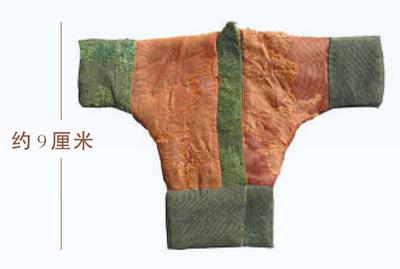
Core Viewpoint - The discovery of a silk toy garment from over 2000 years ago at the Gansu Bamboo Slip Museum highlights the rich childhood experiences of children in the Han Dynasty, showcasing their innate desire for play and entertainment [3][4]. Group 1: Historical Context - The toy garment was unearthed in 1979 from the Han Dynasty beacon site in Dunhuang, indicating that even in military outposts, there was a vibrant children's culture [3]. - The garment measures only 9 centimeters in length, and other artifacts found alongside it, such as toy wooden carts and cuju (a traditional ball game), suggest a focus on entertainment [3][4]. Group 2: Cultural Significance - The craftsmanship of the toy garment reflects the deep emotional connections within border families, illustrating a scene where a father brings back fabric and a mother meticulously stitches it for their child [4]. - The garment retains the cross-collar structure characteristic of Han clothing, providing insights into the clothing styles of children during that era, which were similar to adult garments [4][5]. Group 3: Regional Influence - The design of the toy garment shows a blend of Han cultural features and adaptations to the harsher conditions of the Hexi region, indicating a practical approach to clothing in response to environmental challenges [4][5]. - The use of plain weave textile technology in the garment demonstrates the widespread application of textile craftsmanship in the Han Dynasty, reflecting the ingenuity of people in adapting to their surroundings [5]. Group 4: Value of the Artifact - The toy garment's significance extends beyond its craftsmanship, serving as a valuable cultural artifact that opens a window into the emotional world of children in the Han Dynasty, contrasting the starkness of the border environment with a touch of warmth [5].


2000多年前的“娃衣”长啥样(文物有话说)
Ren Min Ri Bao· 2026-01-02 00:31
Core Viewpoint - The discovery of a silk toy garment from over 2000 years ago at the Gansu Bamboo Slip Museum highlights the rich childhood experiences of children in the Han Dynasty, suggesting that even in military outposts, there was a pursuit of play and creativity among children [3][4]. Group 1: Historical Context - The toy garment was unearthed in 1979 from the Han Dynasty beacon site in Dunhuang, indicating its historical significance and connection to the region's military and cultural history [3]. - The garment's dimensions, measuring only 9 centimeters in length, along with other artifacts like toy wooden carts and cuju (a traditional ball game), confirm its function as a toy [3]. Group 2: Cultural Significance - The silk toy garment reflects the emotional expressions and creativity of Han Dynasty families, showcasing the intimate family dynamics where fathers would bring materials home for mothers to sew, culminating in children dressing their toys [4]. - The garment retains the cross-collar right lapel structure, a key cultural feature of Han clothing, and its proportions align with children's body characteristics, indicating similarities in clothing styles between children and adults during that era [4]. Group 3: Regional Influence - The design of the toy garment shows a blend of Han cultural traits and adaptations to the harsh conditions of the Hexi region, with variations in length and sleeve width compared to mainstream Han clothing from the Central Plains [4]. - The use of plain weave textile technology in the garment's production demonstrates the practical wisdom of the time, as it resulted in durable and easy-to-clean fabrics suitable for the windy and sandy environment of the region [4]. Group 4: Value of Artifacts - The toy garment's value lies in its rich informational content and irreplaceability, serving as a cultural artifact that opens a window into the emotional world of children in the Han Dynasty, contrasting the starkness of the border environment with a touch of warmth and tenderness [5].
2000多年前的“娃衣”长啥样
Ren Min Ri Bao· 2026-01-01 22:49
Core Viewpoint - The discovery of a silk toy garment from the Han Dynasty at the Dunhuang Maquanyuan military site highlights the rich childhood experiences of children in ancient border areas, reflecting their innate desire for play and entertainment [2][3]. Group 1: Historical Significance - The toy garment, measuring only 9 centimeters in length, was found alongside other play items such as toy wooden carts and cuju (a form of ancient football), indicating a culture of play among Han Dynasty children [2]. - The garment's existence raises questions about resource allocation in border areas, suggesting that materials for the toy clothing may have come from leftover silk provided by the government or purchased in local markets [2]. - Archaeological findings, including a thimble measuring approximately 1.8 centimeters in diameter, suggest that women accompanying soldiers also engaged in textile work, indicating that the toy garment may have been crafted by the wives or mothers of soldiers stationed in Dunhuang [2]. Group 2: Cultural Insights - The silk toy garment serves as a unique perspective on Han Dynasty clothing and textile practices, preserving the cross-collar right lapel structure, a significant cultural feature of Han attire [3]. - The garment's design reflects the basic proportions of children's bodies, indicating that children's clothing styles were similar to those of adults during the Han Dynasty [3]. - The style of the toy garment aligns closely with mainstream Han clothing characteristics from the Central Plains, demonstrating the widespread influence of Han culture in the Hexi region [3]. Group 3: Craftsmanship and Adaptation - The plain weave textile technique used in the garment's creation is a fundamental and widely applied textile craft, producing durable and easy-to-clean fabrics suitable for the windy and sandy conditions of the Hexi region [3]. - The ability to create such intricate toy garments reflects the widespread knowledge of textile craftsmanship among Han families [3]. Group 4: Cultural Value - The toy garment's value lies in its information density and irreplaceability, transcending mere craftsmanship to reveal deep cultural significance and offering insights into the emotional world of children in the Han Dynasty's border regions [4].