治边先稳藏

Search documents
西藏阿里典角村五代房变迁见证戍边人幸福年
Xin Lang Cai Jing· 2026-02-23 13:30
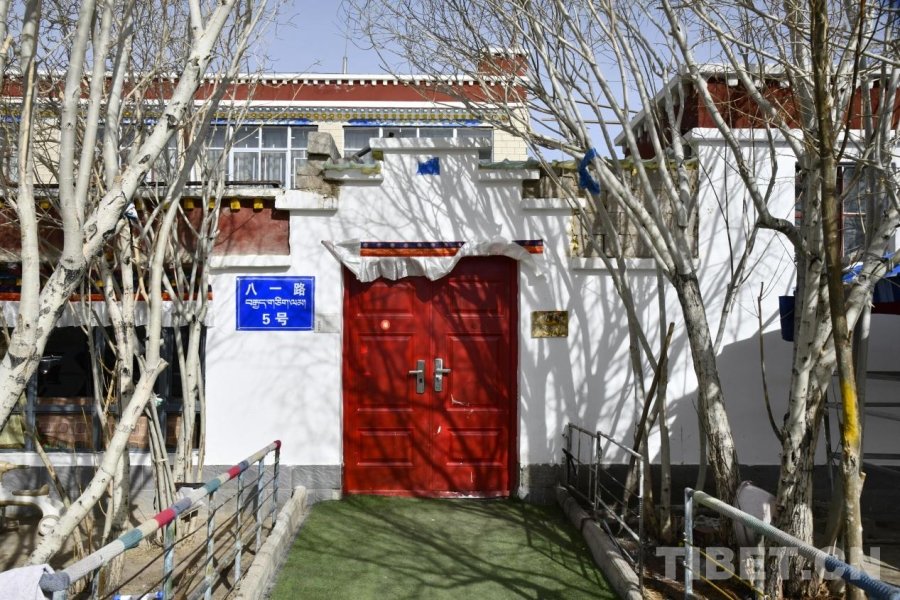
Core Viewpoint - The article highlights the transformation and resilience of the residents in the border village of Dianjiao, Tibet, showcasing their improved living conditions and commitment to border security amidst a changing environment [1][6][7]. Group 1: Village Transformation - The village of Dianjiao has evolved from basic stone and mud houses to modern concrete structures, reflecting significant improvements in living standards [4]. - The village has transitioned from just three households in 1984 to over a hundred today, earning recognition as a "National Civilized Village" and a "Demonstration Village" in Tibet [7]. Group 2: Community and Family Life - Residents like Luo Qiming, who moved from Qinghai, have established their families in Dianjiao, with children now pursuing education far from home, indicating a shift in aspirations and opportunities [2][4]. - The village's families, such as Luo Qiming and his wife, are actively involved in border patrol duties, blending daily life with national security responsibilities [6]. Group 3: Ecological and Economic Development - The ecological environment in the region has visibly improved, with an increase in wildlife, attributed to national efforts in environmental protection [7]. - The village's development is part of a broader strategy emphasizing the importance of border stability and economic growth in remote areas [7].

冰川为证,这堂“高原党课”后劲太大了
Bei Jing Ri Bao Ke Hu Duan· 2025-12-22 16:36
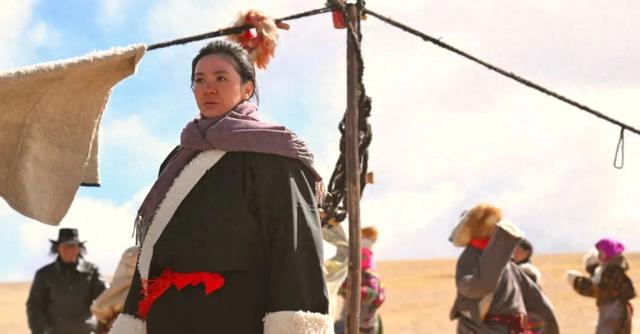
Core Viewpoint - The film "Distant Pu Ruogangri" reflects the real-life experiences of grassroots cadres in Tibet over the past 60 years, showcasing their dedication and transformation through the lens of a young university graduate who becomes a strong leader in the region [1][3][10] Group 1: Film Narrative and Themes - The film tells the story of Tong Xiaofan, a recent university graduate who arrives in Tibet and evolves from a naive student to a committed cadre, building deep connections with local communities [1][3] - The director emphasizes the duality of "distant" and "close" in the title, highlighting the emotional journey of aid workers who integrate their lives with the local culture and environment [3][10] - The film breaks new ground in the portrayal of Tibet, focusing on real experiences rather than idealized heroes, showcasing the struggles and contributions of various characters [3][10] Group 2: Production and Authenticity - 95% of the characters in the film are based on real individuals, making the narrative resonate deeply with those who have served in Tibet [5] - The production team spent three years researching and refining the script to authentically capture the spirit and reality of life in Tibet [5][7] - Filming took place at altitudes above 5000 meters for 62 days, capturing unprecedented visuals of the region's landscapes, thus enhancing the film's authenticity [7] Group 3: Cultural and Historical Significance - The film serves as a tribute to the spirit of perseverance and dedication shown by countless individuals in Tibet over the past 60 years, marking significant progress in healthcare, education, and infrastructure [8][10] - It encapsulates the strategic importance of stabilizing border regions and fostering unity among diverse ethnic groups, reflecting the essence of the "Old Tibet Spirit" [10][12] - The film is positioned as a profound lesson for party members, encouraging reflection on commitment, warmth, and service to the people [10][12]