流星暴

Search documents
可能出现“火流星”!4月22日晚这场流星雨千万别错过
Yang Shi Xin Wen· 2025-04-21 16:16
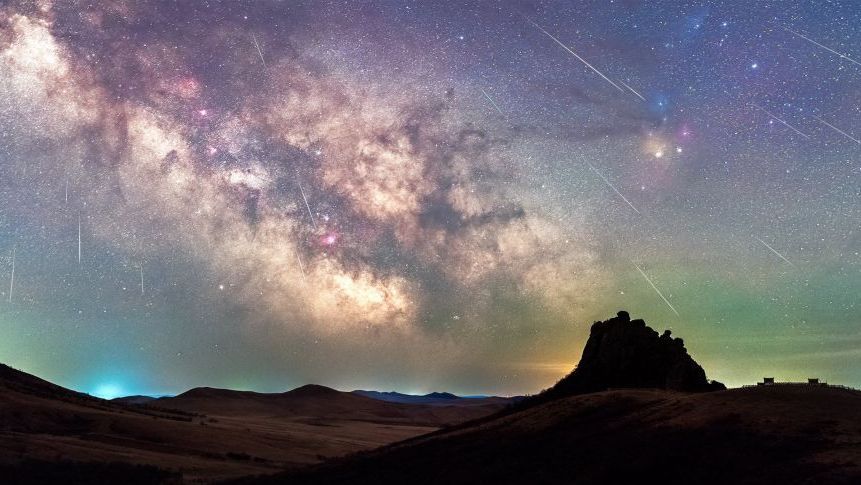
Group 1 - The annual Lyra meteor shower will peak on April 22, with the maximum expected around 21:00 [3] - The active period for the Lyra meteor shower is from April 14 to April 30, with a historical zenith hourly rate (ZHR) stabilizing around 18 in recent years [3][7] - Observers are encouraged to find dark locations away from light pollution for optimal viewing [5] Group 2 - Meteor showers typically originate from comets or asteroids, with the Lyra meteor shower's parent body being comet C/1861 G1 [9] - Other notable meteor showers include the Quadrantids, Perseids, and Geminids, each with a zenith hourly rate exceeding 100 meteors [8][9] - The relationship between meteors, meteor showers, and meteor storms is defined by the frequency and intensity of meteors observed [12][13] Group 3 - Meteor colors vary based on their chemical composition and reaction temperatures, with different elements emitting distinct colors [14][15] - The Sextantids meteor shower occurs during the day, peaking around September 27, making it challenging to observe due to bright sunlight [20] - The Lyra meteor shower is characterized by bright meteors and fireballs, making it a worthwhile event for enthusiasts [3][5]