海南自贸港税收制度体系

Search documents
海南自贸港第一批31个封关项目全部建成
2 1 Shi Ji Jing Ji Bao Dao· 2025-09-23 00:19
Core Insights - The Hainan Free Trade Port is set to officially commence operations on December 18, 2025, marking a significant milestone in China's "14th Five-Year Plan" and the expansion of its open economy [1][5] - Hainan has established a preliminary policy framework for the Free Trade Port, focusing on creating a modern industrial system with unique advantages [1][3] - The implementation of core policies related to customs, taxation, and trade has been initiated, indicating a critical step towards a more open and efficient regulatory environment [1][3] Policy Developments - The Hainan Free Trade Port has seen significant foreign investment, totaling 102.5 billion yuan over the past five years, with an annual growth rate of 14.6% [2] - The number of countries eligible for visa-free entry to Hainan has expanded to 85, and partnerships have been established with 39 other free trade zones [2] - The three "zero tariff" lists have resulted in imports worth 2.505 billion yuan, an increase of 86.4%, with tax reductions amounting to 518 million yuan, a growth of 109.1% [2] Economic Performance - Hainan's GDP reached 370.2 billion yuan in the first half of the year, with industrial output increasing by 11.4%, the highest growth rate in the country for four consecutive months [3] - The four main industries—tourism, modern services, high-tech industries, and tropical agriculture—account for 68.6% of the province's GDP, highlighting their importance to economic growth [3] Social Impact - The construction of 300 "He Mei" rural communities has directly benefited nearly one million residents, contributing to improved living standards [4] - The per capita disposable income in Hainan has increased by 5%, with rural residents experiencing a higher growth rate than urban residents [4]
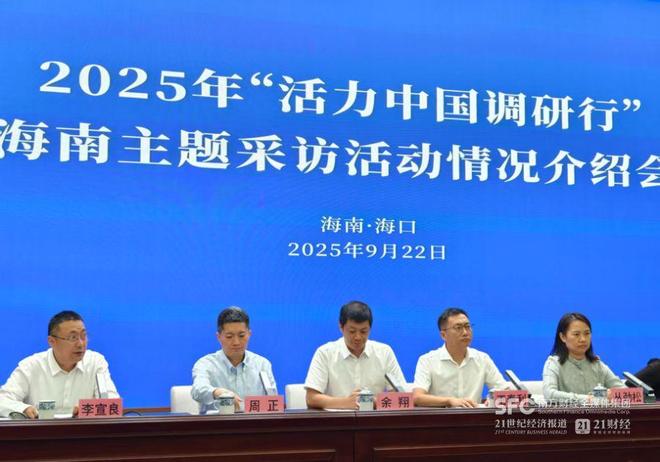
海南自贸港第一批31个封关项目全部建成|活力中国调研行
2 1 Shi Ji Jing Ji Bao Dao· 2025-09-23 00:13
Core Viewpoint - The Hainan Free Trade Port is entering a new phase with the upcoming closure operation on December 18, 2025, marking a significant step in its development and policy implementation [1][3]. Policy and Infrastructure Development - Hainan has established a preliminary policy system for the Free Trade Port, including core policies on import taxation, prohibited and restricted goods, customs supervision, and personal income tax incentives [3][4]. - The first batch of 31 projects for the Free Trade Port has been completed, with infrastructure for 8 open ports and 10 "second-line ports" nearly ready [3][4]. - A smart customs supervision platform has been launched to support efficient customs clearance and regulatory needs post-closure [3][4]. Economic Performance - Over the past five years, Hainan has attracted a total of 102.5 billion yuan in foreign investment, with an annual growth rate of 14.6% [4]. - The number of countries eligible for visa-free entry to Hainan has expanded to 85, and trade with emerging markets has seen significant growth [4][5]. - The total import value under the three "zero tariff" lists reached 2.505 billion yuan, an increase of 86.4%, with tax reductions amounting to 518 million yuan, up 109.1% [4][5]. Taxation and Policy Optimization - The tax policy framework for the Free Trade Port is characterized by stability, uniqueness, systematization, and gradualism, with ongoing updates to ensure continuous policy benefits [5][6]. - After the closure operation, the "zero tariff" level is expected to rise from just over 20% to 74.1%, reflecting a significant enhancement in openness [5][6]. Industry Growth and Social Welfare - Hainan's GDP reached 370.2 billion yuan in the first half of the year, with industrial value-added growth leading the nation at 11.4% [7]. - The four main industries—tourism, modern services, high-tech industries, and tropical agriculture—account for 68.6% of the province's GDP [7]. - The average disposable income of residents has increased, with rural residents experiencing a growth rate higher than that of urban residents [7][8].