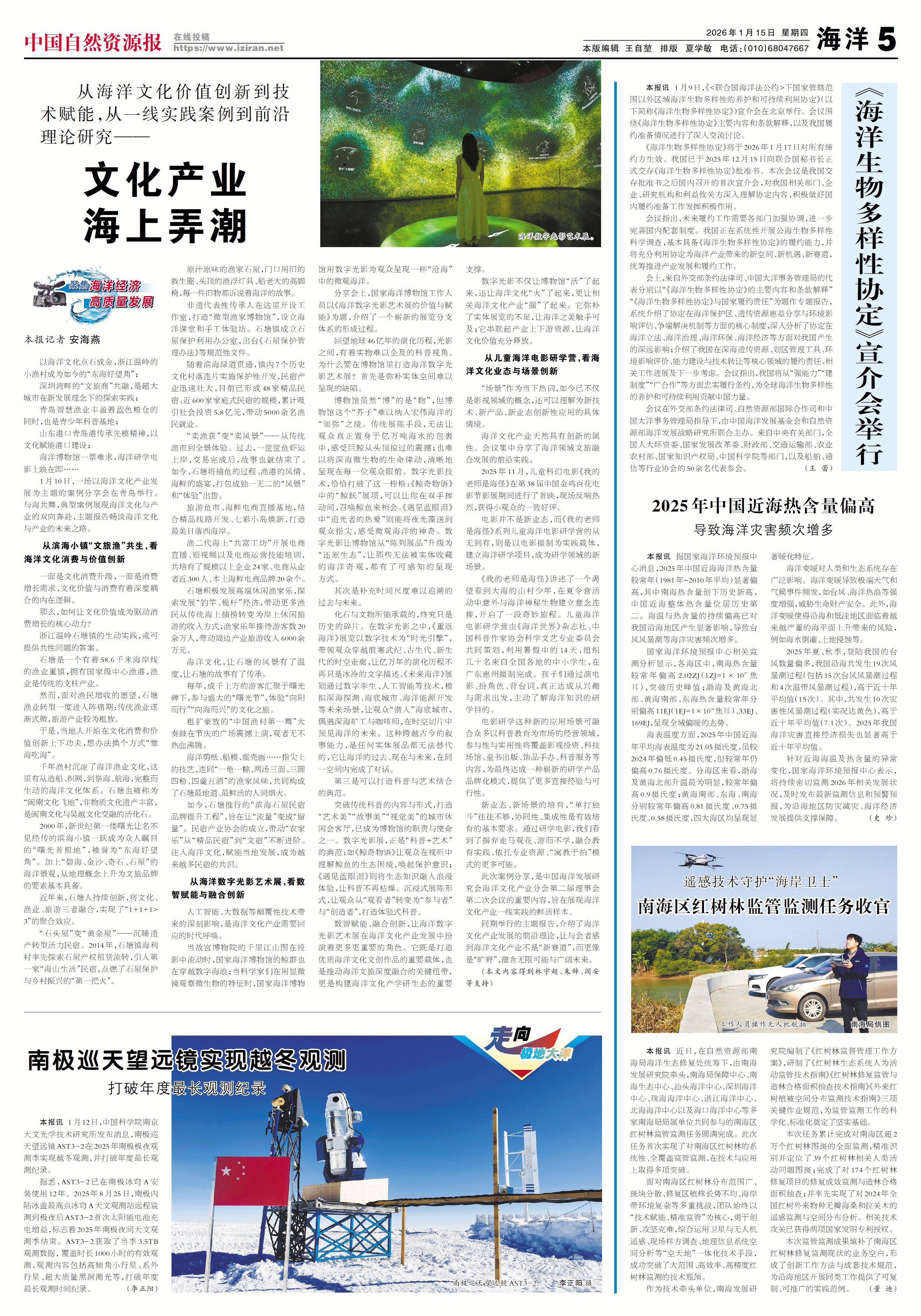
海洋文化与产业融合

Search documents
文化产业海上弄潮
Zhong Guo Zi Ran Zi Yuan Bao· 2026-01-15 07:20
Core Insights - The article discusses the transformation of the fishing village of Shitang in Zhejiang into a cultural and tourism hub, referred to as the "East Sea Good Hope," through the integration of marine culture and industry [3][11][16] - It highlights the innovative practices in marine cultural consumption and value creation, showcasing how local communities are adapting to economic changes by merging culture, fishing, and tourism [6][20][21] Group 1: Marine Culture and Economic Transformation - Shitang has a coastline of 58.6 kilometers and is a significant fishing town with a national-level central fishing port, traditionally relying on fishing as its main industry [18] - The local economy faced challenges as traditional fishing began to decline, prompting a shift towards cultural consumption and tourism to enhance income for fishermen [19][20] - The integration of cultural, fishing, and tourism sectors has led to a synergistic effect, achieving a "1+1+1>3" outcome [21] Group 2: Development of Tourism and Hospitality - The introduction of the first "Sea Mountain Life" homestay in 2014 marked the beginning of a revitalization of traditional stone houses, leading to the establishment of a vibrant homestay industry [21] - Currently, Shitang boasts 48 boutique homestays and nearly 600 family-style homestays, attracting a total investment of 5.8 billion yuan and creating over 5,000 jobs for fishermen [21] - The shift from selling fish to offering unique scenic experiences has transformed the local economy, with tourism-related income exceeding 60 million yuan annually [23] Group 3: Cultural Events and Community Engagement - The annual "Dawn Festival" attracts thousands of visitors, celebrating local culture and marine heritage through various activities, including traditional performances and culinary experiences [25][26] - The community has embraced marine culture, integrating it into local storytelling and tourism, enhancing the emotional connection visitors have with the area [24][26] Group 4: Digital Innovation in Marine Culture - The article also discusses the role of digital technology in enhancing marine cultural experiences, such as the use of digital light and shadow art exhibitions to engage audiences [30][31] - These innovations aim to bridge the gap between traditional exhibits and modern audience expectations, making marine culture more accessible and engaging [32][33]