海洋灾害防御

Search documents
2025年汛期成功防范化解多起海洋灾害风险
Zhong Guo Zi Ran Zi Yuan Bao· 2025-12-05 03:03
Group 1 - The meeting on December 4 aimed to summarize experiences in disaster response and explore technological development directions to enhance marine disaster warning capabilities [1] - The 2025 flood season presents a complex and severe situation for marine disaster defense, with notable impacts from strong typhoons, storm surges, and wave disasters [1] - Various regions successfully responded to 6 temperate storm surges, 16 typhoon storm surges, 30 hazardous wave events, and 41 earthquake tsunami incidents, significantly reducing casualties and property losses [1] Group 2 - The head of the Marine Warning Monitoring Division emphasized nine key areas for systematic deployment, including data application, forecast capability enhancement, and service product optimization [2] - The focus is on innovation and integration as core drivers, aiming to strengthen marine monitoring capabilities and improve the precision and customization of forecast services [2] - Representatives discussed practical experiences in disaster response and identified existing shortcomings, aiming to enhance warning service effectiveness and improve the marine forecasting business system [2] Group 3 - The National Marine Environmental Forecasting Center successfully completed marine disaster response work for the flood season, achieving progress in technical innovation with the development of a "one map" marine disaster sub-scenario [3] - The center proactively organized various forward-looking tasks, including annual marine disaster predictions and El Niño forecasts, to solidify disaster prevention foundations [3] - Local representatives expressed broad consensus on the meeting's key tasks and committed to enhancing collaboration and improving the quality and effectiveness of marine warning and forecasting work [3]
海南2025年汛期海洋防灾科技显身手
Zhong Guo Zi Ran Zi Yuan Bao· 2025-11-21 08:11
Core Insights - The article discusses the completion and operationalization of the Hainan Marine Disaster Comprehensive Prevention and Control Capacity Building Project, which has significantly enhanced the province's ability to respond to marine disasters, particularly during the typhoon season in 2025 [1][2] Group 1: Typhoon Impact and Response - A total of 14 typhoons affected the South China Sea in 2025, with significant storm surges and destructive waves recorded, including 8 instances of over 50 cm storm surge and 34 occurrences of waves exceeding 4 meters [1] - The Hainan Marine Bureau issued 179 marine disaster warnings by November 15, providing critical scientific data for emergency decision-making and disaster response [1] Group 2: Emergency Preparedness and Drills - The project utilized a combination of tabletop exercises and live drills to test emergency response capabilities, including scenarios for transporting supplies, monitoring tide stations, and conducting post-disaster investigations [2] - A daily and emergency duty mechanism was established, along with operational guidelines for disaster response and monitoring, enhancing the coordination between machine management and emergency monitoring [2] Group 3: Advanced Forecasting Systems - The introduction of a storm surge warning system significantly improved the precision of warnings by integrating high-resolution storm surge data with astronomical tide data, allowing for targeted defensive measures [2] - The development of regional wave forecasting and fine-scale numerical predictions has enabled the generation of detailed grid data covering the entire province's marine jurisdiction, expanding services to 27 demand units, including offshore wind farms and oil platforms [3]
“风王”将袭:广东20市地质灾害风险较高,海域狂涛或达13米
2 1 Shi Ji Jing Ji Bao Dao· 2025-09-22 12:43
Core Points - The article discusses the imminent threat posed by Typhoon "Haikaisar" to Guangdong, highlighting the severe geological and marine disaster risks associated with the storm [1] Geological Disaster Risk - The Guangdong Provincial Department of Natural Resources has identified 20 cities and 93 counties (districts) with high geological disaster risks due to the approaching typhoon [1] - Specific areas with heightened risk include cities such as Guangzhou, Shenzhen, and Zhuhai, as well as counties like Lufeng and Jiexi [2] - The report emphasizes the need for enhanced geological disaster prevention efforts in mountainous and hilly regions, particularly in rural areas and along transportation routes [2] Marine Disaster Risk - The Guangdong Marine Forecast Center predicts that the emergency response level for marine disasters will reach Level II or even Level I during the typhoon [2] - Wave heights are expected to increase significantly, with forecasts indicating waves of 6-13 meters from September 23 to 24 [2] - Storm surges along the eastern coast of Guangdong are projected to reach 80-180 cm, with specific cities like Chaozhou and Shantou under yellow warning [3] - The Pearl River Estuary is expected to experience storm surges of 100-320 cm, with cities such as Shenzhen and Guangzhou under red warning [3]
北海局:未雨绸缪密织汛期海洋灾害“防护网”
Zhong Guo Zi Ran Zi Yuan Bao· 2025-07-15 02:04
Core Viewpoint - The North Sea Bureau has implemented a series of proactive measures to enhance marine disaster prevention and response capabilities in the region, focusing on early deployment, advanced warning systems, and emergency drills to safeguard coastal communities during the flood season [1][7]. Group 1: Pre-Flood Preparedness - The North Sea Bureau issued pre-flood preparation and inspection notices in March and April, forming special inspection teams to conduct comprehensive on-site supervision across four marine centers in the North Sea region [3]. - Inspection teams traveled over 2000 kilometers, focusing on areas prone to sudden water increases, and verified the completion of 32 self-inspection items across five major categories [3]. Group 2: Technological Empowerment - The North Sea Bureau enhanced inter-departmental collaboration and upgraded the intelligent marine forecasting platform by adding new warning modules for sudden water increases, including sound and light alarms, SMS alerts, and phone notifications [5]. - The upgraded platform is operational across three levels of forecasting institutions and has been deployed in six coastal cities in Liaoning Province and Weihai City in Shandong, forming an intelligent defense chain for early detection and response [5]. Group 3: Emergency Response Training - The North Sea Bureau organized emergency drills simulating sudden water events, involving collaboration with marine disaster reduction departments from three provinces and one city to test the full process of warning issuance, information linkage, and emergency response [7]. - These practical exercises provided scientific and standardized guidelines for disaster prevention and reduction at the grassroots level, reinforcing the foundation for marine disaster defense during the flood season [7].

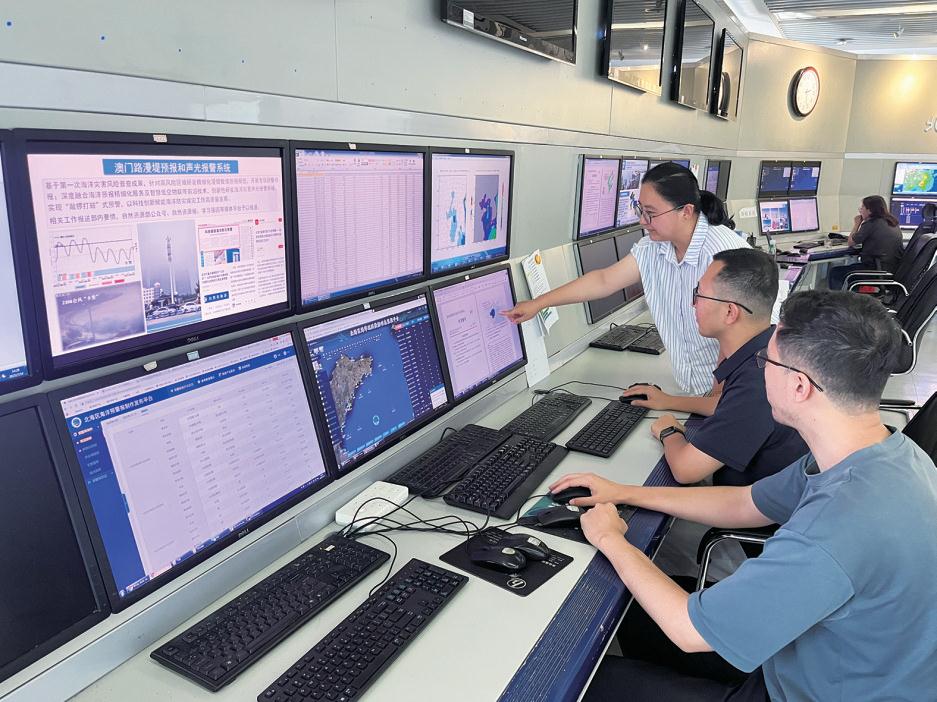
东海局:主动防控筑牢海洋灾害防御前沿阵地
Zhong Guo Zi Ran Zi Yuan Bao· 2025-07-15 02:04
Core Points - The East China Sea Bureau is proactively planning and preparing for marine disaster prevention ahead of the flood season, focusing on strengthening organizational leadership and enhancing monitoring systems [2][4] - A comprehensive emergency drill simulating the impact of a typhoon was conducted to test the entire process of data transmission, warning report creation, and information dissemination [4] - The Bureau is committed to improving monitoring and warning efficiency through the use of existing observation networks and advanced technology [5][6] Group 1: Disaster Prevention Measures - The East China Sea Bureau has issued a flood preparation notice and launched a special inspection plan, completing on-site checks at 12 stations and reviewing 215 documents and 75 pieces of equipment [4] - Emergency response measures include enhancing political awareness, strengthening duty monitoring, and improving observation facilities [4] - A comprehensive emergency response mechanism is being established to ensure effective disaster prevention [4] Group 2: Monitoring and Data Transmission - The Bureau operates 62 marine stations with a real-time data reception rate of 99.8% and an effective rate of 99.3% [6] - Continuous management of observation instruments has been implemented, with over 410 pieces of equipment calibrated and certified [6] - A 24/7 monitoring system for data transmission has been established, ensuring reliable communication across various monitoring nodes [7] Group 3: Future Developments - Plans are in place to accelerate the construction of an instant warning decision support system for seawater backflow, incorporating advanced alert features and refined monitoring techniques [9] - The Bureau aims to standardize the management of observation instruments and develop a comprehensive list of calibration methods and institutions [9]