激光制造

Search documents
一图看懂!面向脑机接口、AI,工信部明确中试标准建设指南
Di Yi Cai Jing· 2025-12-30 05:48
Core Viewpoint - The Ministry of Industry and Information Technology (MIIT) of China has issued the "Manufacturing Industry Pilot Standard System Construction Guide (2025 Edition)" to accelerate the efficient transformation and application of major technological achievements, emphasizing the establishment of pilot verification and testing platforms [1][3]. Group 1: Standard System Construction - The guide aims to revise and establish over 50 standards by 2027 and 100 standards by 2030, creating an advanced manufacturing pilot standard system that includes basic general, key technology, and industry application standards [1][11]. - The manufacturing pilot is a transitional test that connects the technology chain, innovation chain, and industry chain, facilitating the flow of technological innovation to market application [7][1]. Group 2: Structure of the Standard System - The manufacturing pilot standard system consists of three parts: basic general standards, key technology standards, and industry application standards [2][13]. - Basic general standards provide the foundational support for the pilot system, while key technology standards define requirements for equipment, materials, platforms, validation, and outcome evaluation [2][13]. Group 3: Industry Application Focus - The guide emphasizes the need for industry-specific and actionable pilot standards, particularly in emerging and future industries such as brain-computer interfaces, the metaverse, artificial intelligence, quantum technology, and clean hydrogen [2][3]. - The industry application standards ensure that pilot activities are conducted scientifically within specific industries, covering sectors like raw materials, equipment manufacturing, consumer goods, and information technology [2][13]. Group 4: Development Status and Future Goals - China has established over 2,400 pilot platforms, with 241 selected as key cultivation platforms by MIIT, which have undertaken 25,000 pilot service projects [3][4]. - By the end of 2027, the goal is to further strengthen high-level pilot platforms and establish a modern pilot platform system with a nationwide service network [3][4].


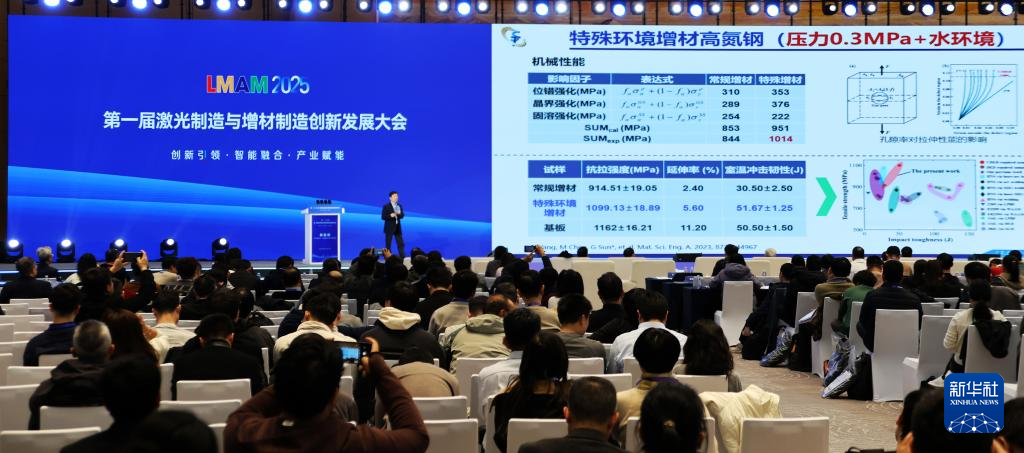
第一届激光制造与增材制造创新发展大会在京开幕
Xin Hua Wang· 2025-11-30 02:50
Core Viewpoint - The first Laser Manufacturing and Additive Manufacturing Innovation Development Conference was held in Beijing on November 29, highlighting the importance of innovation in the laser and additive manufacturing sectors [1]. Group 1 - The conference featured expert speeches, indicating a focus on knowledge sharing and advancements in technology within the industry [1].
企业竞争图谱:2025年超快激光器
Tou Bao Yan Jiu Yuan· 2025-03-18 12:10
Investment Rating - The report does not explicitly provide an investment rating for the ultrafast laser industry. Core Insights - The ultrafast laser industry is characterized by high technical barriers and strong brand and customer resource barriers, with a broad market demand expected to accelerate the replacement of traditional processing technologies. The market is anticipated to expand significantly due to supportive government policies and the development of downstream application fields [1][6][10]. Industry Definition - Ultrafast lasers refer to lasers with pulse durations shorter than nanoseconds, primarily including picosecond and femtosecond lasers. These lasers are recognized for their high instantaneous power and stable beam quality, making them suitable for various applications in medical, aerospace, consumer electronics, and precision machinery sectors [2][3]. Industry Classification - The ultrafast laser industry is classified based on the pulse width of the output laser into picosecond lasers and femtosecond lasers [3][4][5]. Industry Characteristics - The ultrafast laser industry features high technical barriers, high brand and customer resource barriers, and widespread market demand [6][10]. Development History - The ultrafast laser technology has evolved significantly since the 1960s, with key milestones including the development of the first ruby laser in China and the invention of CPA technology in the 1980s, leading to the commercialization of ultrafast lasers in the early 2000s. The industry saw a significant surge in 2020, with a near doubling of shipment volumes [11][15][14]. Industry Chain Analysis - The ultrafast laser industry chain consists of upstream raw materials (optical components, electronic components, pumping sources, and laser crystals), midstream manufacturing, and downstream applications in fields such as photovoltaic energy, medical aesthetics, and aerospace [16][19][26]. Market Size - The ultrafast laser market in China grew from 2.26 billion RMB in 2018 to 4.02 billion RMB in 2023, with a compound annual growth rate (CAGR) of 12.21%. The market is projected to reach 5.66 billion RMB by 2028, with a CAGR of 7.38% [28][29]. Future Market Drivers - The expansion of downstream application fields and the development of supporting industries are expected to drive the rapid growth of the ultrafast laser industry. The technology's advantages in precision, efficiency, and low energy consumption position it as a key player in modern manufacturing [31][32]. Competitive Landscape - The ultrafast laser industry is dominated by international players such as Coherent, IPG Photonics, and Trumpf, with a growing presence of Chinese companies like Han's Laser and Delong Laser. The competitive landscape is shaped by early market entry and technological advancements [37][38][40].