火星生命

Search documents
一场生命起源“侦探剧”在火星上演
Ke Ji Ri Bao· 2025-09-15 01:40
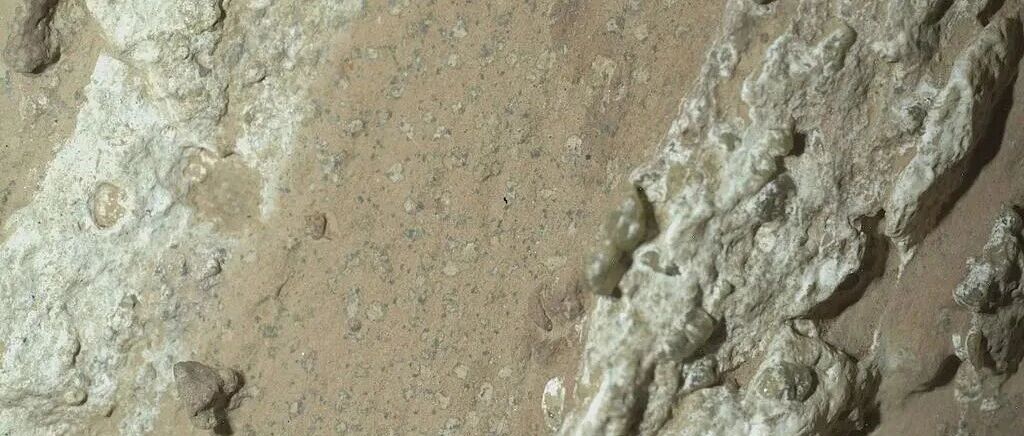
Core Insights - The research focuses on Jezero Crater on Mars, which was once a lake, and aims to uncover clues about ancient Martian life [1] - NASA's Perseverance rover has confirmed the presence of a delta formed by a river, indicating a history of water flow in the area [1] - A study published in Nature highlights the discovery of a rock formation called "Bright Angels," which contains minerals that may serve as potential biosignatures [1][2] Group 1 - The minerals found in the "Bright Angels" formation are rich in iron phosphate and iron sulfide, and their distribution aligns closely with organic carbon, suggesting a possible link to past biological activity [1][2] - These minerals formed in a low-temperature environment post-sedimentation, indicating they were likely created through chemical reactions involving water rather than volcanic activity [2] - The coexistence of iron phosphate and organic carbon is often associated with microbial metabolism on Earth, hinting at the potential for past life on Mars [2] Group 2 - Scientists remain cautious, considering that the minerals could also be products of purely chemical reactions, necessitating further investigation into both biological and non-biological origins [2] - Perseverance has collected multiple core samples from the area, which are sealed in titanium tubes for future analysis on Earth, where advanced laboratory techniques may reveal more definitive evidence of life [2] - The findings raise profound questions about the nature of life in the universe, pondering whether it is a mere chemical accident or an inevitable occurrence [2]
NASA惊人发现:火星或曾存在远古生命
财联社· 2025-09-11 06:00
Core Viewpoint - NASA's recent discovery of organic carbon and iron compounds in Mars' Jezero Crater may provide significant evidence for the existence of life on Mars, prompting further research and potential sample return to Earth [1][3]. Group 1: Discovery and Implications - NASA's Perseverance rover found samples that contain organic carbon and iron compounds, which are similar to chemical structures on Earth associated with life [1]. - The samples exhibit unique features, described as "leopard spots," indicating the presence of iron phosphides and iron sulfides, which could suggest microbial activity [1][3]. - The discovery has raised questions about the past habitability of Mars, as it is believed that the planet had a more hospitable surface billions of years ago before losing its atmosphere [1]. Group 2: Scientific Perspectives - Planetary scientist Sanjeev Gupta emphasized the need for advanced laboratory facilities on Earth to analyze the samples thoroughly [1]. - Geology professor John Parnell noted that the rock structures could represent a microbial ecosystem, which is a crucial step in identifying life [3]. - A cautionary commentary published alongside the findings in Nature suggests that non-biological processes could also explain the observed rock features, indicating the need for further investigation [3]. Group 3: Future Plans and Collaborations - SpaceX aims to establish a self-sustaining colony on Mars by 2050, and NASA's findings could influence future ecological transformation plans for Mars [3]. - NASA and the European Space Agency are reassessing their Mars sample return mission, which has faced delays due to budget overruns and complexity, with a target to return samples to Earth between 2035 and 2039 [3]. - NASA plans to finalize the mission architecture by mid-2026 while exploring lower-cost commercial collaboration options [3].