
毅力号火星车

Search documents
Claude“开上”火星,跨越3.6亿公里,AI指挥毅力号自动驾驶
3 6 Ke· 2026-02-02 08:26
Core Insights - The article highlights the historic achievement of AI, specifically Anthropic's Claude, in successfully navigating NASA's Perseverance rover on Mars, marking the first time AI has autonomously planned an extraterrestrial driving mission [1][6][17]. Group 1: Mission Overview - The Perseverance rover, located in Jezero Crater on Mars, completed a 400-meter journey, which is a significant milestone in AI's application in space exploration [3][6]. - The mission site, Jezero Crater, is believed to have once contained liquid water, suggesting it could have been a cradle for microbial life billions of years ago [7][8]. Group 2: AI's Role and Functionality - Claude was integrated into a specialized programming environment, Claude Code, where it was trained using extensive data from NASA's previous Mars missions [14][17]. - The AI was able to analyze terrain data and break down the journey into manageable segments, allowing for precise navigation [14][17]. Group 3: Efficiency and Collaboration - The collaboration between Claude and NASA engineers resulted in a 50% reduction in route planning time, enabling scientists to focus more on scientific exploration rather than manual planning [17][18]. - Claude's ability to self-review and optimize its navigation plans contributed to the reliability of the mission, with only minor adjustments needed from human operators [17]. Group 4: Future Implications - The successful navigation of the Perseverance rover signifies a shift in how space exploration may be conducted, with AI taking on more autonomous roles in future missions [25][27]. - As NASA faces budget constraints and workforce reductions, AI is seen as a critical tool for enhancing efficiency and maintaining exploration efforts [25][26].

刷屏!SpaceX,突传重磅!
券商中国· 2026-01-31 14:41
Core Viewpoint - The commercial space industry is experiencing significant developments, particularly with SpaceX's ambitious plan to launch up to 1 million satellites to create an "Orbital Data Center" [2][3][4]. Group 1: SpaceX's Satellite Deployment Plan - SpaceX has submitted an application to the FCC to deploy a satellite network consisting of up to 1 million satellites, which will operate at altitudes ranging from 500 km to 2000 km [3][4]. - The proposed "Orbital Data Center system" aims to provide unprecedented computational power to support advanced AI models and applications, addressing the growing demand for AI computing capabilities [4][5]. - The satellites will be arranged in narrow orbital shells with a width of no more than 50 km to minimize interference with other systems [4]. Group 2: Regulatory and Market Implications - The scale of the proposed satellite deployment raises concerns regarding SpaceX's future capital expenditures, execution capabilities, and regulatory challenges, particularly from the FCC [4][7]. - The FCC previously approved SpaceX's application for 7,500 satellites for its second-generation Starlink network but did not approve the full request for 22,488 satellites, indicating potential scrutiny for the new application [7]. - Analysts predict that the environmental impact and orbital congestion risks associated with deploying 1 million satellites will face rigorous examination, possibly leading to objections from other space-faring nations [7]. Group 3: Advancements in AI and Space Exploration - NASA's Perseverance rover successfully completed its first autonomous driving task on Mars, utilizing AI to plan its route based on terrain analysis, marking a significant advancement in space exploration technology [8][9]. - The rover has traveled over 42.2 kilometers on Mars, with more than 90% of its distance covered through autonomous driving, showcasing the importance of remote autonomous technology for future missions [9].

AI进化速递丨可灵AI推出可灵3.0模型
Xin Lang Cai Jing· 2026-01-31 13:20
Group 1 - Keling AI has launched the Keling 3.0 model [1] - NASA's Perseverance rover has successfully completed its first AI-planned driving task on Mars [1] - Apple's AI team is experiencing a wave of departures, with several researchers moving to Meta and Google [1] - SpaceX has applied to launch up to 1 million satellites to establish an orbital data center network around the Earth [1]
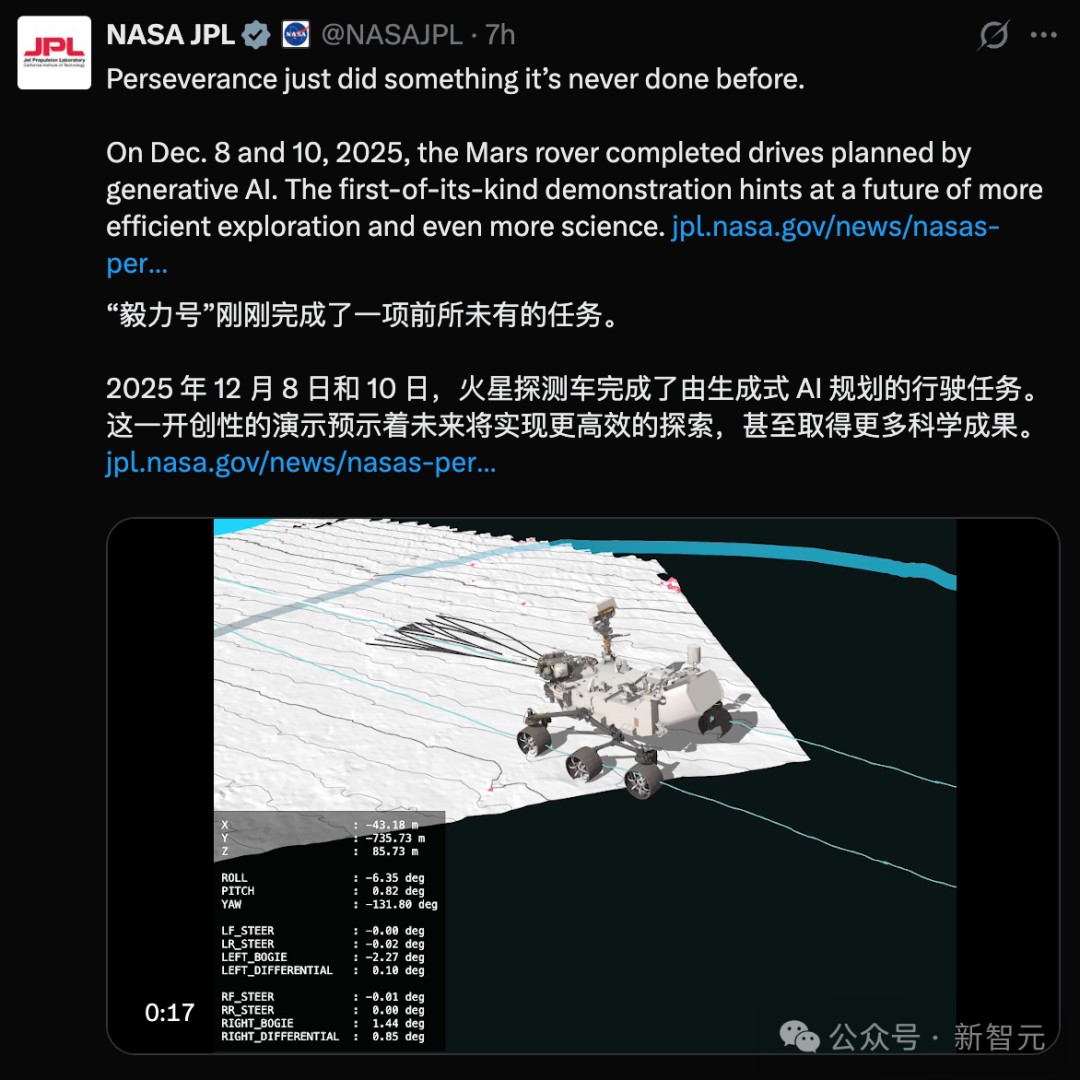
美“毅力”号火星车首次完成人工智能规划的行驶任务
Xin Hua She· 2026-01-31 08:20
Core Viewpoint - NASA's Perseverance rover successfully completed its first route planning task using artificial intelligence on the Martian surface, marking a significant advancement in autonomous navigation for space exploration [1] Group 1: Mission Details - The demonstration task was conducted on December 8 and 10, 2025, led by NASA's Jet Propulsion Laboratory [1] - The AI analyzed high-resolution images and terrain data from the Mars Reconnaissance Orbiter to identify key terrain features such as rocks and sand patterns, generating a continuous driving route with multiple waypoints [1] - Perseverance traveled approximately 210 meters on December 8 and another 246 meters two days later, using the AI-generated path stored in its memory [1] Group 2: Technological Significance - The use of AI for route planning is a departure from the previous method where ground engineers manually planned the rover's path based on terrain and operational data [1] - NASA Administrator Bill Nelson highlighted that such autonomous technologies will enhance the efficiency of future deep space missions under communication delay conditions, allowing for better navigation in complex environments [1]
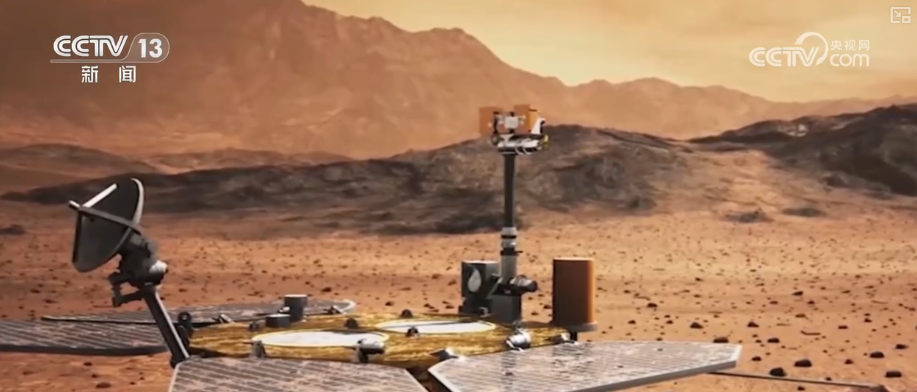
一次“CT扫描”有了意外发现 “祝融号”找到藏在火星地下的“秘密日记”
Yang Shi Wang· 2026-01-14 06:52
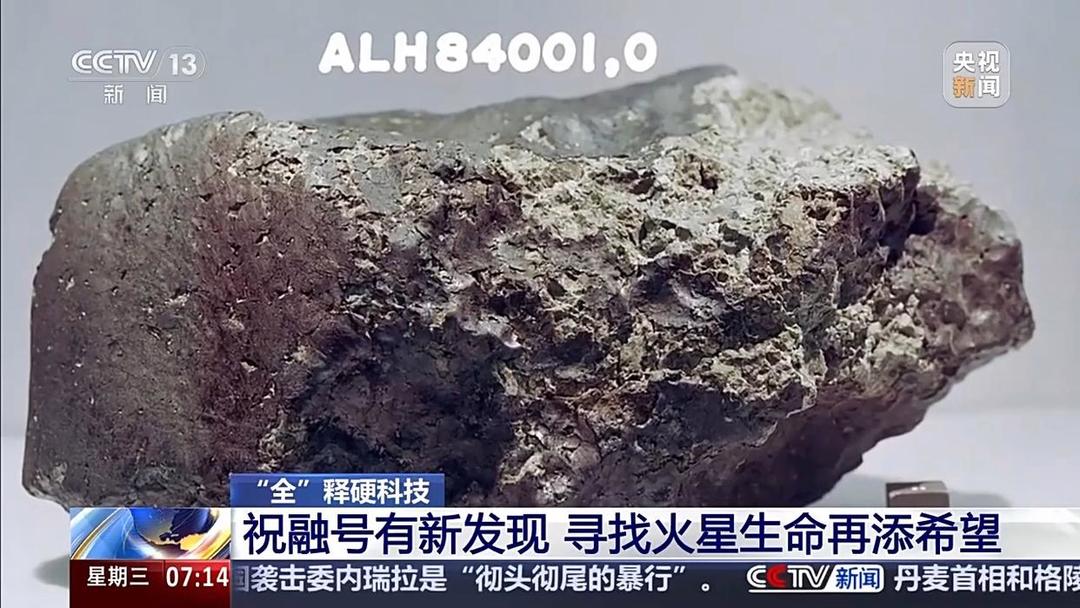
Core Viewpoint - The recent discoveries made by China's Zhurong rover on Mars have reignited discussions about the potential for life on the planet, particularly due to findings that suggest a history of significant water activity on Mars [1][6]. Group 1: Discoveries and Findings - The Zhurong rover conducted a "CT scan" of the southern Utopia Planitia, revealing well-structured sedimentary layers resembling those found in Earth's shallow seas and large lakes [3]. - These sedimentary layers are estimated to have formed around 750 million years ago, extending the timeline for water activity on Mars by several hundred million years, thus prolonging the planet's "youth" [6]. Group 2: Implications for Life on Mars - The findings raise the question of whether the search for life on Mars has become more promising, as evidence suggests that Mars may have once had conditions suitable for life [8]. - Historical attempts to find life on Mars date back to 1877, with significant discoveries such as potential organic materials found in Martian meteorites in 1996, although these findings were controversial [10]. - Recent discoveries by NASA's Perseverance rover in ancient riverbeds indicate potential signs of life, with organic carbon and iron oxides possibly providing energy sources for ancient microorganisms [13]. Group 3: Environmental Conditions and Life Potential - Many Earth microorganisms can survive in conditions similar to those on Mars, supporting the hypothesis that life could have adapted to Martian conditions [14]. - Scientists speculate that if life ever existed on Mars, it likely remained in a primitive state, similar to early Earth bacteria, and may have retreated underground or become extinct due to environmental changes [16][18]. - Future missions, such as China's Tianwen-3, aim to further investigate the mysteries of life on Mars [18].
祝融号有新发现,寻找火星生命再添希望
Yang Shi Xin Wen· 2026-01-14 02:20
Core Insights - The recent discovery by the Zhurong rover on Mars has sparked renewed interest in the possibility of life on the planet, revealing sedimentary layers that resemble those formed in water environments on Earth [3][5][7] Group 1: Geological Findings - The Zhurong rover conducted a "CT scan" of the southern Utopia Planitia, uncovering sedimentary layers that are structured like a "secret diary" hidden underground, indicating significant water activity on Mars approximately 750 million years ago [3][7] - This discovery extends the timeline of Mars' habitable conditions, suggesting that the planet may have had a longer "youth" than previously thought [3][7] Group 2: Historical Context of Mars Exploration - The search for Martian life has a long history, dating back to 1877 when astronomers mistakenly believed they saw "canals" on Mars, igniting romantic notions of Martian civilization [5] - In 1996, NASA found potential organic materials in a Martian meteorite, hinting at ancient microbial life, although this finding remains controversial [5] Group 3: Evidence of Water Activity - Since the 21st century, various countries have confirmed evidence of past water activity on Mars, including the presence of water ice and ancient riverbeds, bolstering the idea that Mars may have once been a blue planet capable of supporting life [7][9] - Recent findings from NASA's Perseverance rover have identified potential biosignatures in ancient riverbeds, suggesting that organic carbon and iron oxides could have provided energy for ancient microbial life [9] Group 4: Theoretical Implications of Martian Life - If life ever existed on Mars, it likely remained at a primitive stage, similar to early Earth bacteria, due to the planet's loss of its magnetic field and subsequent atmospheric erosion [11] - The ongoing exploration of Mars, including China's upcoming Tianwen-3 mission, aims to further investigate the mysteries surrounding potential Martian life [11]
中国有望成为首个将火星样本带回地球的国家
财联社· 2026-01-12 12:42
Core Viewpoint - NASA's Mars Sample Return mission has been canceled due to significant budget cuts, while China's Mars sample return plan is set to be implemented by 2031, potentially making China the first country to bring back Martian samples [1][2]. Group 1: NASA's Mars Sample Return Mission - The Mars Sample Return (MSR) mission was expected to answer critical questions about Mars' ancient habitability but has been hindered by budget cuts from the U.S. Congress [1]. - The estimated cost of the MSR mission rose to $11 billion but was later adjusted to approximately $7 billion, although uncertainties remain due to the unprecedented nature of the mission [1]. - NASA's Curiosity and Perseverance rovers have provided compelling evidence of Mars' past conditions that may have supported life, but further exploration requires bringing Martian rock samples back to Earth for advanced analysis [1]. Group 2: Funding and Political Factors - NASA is under immense pressure from budget cuts, which are linked to increased military spending demands from the Trump administration, raising military budgets to $1.5 trillion, a 50% increase [2]. - Political tensions between the U.S. and European nations have jeopardized NASA's collaboration with the European Space Agency (ESA) on the MSR mission, with the likelihood of future cooperation appearing slim [2]. - The cancellation of the MSR mission is a significant setback for American researchers who have invested considerable effort into the project [2]. Group 3: China's Mars Sample Return Plan - China has established a Mars sample return plan that is less complex than the U.S.-European collaboration, focusing on rapid collection and return of samples [2]. - The potential success of China's Mars sample return mission could position it as the first nation to successfully bring back samples from Mars [2].

美航天局继续尝试联络失联的火星探测器
Xin Hua She· 2025-12-16 06:31
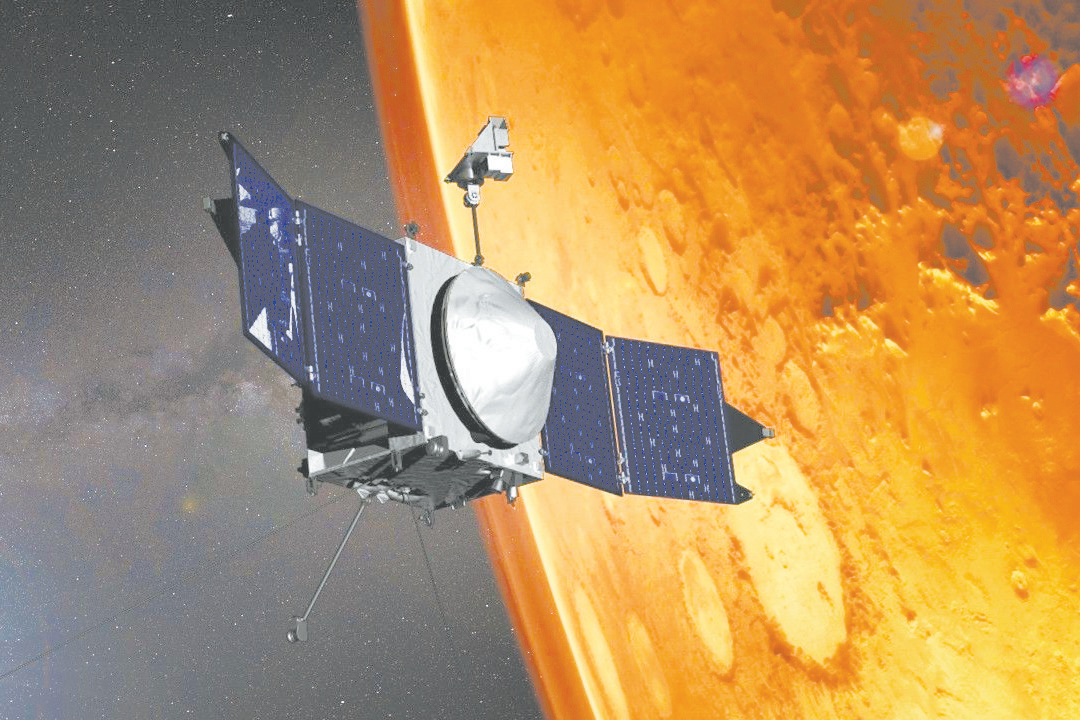
Core Viewpoint - The Mars Atmosphere and Volatile Evolution (MAVEN) spacecraft has lost contact with its ground team since December 4, and NASA is currently attempting to re-establish communication with the spacecraft [1] Group 1: Communication Issues - Since December 4, no telemetry data has been received from the MAVEN spacecraft, indicating a significant communication failure [1] - A brief segment of telemetry data from December 6 was recovered, revealing an unexpected rotation of the spacecraft after it passed behind Mars [1] - Further analysis suggests that the spacecraft's orbit may have changed, prompting the mission team to continue tracking data to determine the cause of the signal loss [1] Group 2: Impact on Other Missions - NASA is working to mitigate the impact of MAVEN's anomaly on the operational Mars rovers, Perseverance and Curiosity, which rely on four Mars spacecraft for communication relay [1] - Of the four Mars spacecraft, three are still operational and maintaining normal communication functions [1] Group 3: Mission Background - MAVEN was launched in September 2014 and has been operational in Mars orbit for over 10 years [1] - The primary objective of MAVEN is to study the upper atmosphere of Mars, its ionosphere, and the interaction with solar wind, contributing to the understanding of atmospheric escape processes [1]
NASA火星探测器“失联”,暴露超期服役隐患
Huan Qiu Shi Bao· 2025-12-14 22:36
Core Viewpoint - NASA's MAVEN spacecraft has lost contact with Earth after over 10 years in Mars orbit, raising concerns about the impact on Mars atmospheric research and the overall Mars exploration program [1][3][4] Group 1: MAVEN's Mission and Importance - MAVEN was launched in November 2013 and entered Mars orbit in September 2014, with the mission focused on studying Mars' upper atmosphere, ionosphere, and interactions with solar wind [3] - The spacecraft plays a crucial role as a communication relay for other Mars rovers, including the Perseverance and Curiosity rovers [4] Group 2: Current Status and Investigation - MAVEN lost contact with Earth on December 6, with telemetry data indicating all systems were functioning normally until it passed behind Mars [3] - NASA is currently investigating the loss of contact and working on potential solutions [3] Group 3: Implications of MAVEN's Loss - The loss of MAVEN could significantly impact ongoing research into Mars' atmosphere and climate evolution, as well as the communication capabilities for other Mars missions [4][5] - MAVEN's previous issues, including a three-month safe mode in 2022 due to an inertial measurement unit failure, highlight the systemic risks within NASA's Mars exploration program [4] Group 4: Future Considerations - NASA has been exploring next-generation orbital vehicles for Mars communication, but many plans have not materialized, with a proposed Mars Communication Orbiter project being canceled in the past [4] - The urgency for a commercial relay architecture is emphasized due to the aging fleet of Mars orbiters, which poses risks for future missions [5]
解开“火星生命之谜”还得多久?
Ke Ji Ri Bao· 2025-10-23 09:15
Core Insights - NASA's Perseverance rover has made significant discoveries that suggest the possibility of ancient microbial life on Mars, particularly in the Jezero Crater [1][2] - The findings include unique rock samples that may contain evidence of biological activity dating back 3.5 billion years [1][3] Group 1: Discovery Details - The Perseverance rover identified a rock layer called "Bright Angel" in the Nerretwa Canyon, which may have formed in a water-rich environment [2][3] - The rover found green spots, referred to as "poppy seeds," containing a phosphorus-rich mineral called blue iron ore [2][3] - The "Chiawa Falls" rock sample contains small circular structures known as "leopard spots," which are composed of iron minerals that could indicate past microbial activity [2][3] Group 2: Scientific Interpretation - Researchers are cautious in labeling these findings as definitive signs of life, preferring the term "potential biosignatures" [3][4] - The study emphasizes the need for multiple lines of evidence to confirm any signs of life, as non-biological processes could produce similar mineral formations [4][5] - The current evidence is considered indirect, and further analysis is required to establish a direct link to ancient life [3][5] Group 3: Future Exploration - Returning Martian samples to Earth is deemed crucial for validating the findings and conducting more advanced analyses [5][6] - Various countries, including China, are advancing their Mars exploration missions, with plans for sample return missions to further investigate potential life signs [6][7] - The European Space Agency's Rosalind Franklin rover is also set to join the Mars exploration efforts, highlighting the global interest in uncovering the mysteries of Martian life [7]