热管理集成

Search documents
全球及中国热管理集成模块行业研究及十五五规划分析报告
QYResearch· 2025-10-16 02:18
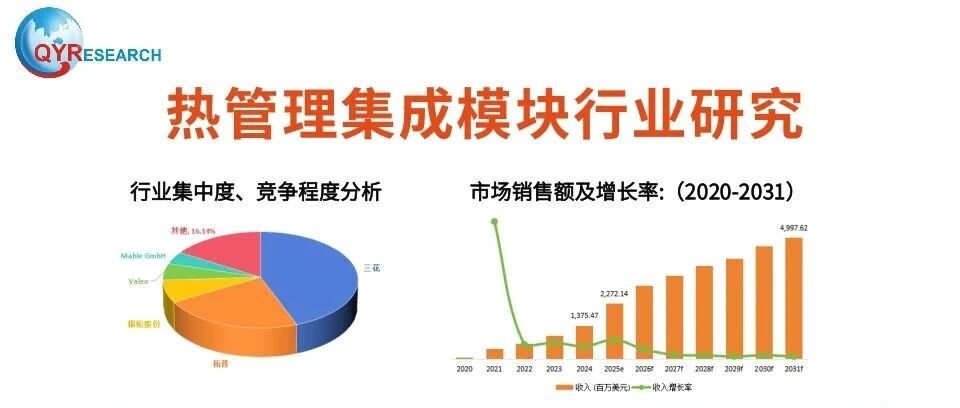
Group 1 - The core viewpoint of the article emphasizes the increasing importance of thermal management systems in electric vehicles, particularly in enhancing range, safety, and passenger comfort [2][4] - The thermal management integrated module combines various components like condensers and electronic expansion valves to optimize space and reduce costs, addressing the growing demand for efficient energy management in electric vehicles [2][6] Group 2 - The global market for thermal management integrated modules was valued at approximately 72.81 million USD in 2020 and is projected to reach 1,375.47 million USD by 2024, reflecting a compound annual growth rate (CAGR) of 108.48% from 2020 to 2025 [6] - By 2031, the global market size is expected to reach 4,997.62 million USD, with a CAGR of 14.04% from 2025 to 2031, indicating strong growth potential [6] - China is anticipated to hold a significant market share of 59.83% in 2024, with a projected CAGR of 14.53% in the following six years [6] Group 3 - The industry is characterized by rapid technological iteration, with significant advancements occurring almost annually, driven by the urgent need for improved vehicle range and efficiency [10] - The shift from traditional fuel vehicles to electric vehicles necessitates a transition from independent thermal management systems to integrated solutions, enhancing efficiency and reducing component count [4][12] - The competitive landscape is evolving, with both established players and new entrants vying for market share, leading to a more complex and dynamic market environment [9][12] Group 4 - Favorable factors for the industry include the continuous growth of the electric vehicle market, which drives demand for thermal management modules as essential components for battery safety and range optimization [14] - Technological innovations are facilitating the transition to integrated designs, reducing system complexity and costs while expanding application scenarios across various vehicle types [14] - Increased capital and capacity investments are propelling rapid industry growth, with a focus on local production to lower procurement costs [14] Group 5 - Challenges include the complexity of supply chains and the difficulty of integrating various components, which can impact the reliability of thermal management modules [15] - Cost pressures from automakers and the potential for overcapacity in the market may lead to price competition and quality inconsistencies [15] - The lack of standardized solutions in the industry hampers the ability to achieve economies of scale, increasing development and production costs for suppliers [15]