物联网与柔性电子融合

Search documents
高门槛铸就高价值:全球医用FPC市场供应链格局与2032年展望
QYResearch· 2026-03-11 01:23
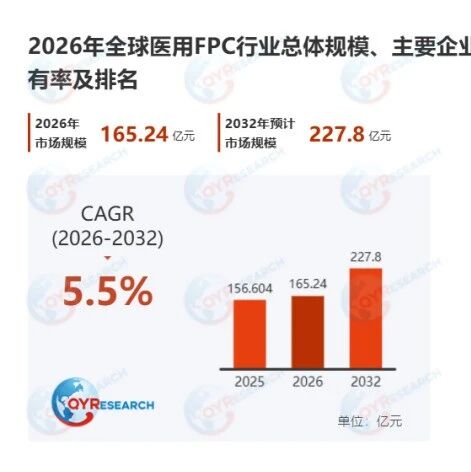
Market Overview - The global medical FPC market is projected to reach USD 2.303 billion by 2032, with a compound annual growth rate (CAGR) of 5.5% in the coming years [2][11]. Key Manufacturers - Mektec Corporation, based in Japan, specializes in flexible printed circuit boards (FPC) for various industries, including medical, leveraging its material technology and process capabilities [4][5]. - Taiyo Yuden Co., Ltd. is a major manufacturer of soft printed circuit boards, providing a range of products for medical applications [5]. - Shenghong Technology, located in Guangdong, China, focuses on high-density printed circuit boards, including FPC, with applications in medical devices [5]. - Interflex Co., Ltd. from South Korea develops flexible circuits and touch panels, serving the medical device sector [5]. - AT&S, an Austrian company, is a leading manufacturer of high-end printed circuit boards, including FPC, for medical and other high-tech fields [6]. Supply Chain Analysis - The upstream supply chain is centered around high-reliability materials such as PI substrates, electrolytic/cast copper foil, and medical-grade adhesives, which must meet strict biocompatibility and sterilization requirements [7]. - Midstream manufacturers require cleanroom facilities and capabilities for fine lines and multilayer rigid-flex circuits, adhering to ISO 13485 standards [7]. - Downstream applications include medical device manufacturers, focusing on small-batch, diverse products with strong R&D collaboration [7]. Driving Factors - The demand for medical FPC is driven by technological innovations in the medical industry, with a trend towards miniaturization and lightweight designs [7]. - The rapid adoption of smart medical devices and remote monitoring is increasing the need for reliable, low-power FPC solutions [7]. - The aging population and chronic disease management are contributing to the growth of wearable and implantable medical electronics [7]. Challenges - The medical FPC industry faces high technical and entry barriers, with stringent requirements for biocompatibility and stability testing [8]. - The complex manufacturing processes and high certification costs pose significant challenges for new entrants [8]. - The reliance on imported high-end raw materials creates potential risks in supply chain control [8]. Opportunities - The digital transformation and smart upgrade of the global healthcare industry present unprecedented opportunities for the medical FPC sector [8]. - The increasing prevalence of wearable health monitoring devices is driving demand for high-precision, reliable medical FPC [8]. - The push for domestic medical infrastructure and policies favoring local high-end medical device production create openings for local suppliers [8].