现代主义设计

Search documents
上海与世界|魔都除了邬达克,还有鲍立克
Xin Lang Cai Jing· 2026-02-14 02:59
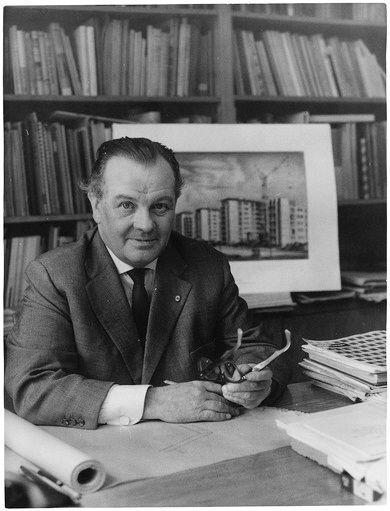
Core Viewpoint - Richard Paulick, a German planner, played a crucial yet underrecognized role in Shanghai's urban modernization, significantly influencing the city's development blueprint during his time there [1][3]. Group 1: Background and Early Life - Paulick was born in a working-class family in Germany and studied architecture at the Royal Saxon Technical University, later contributing to the Bauhaus Dessau campus [3]. - He fled to Shanghai in 1933 to escape Nazi persecution, becoming stateless after the German consulate refused to renew his passport, which deepened his commitment to the city [3][4]. Group 2: Contributions to Urban Planning - During his time in Shanghai, Paulick engaged in various design fields, including interior design, and became a professor at St. John's University, where he taught urban planning [4][6]. - He was a key figure in the Shanghai Urban Planning Committee, which developed the "Greater Shanghai Urban Plan," incorporating modern concepts like organic dispersion and satellite towns [6][8]. Group 3: Vision and Predictions - Paulick predicted that Shanghai's population would reach 15 million within 50 years, a forecast that was initially met with skepticism but later validated [8][9]. - He advocated for the construction of centralized deep-water ports and the inclusion of Pudong in Shanghai's urban development, both of which have been realized in subsequent decades [9]. Group 4: Legacy and Impact - The "Greater Shanghai Urban Plan" is recognized as the first comprehensive modern urban plan in China, marking a significant milestone in the country's urban planning history [9][10]. - Paulick's modernist principles, such as organic dispersion and group structure, have influenced subsequent urban planning efforts in Shanghai, including the development of satellite towns and multi-center layouts [10]. - His dedication and professional spirit during challenging times set a standard for urban planning in Shanghai, leaving a lasting impact on the field [10].

当肖特遇见包豪斯:跨越百年的设计交融与创新传承
商业洞察· 2025-08-08 09:37
Core Viewpoint - The article discusses the historical significance and ongoing influence of the Bauhaus movement on design and innovation, particularly highlighting SCHOTT's role in integrating art and technology through glass products [3][4][11]. Group 1: Historical Context - The Bauhaus movement emerged in response to societal changes in Europe, advocating for design that serves the public rather than purely artistic purposes, leading to a shift from ornate aesthetics to functional simplicity [4]. - SCHOTT, under the leadership of Eric Schott, transformed from a laboratory glass producer to a household name, making elegant glass designs accessible to the masses [4][6]. Group 2: Design Innovations - Notable collaborations with Bauhaus artists, such as Gerhard Marcks and Wilhelm Wagenfeld, resulted in iconic products like the Sintrax coffee pot, which exemplified the fusion of industrial design and art [5][6]. - The company's commitment to design as a core part of its business strategy was emphasized during its 50th anniversary celebration in 1934, marking a pivotal moment in its evolution [6]. Group 3: Architectural Contributions - Post-war reconstruction efforts included the design of a new factory by Bauhaus architect Ernst Neufert, showcasing the integration of art and technology in production processes [8]. - SCHOTT participated in the restoration of significant Bauhaus buildings, employing advanced glass technologies to preserve historical integrity while enhancing functionality [9][11]. Group 4: Modern Applications - SCHOTT's borosilicate glass is now utilized in semiconductor technology, providing essential protective barriers for chips and maintaining sterility for vaccine transport, demonstrating the enduring relevance of Bauhaus principles in contemporary design [11]. - The article concludes that the true design revolution transcends museum displays, manifesting in everyday life through practical and aesthetically pleasing products [11].